


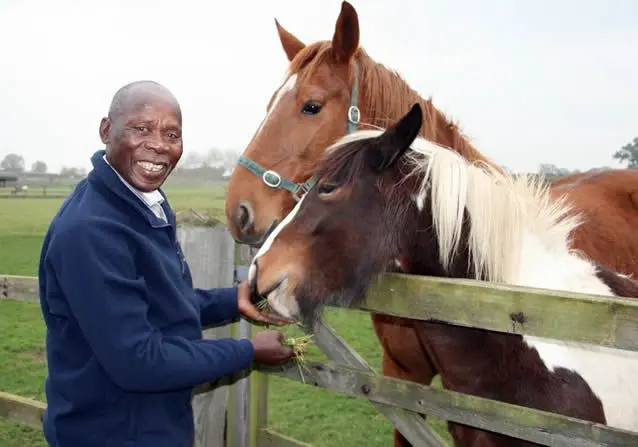
South Africa has lost a quiet giant. Enos Mafokate, the pioneering horseman known as the “King of Horses,” has died at the age of 80. His passing leaves a profound void in the country’s sporting history, its ongoing struggle for equality and the dreams of countless young people in the townships.
“It is with profound sadness that the Mafokate family announces the passing of our beloved Enos Mafokate - husband, father, grandfather, great-grandfather, mentor and pioneering South African equestrian. We are deeply saddened by his passing and immensely proud of the extraordinary life he lived and legacy he leaves behind. His legacy will live on,” said a family statement released by his son, kwaito star Arthur Mafokate.
Born on 15 February 1944 in Alexandra township, Johannesburg, Mafokate grew up under the harsh realities of apartheid. As a boy he rode the family donkey while herding cattle on a farm near Rivonia. A life-changing incident as a teenager led him to work as a stable hand. From those humble beginnings he rose to become South Africa’s first black professional show jumper. An achievement that shattered the racial barriers of an elite, colonial sport long reserved for white riders.
In an era when Black South Africans were systematically excluded from competitive equestrian events, Mafokate’s talent and determination forced doors open. He became the first black member of the Transvaal Horse Society and the first black rider in 127 years to compete at the Pietermaritzburg Royal Agricultural Show. In 1980, British champion David Broome spotted him and invited him to compete in the United Kingdom. There he placed fifth out of 31 riders at the Royal International Horse Show at Wembley, the first South African of any race to compete internationally in two decades. He went on to win major titles, including the Midlands Championship, and met members of the British royal family. In 1992 he accompanied the South African team to the Barcelona Olympics as a sports ambassador when the country returned to the Games after decades of isolation due to apartheid.
Yet Mafokate’s greatest legacy was not the medals or the international recognition. It was the Soweto Equestrian Centre he founded in 2007 on land donated in Moroka. He created a space where township children, many of whom had never seen a horse up close, could learn to ride, care for animals and compete. He worked tirelessly to improve the welfare of cart horses that still pulled loads through Soweto’s streets and opened the gates to disabled youngsters, giving them moments of freedom and joy on horseback. His mission was simple and powerful: to see a black child compete on equal terms with any other child in the world.
Mafokate’s life embodied resilience, dignity and quiet transformation. He turned systemic exclusion into opportunity and elite privilege into community empowerment. In a nation still healing from the wounds of the past, he proved that excellence and access can rewrite the rules.
His death is a great loss to South Africa. The horses he loved, the children he taught and the example he set will continue to carry his spirit forward. May his legacy gallop on.