


The 2026 Carling Knockout Cup final between Kaizer Chiefs and Orlando Pirates on 12 December has become as much about geography as it is about football.
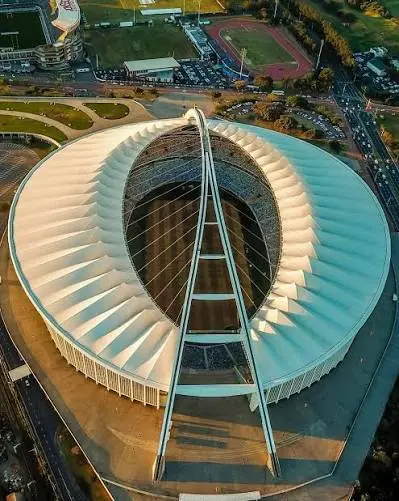
With FNB Stadium in Johannesburg unavailable due to a J Cole concert on the same day, the Premier Soccer League faces a choice between Cape Town Stadium (also known as DHL Stadium) and Moses Mabhida Stadium in Durban. Both venues can stage a big occasion. Yet practical realities for the traditional support bases of the two Soweto giants tilt the balance firmly towards Durban.
Moses Mabhida Stadium has a capacity of about 55 500 to 56 000 for domestic matches. Cape Town Stadium seats around 55 000. On pure size the two are almost identical and both meet the scale required for a high-demand Soweto derby final. The differences lie elsewhere.
The PSL’s approach to selecting final venues is pragmatic rather than formulaic. Officials weigh stadium capacity against expected demand, spectator safety, overall cost of staging the match, contractual conditions with stadium management and logistical fairness.
Recent comments from PSL chief operating officer Ronnie Schloss illustrate the priorities. When Stellenbosch FC’s semi-final against Pirates could not be played in the Western Cape, Schloss cited Danie Craven Stadium’s 16 000 capacity as too small for a projected 50 000-ticket sale and safety concerns. He also described the cost of running matches at Cape Town Stadium as the highest in the country and the contractual conditions as “very severe”. The final, he indicated, would only go there if those terms changed. Safety, cost and workable agreements therefore sit at the centre of the decision-making process, alongside the ability to deliver a well-organised event.

These criteria favour Durban. Moses Mabhida has proved itself this season by hosting the Stellenbosch–Pirates semi-final without reported major issues. It previously staged the 2024-25 Nedbank Cup final between the same two Soweto clubs, which Chiefs won 2-1. PSL chairperson Dr Irvin Khoza has also spoken positively about the Durban venue as a possible alternative for big matches after crowd-control problems at a recent league derby at FNB Stadium. The stadium’s recent track record and existing relationships give the league confidence on organisation and cost.
For the supporters who form the backbone of both clubs, distance and cost matter more than scenery. Most committed Chiefs and Pirates fans live on the Highveld, particularly in Soweto and the wider Gauteng region. Durban is closer than Cape Town. Road travel from Johannesburg to Durban takes roughly six hours. The journey to Cape Town is closer to 14 hours or an expensive flight. For working-class supporters who travel by bus or shared mini-bus taxi, the difference is decisive.
Accommodation reinforces the point. Durban offers a wide range of affordable options within easy reach of Moses Mabhida. Cape Town’s hospitality sector, especially in peak season and around major events, commands higher prices. Fans stretched by ticket costs, transport and time off work face a heavier financial burden if the final moves to the Mother City. The risk is that a significant portion of the traditional support base is priced out or simply cannot make the journey, leaving empty seats or a diluted atmosphere that neither club wants.
Cape Town’s attractions are real. The stadium is a world-class venue with a dramatic setting and the opportunity to take the Soweto derby to a new audience. City officials and stadium management have confirmed availability and expressed strong interest in hosting the final. A first Soweto derby in Cape Town would carry novelty value and could grow the game in the Western Cape. Those are legitimate arguments. Yet novelty should not override accessibility for the core constituencies that have sustained these two clubs for decades.
The Carling Knockout final is one of the biggest occasions on the South African football calendar precisely because of the intensity generated by Chiefs and Pirates supporters. That intensity is more likely to travel to Durban than to Cape Town. A fuller stadium of committed fans produces a better spectacle, stronger commercial returns and a more authentic occasion than a picturesque but partially empty venue.
Durban also offers continuity. Moses Mabhida has demonstrated that it can handle the logistics, security and commercial arrangements required for a major cup final involving these two clubs. The league has recent positive experience there. Choosing it avoids the contractual and cost complications that have complicated Western Cape fixtures this season.
The final decision rests with the PSL, ultimately with Khoza and the league’s executive. They must balance the competing claims of two capable cities. On capacity the venues are comparable. On cost, contractual simplicity, recent delivery and, above all, accessibility for the travelling support that defines these clubs, Moses Mabhida Stadium in Durban presents the clearer and more practical option. Taking the showpiece to the coast closest to Soweto respects the fans who make the derby what it is while delivering a high-quality, well-organised final.
Lelo Mzaca is an award-winning multitalented journalist, copywriter and presenter of The Big Breakfast Show on Radio 2000. He has an over- whelming passion for sport, lifestyle, music, arts and culture.