

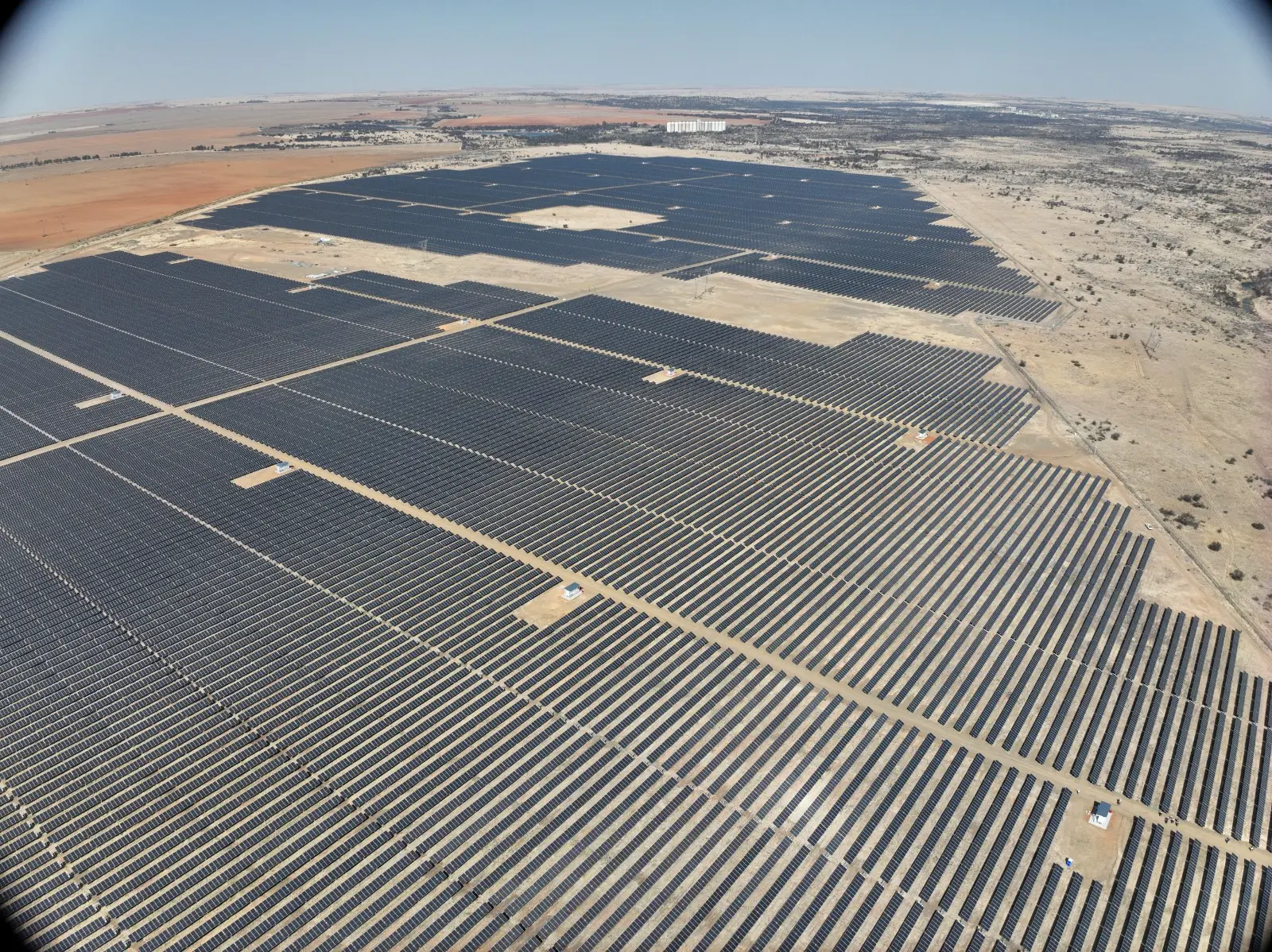
The energy landscape in South Africa is unrecognisable from a decade ago, never mind the turn of the century. The sheer pace of the shift defies traditional playbook solutions, and there’s no time to pause. The country faces an urgent and monumental task of bringing reliable, clean capacity online: from 2030 onwards, about 8.4 GW of Eskom’s coal fleet is scheduled for decommissioning. We come from a history where the sector was centrally driven. However, massive infrastructure investments, such as the roughly R20-billion Independent Transmission Project (ITP) phase 1 aimed at unlocking about 3.2 GW of new grid capacity, signal clearly that the private sector is moving from a spectator at worst or a helpful alternative at best, to a non-negotiable imperative and vital partner in the country’s energy transition.Through experience on the front line, building the energy industry South Africa needs requires more than capital and engineering. When SOLA delivered Project Springbok, which is a flagship 195 MWp, multi-buyer renewable energy asset, we were reminded of a lesson that lies at the heart of innovation. You simply cannot be afraid of complexity. You must walk towards it.

Walking towards complexity Over a number of years the approach to utility-scale renewable energy projects had become monolithic, with one big asset, one off-taker and one standardised long-term power purchase agreement (PPA). But if there is one constant in this sector, it’s that time never stands still. South Africa’s commercial and industrial markets have evolved and so have their needs. Buyers are increasingly looking beyond a one-size-fits-all model.Enter complexity. To make Project Springbok viable and responsive to the evolving market realities, SOLA had to pioneer a multi-buyer structure from a single asset. Our task was to integrate vastly different off-take requirements under one coherent framework.Springbok delivers renewable energy to buyers via PPA contracts as short as 12 months, and as long as 20 years. It goes without saying that structuring a project this way is not straightforward. The challenge forces you to deal with multi-layered commercial, legal and operational requirements. It’s a challenge that a business needs to tackle head on because, bluntly speaking, if customer centricity in the energy sector is to have any meaning, an independent power producer must be able to offer flexible, modular solutions as an alternative to rigid templates.The real test is executionAny business that has delivered a large, first-of-its-kind project knows that there’s a real difference between planning for it and executing it. Planning is about being prepared. You bring past experience and the lessons from previous mistakes; you look at historical data, and you try to anticipate every variable your highly specialised team can identify. Execution is when reality comes home to roost. Execution tests your assumptions. Whether you are successful or not in the execution phase depends on how you handle unforeseen challenges and how teams adapt in real time to difficulties. It’s about how you collaborate with lenders, contractors and local communities when things don’t go according to plan. For example, we faced delays relating to grid connection, and the common challenge of bad weather impacted project implementation. However, our team managed to mitigate these delays, accelerating construction by more than two months, bringing the project online early.It’s easy to find a million reasons why a project “can’t be done” or “isn’t bankable”. First-of-their-kind technical and regulatory hurdles have a way of reminding the human in each of us just how big a task lies ahead. In this cauldron, successful execution lies in breaking seemingly impossible problems down into smaller, solvable components until, together, they start stacking up, making the project deliverable. The importance of feedback loops to navigate new frontiersTo compound matters, South Africa is moving towards a competitive wholesale electricity market through the South African Wholesale Electricity Market (SAWEM). Originally targeted for April 2026, its implementation has been postponed to allow further work on the regulatory, technical and operational requirements. The market is expected to be introduced in phases, with key elements of the framework, including the Market Code and trading arrangements, still being finalised. For industry participants, this creates a period of transition: businesses must continue operating within existing electricity procurement frameworks while preparing for new approaches to trading, forecasting, balancing and managing energy portfolios. There is no single established playbook for this transition, and even experienced market participants are continually adapting their understanding as the rules and practical requirements evolve.Continuous feedback loops are critical in this environment. Every project must inform the next. However, this does not mean repeating the same template over and over again. If, after delivering Springbok’s multi-buyer innovation, we simply replicated the exact same project structure somewhere else, we would have failed our commitment to strive for innovation and the continual creation of better products for our buyers. As the country’s energy transition accelerates, so too must the frontiers. That's exactly why, fresh off from delivering Springbok, we moved directly into Naos-1: a 435 MWp solar facility paired with a 855 MWh battery energy storage system, built for Sasol’s Nomusize and Air Liquide. Springbok taught us that a single asset could serve genuinely different buyers on genuinely different terms. Naos-1 takes that lesson further: instead of multiple buyers on short-to-medium PPAs, it's built around two anchor offtakers on 25-year agreements, with storage allowing us to dispatch solar power exactly when the grid - and our buyers - need it most, not just when the sun is out. Where Springbok was about flexibility across many buyers, Naos-1 is about durability and dispatchability for a smaller number of long-term partners. Both grew out of the same underlying discipline: designing the commercial structure around what the buyer actually needs, not around what's easiest to build and operate.Progress anchored in community impactTechnical and commercial innovation must translate into tangible social value. Complex energy projects require businesses to embed and immerse themselves in local communities for months and years on end. Collaboration at the grassroots level is a non-negotiable prerequisite for execution.It was important for us, from day one, to collaborate with host communities on targeted socio-economic development initiatives, such as partnering with SETA-accredited Lemena Solutions on a community sewing initiative. The project has empowered local women and youth with accredited skills and sustainable income generation opportunities, such as producing school uniforms for local learners and operational workwear for on-site maintenance teams. The road aheadSouth Africa’s energy sector must keep pace with rising demand from emerging sectors and the imminent decommissioning of the coal fleet. To get there, the country must collaboratively address systemic friction points, such as grid connection capacity and multi-departmental regulatory alignment. The main lesson from Springbok is not that we have found a final formula, but rather that we must remain comfortable stretching into the unknown. South Africa’s rapidly evolving energy sector needs players willing to lean into complexity, solve unprecedented problems, and continuously build what the market needs next. SOLA is currently in the final stages of financing our next large solar PV and BESS project, which will deliver green electrons to multiple buyers from 2029.