


Artificial intelligence is advancing at a pace that could change how people work, learn, access healthcare and understand the world. But as machines become more capable, an important question remains for South Africa. Will the country help shape this future, or will it mainly depend on technologies developed elsewhere?
The question goes beyond the latest software or the promise of machines capable of performing tasks once reserved for people. It is about who develops these technologies, whose problems they solve and whether the benefits reach ordinary people. These questions were among those explored at the Singularity Summit South Africa, held at the Sandton Convention Centre in Johannesburg on 21 and 22 October 2026.

The summit brought together futurists, researchers, technology experts and innovators to consider what lies ahead. For South Africa, the conversation about artificial intelligence is particularly important. The country faces unemployment, unequal access to education and healthcare, and a growing need to prepare people for workplace changes. AI could help address some of these challenges, but it could also deepen existing inequalities if its opportunities remain concentrated among those who already have resources.
Part of the answer lies in developing local expertise. In a forward-looking fireside chat about the next decade of AI, Amanda Manna and Dr. Mark Nasila optimistically envisioned a future defined by the normalization of autonomous agents, flattened career structures, and ubiquitous personal AI advisors. They also gave a cautious outlook focused on the near-term failure of experimental projects, the critical ongoing shift towards Sovereign AI and small language models, why we are in an AI bubble, the expected rise of the AI marketplace and the long-term threat of an AI-driven “job apocalypse” necessitating new policy interventions. Their contributions formed part of a wider conversation about how South Africa can move beyond merely adopting emerging technologies and develop its own capabilities.
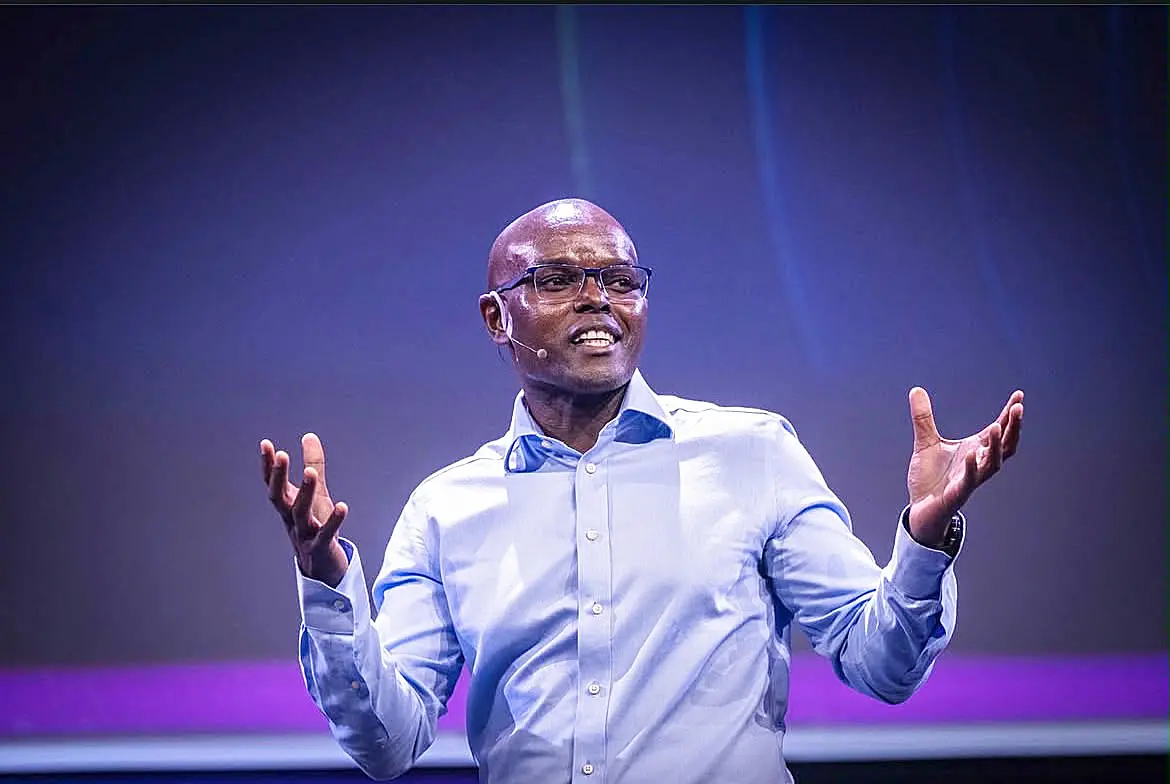
A country that relies entirely on technologies developed elsewhere may benefit from their convenience, but it has less influence over how they are designed, whose data they use and which problems they prioritise. Developing local expertise and intellectual property gives South Africa a greater opportunity to influence those decisions.
It also creates room for solutions shaped by the country’s realities. South Africa has a wide range of languages, uneven access to services and communities whose needs may not be reflected in products designed primarily for wealthier international markets. AI systems that work well in one setting may not automatically work as effectively in another. Local knowledge and research are therefore not simply additions to the industry. They are part of building technology that works for more people.
The South African AI Awards add another dimension to this conversation by recognising local innovation and highlighting how AI can contribute to inclusive socio-economic prosperity. Represented at the summit by chairperson Atenkosi Ngubevana, the awards highlighted the importance of supporting people and organisations developing solutions with practical value.
That value can take different forms, from helping businesses improve their operations to making financial education more accessible. Initiatives such as digital platforms offering videos, podcasts, games and calculators show how technology can help people engage with information in new ways. The bigger test, however, is whether these innovations are useful and accessible to the people they are intended to serve.
Recognition is an important starting point, but promising ideas also need investment, customers, technical expertise and opportunities to grow. If South Africa wants to develop its own technologies, innovators must be able to move beyond the initial idea and build sustainable organisations around it. That means creating conditions in which local talent can find support and pursue ambitious work without having to look elsewhere for every opportunity.

For Professor Benjamin Rosman of the MIND Institute, one of the most important steps is investing in the people who will drive that research. His experience with the Deep Learning Indaba revealed how much interest in AI already existed across Africa, even when it was not particularly visible.
When the initiative launched in 2017, its organisers expected around 30 people might be interested in attending. Instead, they received approximately 750 applications. The response showed that many talented researchers were working across the continent, often without easy access to collaborators or a wider research community. Since then, the Indaba has grown into a continental network, with locally organised IndabaX initiatives spanning 48 African countries.
For Rosman, the lesson was that investing in people and relationships can have consequences far beyond what organisers initially imagine. He believes Africa must be more ambitious about its role in AI research, rather than assuming that fundamental scientific advances will happen elsewhere. “We have researchers in South Africa who are capable of making genuinely new contributions to machine learning, reasoning, robotics and our understanding of intelligence,” he said.
His argument challenges the idea that African researchers should primarily focus on applying technologies developed elsewhere. They should also be supported in developing new ideas, building research institutions, and contributing to advances that influence global industry. That requires long-term investment and the freedom to pursue difficult questions, even when progress is slow.
The importance of developing local capabilities becomes clearer when the discussion moves from research laboratories to ordinary workplaces. Futurist David Roberts offered one of the summit’s most striking predictions, arguing that artificial intelligence and robotics could eventually take over almost all human labour. “There is no human labour that humans will do in the future. None,” he said.
It is a sweeping prediction rather than an established outcome, but it raises a difficult question for a country already struggling with unemployment. Automation could make certain services cheaper and allow people to spend less time on repetitive tasks. Yet for someone who depends on a salary to feed their family, the disappearance of a job is not automatically an improvement in quality of life.
The benefits of AI will depend on how its gains are distributed and whether people have opportunities to adapt. Education, reskilling and access to digital tools will matter, but so will decisions made by employers and government about the future of work. A technological transformation that creates wealth without creating wider opportunities could deepen the inequalities South Africa is already trying to overcome.
The same principle applies to healthcare. Radiation oncologist Dr Martin Zschornak explored emerging approaches to cancer treatment, including focused ultrasound, as well as the potential role of music in supporting patients. Some of these approaches remain under investigation, but they show how researchers are exploring new ways to treat disease and improve patient well-being.
For a country where access to healthcare remains unequal, the value of such advances cannot be judged only by what is possible in a specialised facility. New treatments must also be safe, accessible and affordable if they are to make a meaningful difference to the wider population.
Technology’s influence extends beyond physical health. Clinical psychologist Dr Danielle Einstein warned that constant digital checking and the search for reassurance can reinforce anxiety. She described the surrounding environment as an “anxiety economy”, in which tools designed to make life easier can sometimes make it harder to tolerate uncertainty.
Cybersecurity expert Dr Melanie Rieback also highlighted the risks associated with increasingly capable AI. The same technology that can strengthen digital security can be used to create convincing scams, impersonate trusted people and make cyberattacks easier to carry out. As more services move online, people need practical ways to recognise threats and protect themselves.
These concerns are a reminder that technological progress is not automatically human progress. New systems can make information easier to access and services more efficient, but they can also introduce risks when they are poorly designed, inaccessible or used without considering their effects on people.
Architect DaeWha Kang applied a similar principle to the discussion of cities, asking whether the places people build can support healthier lives and better relationships with nature. His focus on local materials, thoughtful design and reducing waste offered another way to think about innovation. Development should serve the people who live with its consequences, rather than simply demonstrate what technology can accomplish.
For South Africa, this means building an AI future that reflects local priorities while contributing to global research. It means investing in researchers who can make new discoveries, supporting innovators who can turn ideas into useful products and ensuring communities are not treated merely as consumers of technology developed elsewhere.
The country has the talent to help shape what comes next. The challenge is creating the conditions for that talent to thrive and ensuring that the benefits of AI are not limited to a small group of companies, researchers and investors.
The future of artificial intelligence will not be determined by technology alone. It will also depend on choices about research, education, employment and access. South Africa has an opportunity to be more than a market for other people’s inventions. It can help shape the technologies that will influence how people live and work for generations to come.
The real measure of progress will not be how quickly machines become more capable, but whether the people living alongside them have more opportunities to build secure, healthy and dignified lives.