

Ocean research must do more than advance scientific knowledge. It must protect marine ecosystems, strengthen coastal livelihoods and create economic opportunities for communities that depend on the sea.
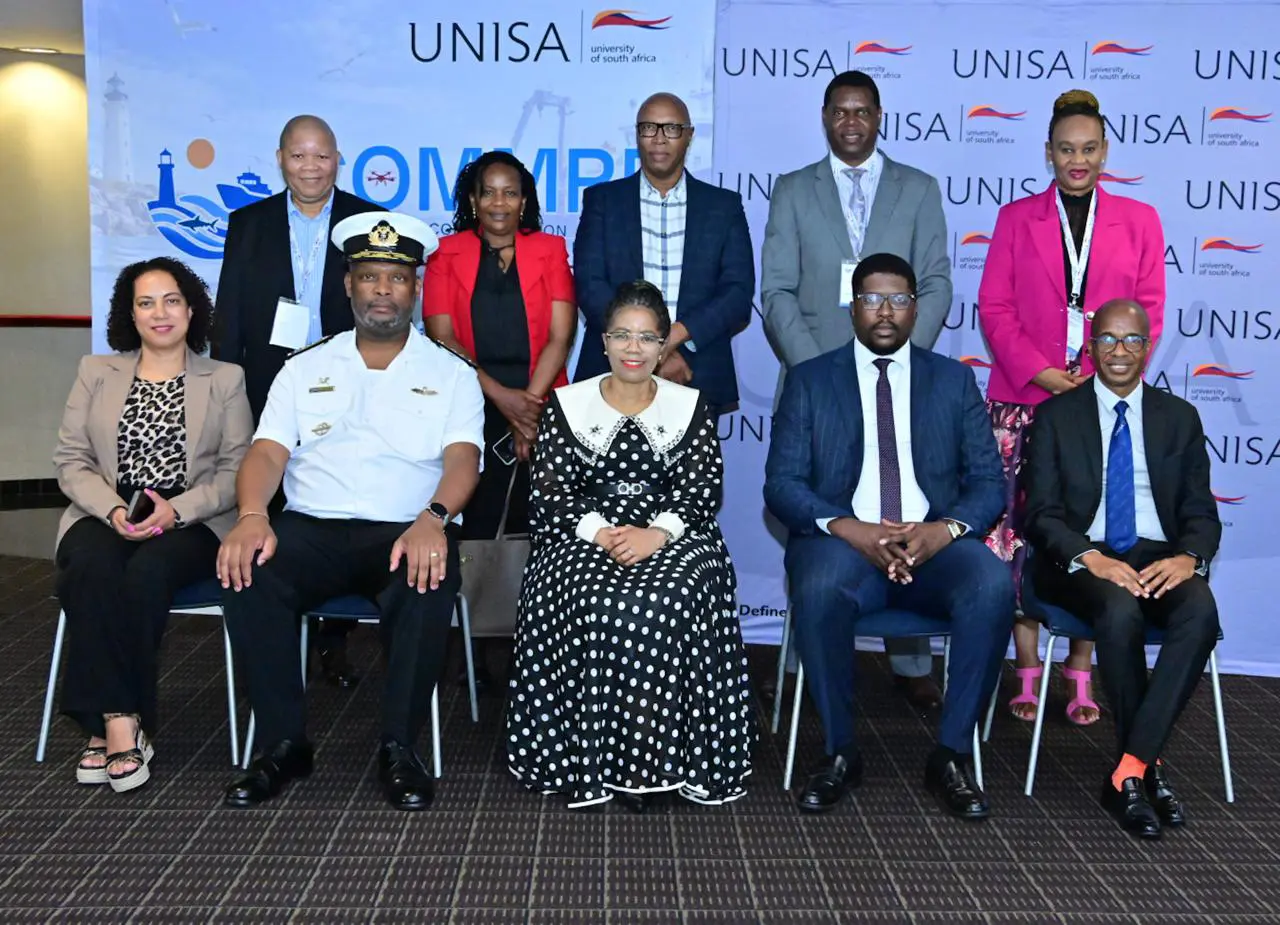
This was the central message from University of South Africa (Unisa) Principal and Vice-Chancellor Prof Puleng LenkaBula as she opened the inaugural International Conference on Coastal, Marine and Maritime Research (COMMRE 2026) at the Durban International Convention Centre. Hosted by Unisa in partnership with the Department of Forestry, Fisheries and the Environment (DFFE) and other stakeholders, the conference brought together researchers, policymakers, government representatives, industry specialists and community stakeholders from Africa and beyond.

Held under the theme Advancing Science, Innovation, Policy, and Equity within the UN Ocean Decade, the gathering provided a platform to explore how research, technological innovation and policy reform can respond to pressing challenges facing coastal and maritime environments. For Unisa, the conference also marked an important step in advancing Marine Studies, one of the university’s ten Catalytic Niche Areas (CNAs), through interdisciplinary research and partnerships aimed at addressing national, continental and global development priorities.
Addressing delegates, LenkaBula emphasised that scientific progress must translate into practical improvements in people’s lives, particularly those living in vulnerable coastal communities. “We gather this morning with a shared responsibility, that is: to ensure that advances in ocean science translate into healthier ecosystems, more resilient communities, and fairer opportunities across the continent,” she said. South Africa’s extensive coastline and strategic maritime position offer opportunities in fisheries, aquaculture, tourism, shipping and offshore energy.
However, LenkaBula stressed that these opportunities would have limited developmental value unless they contributed to sustainable livelihoods, employment creation and inclusive economic growth. She also called for greater recognition of coastal communities and small-scale fishers as knowledge partners whose experiences and insights should inform scientific research and environmental decision-making. Her address challenged African universities to move beyond participating in international research conversations and assume a stronger leadership role in generating solutions relevant to the continent.

“COMMRE 2026 demonstrates that African institutions are not merely participants in the global coastal, marine and maritime research and policy debates. No! Our institutions are producers of knowledge, innovation and policy solutions,” she said. The message reinforced Unisa’s commitment to research that responds to societal challenges while strengthening Africa’s contribution to global knowledge production. Deputy Minister of Transport Mkhuleko Hlengwa, delivering the keynote address, highlighted the strategic importance of maritime transport to South Africa’s economy.
“South Africa is a maritime nation. We have a coastline of more than 3,000 kilometres, and more than 90 per cent of our trade by volume is transported by sea,” he said. Hlengwa argued that the country’s maritime position presented substantial economic opportunities, but realising them required efficient ports, integrated transport infrastructure and investment in technological innovation. He identified artificial intelligence, predictive maintenance, digital twins, port-call optimisation and port community systems as technologies capable of improving operational efficiency and strengthening supply-chain reliability.
“The objective is not technology for its own sake, but measurable gains in productivity, reliability, safety and service quality,” he said. He also emphasised the importance of reducing emissions from ports and shipping, improving coordination between road, rail and maritime transport, and preparing professionals for an increasingly technology-driven industry. Highlighting the relationship between higher education and industry development, Hlengwa referred to Unisa’s collaboration with the Department of Transport in developing a Bachelor of Commerce in Maritime Management.

The initiative reflects the university’s contribution to building specialised skills that can support South Africa’s maritime economy. Conference chairperson Prof Godwell Nhamo, Professor and Acting Head of Unisa’s Institute for Sustainability and Corporate Citizenship in the College of Economic and Management Sciences (CEMS), called for greater recognition of the relationship between marine resources, communities and sustainable development. Nhamo explained that COMMRE originated from Unisa’s Marine and Coastal Studies Strategic Document, developed in June 2024.
The document called on the university to “Rise, Engage, and Leave Nobody Behind in Marine and Coastal Studies at UNISA and beyond!” He urged delegates to engage more deeply with what he described as the “ocean question”, arguing that discussions about access to resources, economic development and social justice must also consider marine and coastal environments. “For coastal communities, changes in the marine environment can directly affect livelihoods, food security, infrastructure and economic opportunities, while healthy marine ecosystems are essential for biodiversity and sustainable fisheries, tourism and maritime trade,” Nhamo said.
His remarks highlighted the consequences of coastal erosion, marine pollution, climate-related disasters and unsustainable resource use. These challenges threaten not only biodiversity but also employment, infrastructure and the long-term sustainability of coastal economies. Nhamo emphasised the importance of partnerships involving universities, government, municipalities, research institutions and communities in developing responses grounded in scientific evidence and local experience.
COMMRE 2026 represents an important contribution to Unisa’s Marine Studies Catalytic Niche Area, which prioritises research and innovation in marine conservation, coastal oceanography, the blue economy and sustainable development. Through this research focus, the university seeks to strengthen interdisciplinary collaboration, postgraduate research, specialised skills development and partnerships that can address complex marine and coastal challenges. The conference brought together expertise in climate science, ocean governance, biodiversity conservation, maritime development and coastal resilience.
These fields are increasingly interconnected as countries seek to balance economic opportunities with the protection of marine ecosystems. The initiative also advances priorities identified in South Africa’s National Development Plan (NDP): Vision 2030, particularly those relating to sustainable economic growth, infrastructure development, employment creation and environmental protection. At continental level, it supports the African Union’s Agenda 2063 aspirations for inclusive growth, regional integration and the sustainable management of Africa’s natural resources.
The conference further contributes to the United Nations Decade of Ocean Science for Sustainable Development (2021–2030), which seeks to strengthen scientific cooperation and translate ocean knowledge into practical action. Its work is particularly relevant to Sustainable Development Goal (SDG) 14, which focuses on conserving and sustainably using oceans and marine resources. Related priorities include climate action (SDG 13), food security (SDG 2), sustainable communities (SDG 11) and partnerships (SDG 17).
For Unisa, these connections demonstrate how research can contribute to environmental sustainability while addressing poverty, inequality and development challenges affecting coastal populations. The conference programme explored how scientific research and technological innovation can strengthen coastal resilience and support a sustainable blue economy. Discussions covered climate adaptation, integrated coastal zone management, ocean observation, maritime governance, marine biodiversity, coastal tourism, ocean accounting and blue carbon.
Emerging technologies, including artificial intelligence, digital ocean platforms and early warning systems, featured prominently in discussions about improving environmental monitoring and managing climate-related risks. Delegates also examined nature-based solutions and the potential of blue carbon initiatives to support climate mitigation and ecosystem restoration. A significant feature of the programme was the South Africa Coastal Resilience Policy Living Lab (SA-CORLAB), an initiative aimed at connecting research with coastal resilience policy and legislation.
The approach seeks to incorporate community experiences into policy development, particularly in areas exposed to environmental risks. Indigenous knowledge systems, community-led environmental management, gender-responsive adaptation and youth participation also formed part of the discussions.
These themes reinforced the importance of ensuring that coastal development strategies are inclusive and informed by the needs of communities most directly affected by environmental change. COMMRE 2026 attracted prominent African and international researchers and specialists, including Prof Nadia Pinardi, Prof Edem Mahu, Prof Martin Zimmer, Prof Kaitano Dube, Prof Juliet Hermes, Adv Thembelihle Mapipa, Prof Christian Bueger, Dr Arthur Tuda and Dr Bernice McLean. Their participation brought expertise spanning ocean science, climate change, biodiversity, marine governance and maritime development.
The conference was supported by an extensive network of partners, including the DFFE, Department of Transport, Department of Science, Technology and Innovation, South African Navy, eThekwini Metropolitan Municipality, Southern African Development Community Secretariat, Western Indian Ocean Marine Science Association, National Research Foundation, South African Environmental Observation Network and South African Maritime Safety Authority. Unisa’s partnerships with eThekwini Metropolitan Municipality, Matzikama Local Municipality, Jacob’s Ladder Africa and the South African Association for Marine Biological Research further demonstrate the university’s efforts to connect research with community needs and policy priorities.
The opening programme was chaired by Unisa Vice-Principal: Teaching and Learning, Community Engagement and Student Support, Prof Mpho Ngoepe. It also featured an address by Rear Admiral Musa Nkomonde of the South African Navy and a virtual contribution from DFFE Director-General Nomfundo Tshabalala. Their participation highlighted the importance of cooperation between academia, government, industry and maritime institutions. As COMMRE 2026 brought together scientific expertise, policy perspectives and community-focused approaches, its central challenge was clear: translating research into measurable environmental, social and economic outcomes.
For South Africa and the wider African continent, the sustainable management of marine resources offers opportunities to strengthen food security, create employment, improve infrastructure and protect biodiversity. However, these opportunities depend on effective governance, scientific innovation, inclusive participation and sustained investment in research and skills development. Through its Marine Studies Catalytic Niche Area and growing network of national and international partnerships, Unisa is positioning itself to contribute to these priorities.