

Key takeaways from the Mail & Guardian and Water Research Commission dialogues on non-revenue water, climate adaptation, and preparing for supply pressures
A full dam gives a city some protection against a dry summer. Whether that water reaches the tap depends on how much the system can deliver, how much is lost along the way and what happens when demand rises. If restrictions follow, the effects can be hardest on households and businesses that already contend with an unreliable supply.
Those questions ran through two webinars convened by the Mail & Guardian and the Water Research Commission (WRC) on 25 November at the AWSISA Africa and Global South Water and Sanitation Dialogue in Durban. The sessions marked the commission’s 55th anniversary and examined what municipalities and communities can do before water supplies come under pressure.

In the morning session, research psychologist Leonie Vorster said the WRC had identified 84 resources for a portal to help municipalities tackle non-revenue water. The next phase would also give registered users a way to share what had worked in their own networks. A municipality that had reduced losses could explain what it did, giving another council a starting point for deciding whether the approach might work there.
Finding the losses
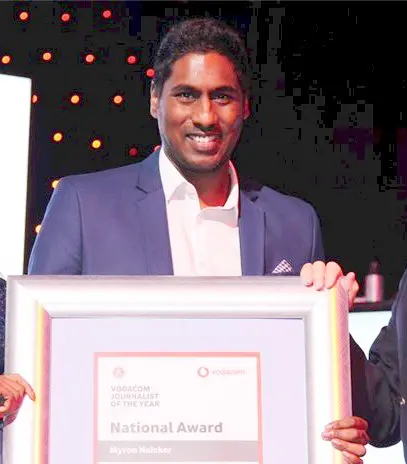
Moderator Myron Naicker asked how a city that had experienced heavy rainfall could still struggle to keep water flowing to residents. Dr Manjusha Sunil, a WRC water and sanitation specialist, said South Africa was better at responding to water problems once they occurred than at preventing them. She asked what more could be done to harvest rainwater and address leaks before they became emergencies.

“South Africa is not short of innovative ideas and smart people,” Sunil said. What she found most rewarding was seeing an idea move from a laboratory or a pilot into use, where it could change how a municipality ran its network or help a community gain access to water. The WRC had tested technologies with municipalities, she said. Sharing the results would help officials elsewhere assess whether the same technology could work in their systems.
Sunil said the portal would bring together guidelines, tools and information on technologies already tested in the field. Vorster said it had been in development for about two years and some municipalities had already begun using it. Work on the full version was continuing. The commission was considering working with the South African Local Government Association to reach councils over the coming year. Some of those most in need of support were also among the hardest to reach, she said.
Vorster put national non-revenue water at about 47%. The Department of Water and Sanitation’s national water balance, drawing on its 2023 No Drop assessment, put the figure at 47.4% and estimated water losses at 40.8%. Non-revenue water includes physical losses such as leaks and water that is supplied without generating revenue. The distinction determines what officials do next. A leak calls for a repair. Inaccurate readings or billing errors call for a closer look at how the municipality measures and accounts for supplies.
The morning session also examined multiple-use water systems as an approach to climate adaptation. In rural communities, a shared supply may serve households that need water for cooking, washing and sanitation, as well as people growing food or keeping livestock. Planning for those uses together makes it easier to see what is at stake when supplies fall short. A dry spell can threaten a household’s income and food supply as well as the water it needs for daily life.

When demand outstrips supply
In the afternoon, Dr Shafick Adams, the WRC’s senior research manager for water availability, explained how El Niño can put pressure on a water system from two directions. Hotter weather can drive up demand. Less rainfall can slow the replenishment of reservoirs. The combination is especially difficult when storage is already low, as it was during the 2015–16 El Niño, he said.
Adams cautioned that several factors influence rainfall and that some previous El Niño events had been wet. He pointed to Gauteng to illustrate another risk. A system can come under strain even with water in storage if demand exceeds what it can deliver. How much people use, how water is supplied and the condition of the infrastructure all help determine whether water reaches users.
“El Niño gets the blame for everything,” Adams said. Climate variability can exacerbate existing problems. His assessment brought the discussion back to the morning panel’s emphasis on prevention. A seasonal outlook can give a municipality time to prepare. Knowing the condition of its pipes and where losses are occurring helps it decide what to do with that time.
Adams said 55 years of research had given the commission technologies and approaches that could address some of the country’s pressing water problems. Putting them into practice depended on decisions about policy and implementation over which the WRC had limited control.

Dr Valerie Naidoo, the WRC’s senior research manager for advisory services, cited Windhoek as an example of research that had found its way into a working water supply. The Council for Scientific and Industrial Research developed the original reclamation plant in the 1960s. The WRC supported later research and improvements, including a 1976 extension. Reclaimed wastewater now helps secure the Namibian capital’s drinking water supply. Naidoo also pointed to Eskom’s use of dry cooling to reduce water demand and to South African biological wastewater treatment processes that went on to be used internationally.
Planning for the people affected
Naidoo said planning for a dry spell had to take place at household, municipal and bulk supply level. Countries tend to concentrate on the bulk system, she said, while the effects of interruptions and restrictions are felt locally. At household level, she pointed to water-efficient devices, ways to store water and information that helps people understand the quality of the water they use.
Municipalities also need to decide in advance how they will distribute water fairly and maintain sanitation services while the system is under strain, she said. Communities that already experience unreliable services can become more vulnerable when supplies tighten. That makes it important to consider where a restriction will fall and how people in those areas will manage.
Naidoo said councils should give people enough information to prepare for restrictions and explain how services will be restored after an interruption. A household needs time to work out how it will manage cooking, washing and sanitation. A small business needs to know whether it will have enough water to stay open. For the people who depend on the system, those are decisions that have to be made before the water goes off.