


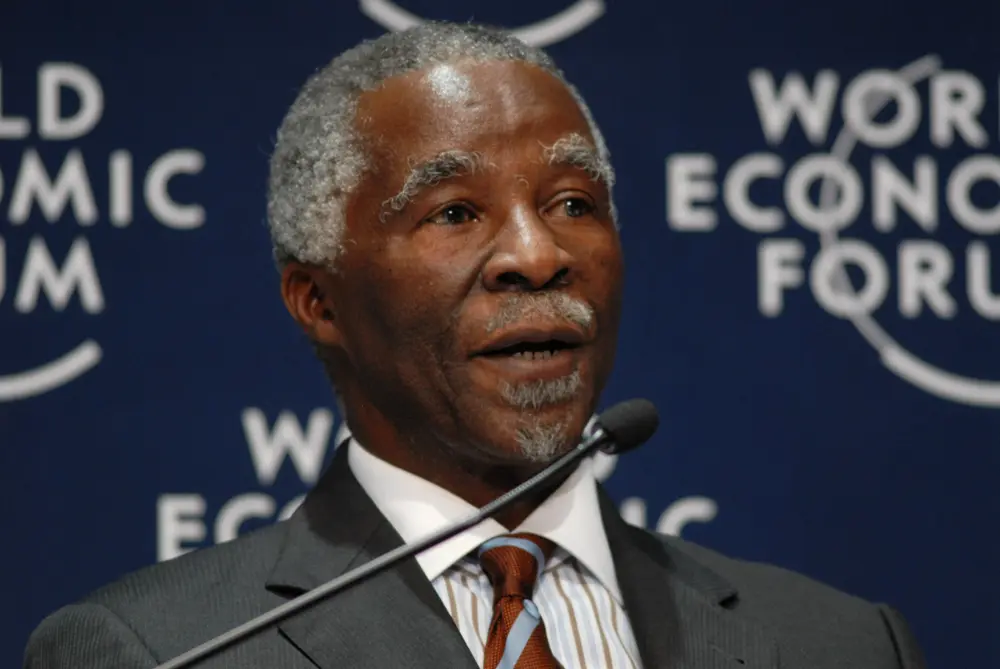
Former president Thabo Mbeki has denied holding secret talks with apartheid-era generals to secure amnesty for crimes they had committed.
Mbeki was testifying before the Khampepe Commission, chaired by retired justice Sisi Khampepe, which is investigating allegations of political interference in cases handled by the Truth and Reconciliation Commission (TRC).
Mbeki is accused of holding secret talks with apartheid-era generals in 1998 to secure amnesty for them and help them avoid prosecution for apartheid-era offences. He is also accused of using his political power to pardon prisoners, bypassing the TRC’s amnesty process.
“It's a complete fabrication. There’s no such thing. There were no such meetings that took place in order to secure amnesty for them," Mbeki said.
He told the commission that there had been a meeting with generals from the South African Defence Force and the South African Police, during which they called for the National Party’s political leaders to testify before the commission before the foot soldiers did.
According to Mbeki, the generals said that if their political principals did so, they would then appear before the amnesty committee to explain what they had done to implement decisions made by their leaders.
The generals wanted to avoid a situation in which foot soldiers who had carried out their political principals’ decisions appeared before the commission before those principals had testified, Mbeki said.
“The generals raised a problem they faced and they said to us that what they thought needed to happen was for their political principals, namely President FW de Klerk and his cabinet, to appear before the amnesty committee to tell the truth about what they did in relation to the matters addressed by the amnesty committee," Mbeki said.
Mbeki said the ANC subsequently decided to respond by ensuring that its political leadership appeared before the amnesty committee first. The ANC would then approach National Party leaders and urge them to do the same.
“We said we would give them an example by going to the amnesty committee ourselves as the leadership of the ANC," he said.
Mbeki also told the commission that he had pardoned 33 prisoners, including members of the ANC and the Pan Africanist Congress who had been convicted of serious crimes. The pardons have drawn criticism from some who argue that the process bypassed the TRC's amnesty procedures.
“There’s no instance at all when the national executive intervened to stop the prosecution of cases referred to the National Prosecuting Authority by the TRC. Any statement claiming that this happened is a lie. None of that ever happened,” Mbeki said.
Mbeki and his successor, Jacob Zuma, had challenged Khampepe’s refusal to recuse herself, accusing her of bias. The Constitutional Court dismissed the former presidents’ application, ruling that the inquiry under Khampepe must proceed.
Mbeki concluded his evidence-in-chief on Monday, and cross examination will resume on a date to be determined by the commission.