

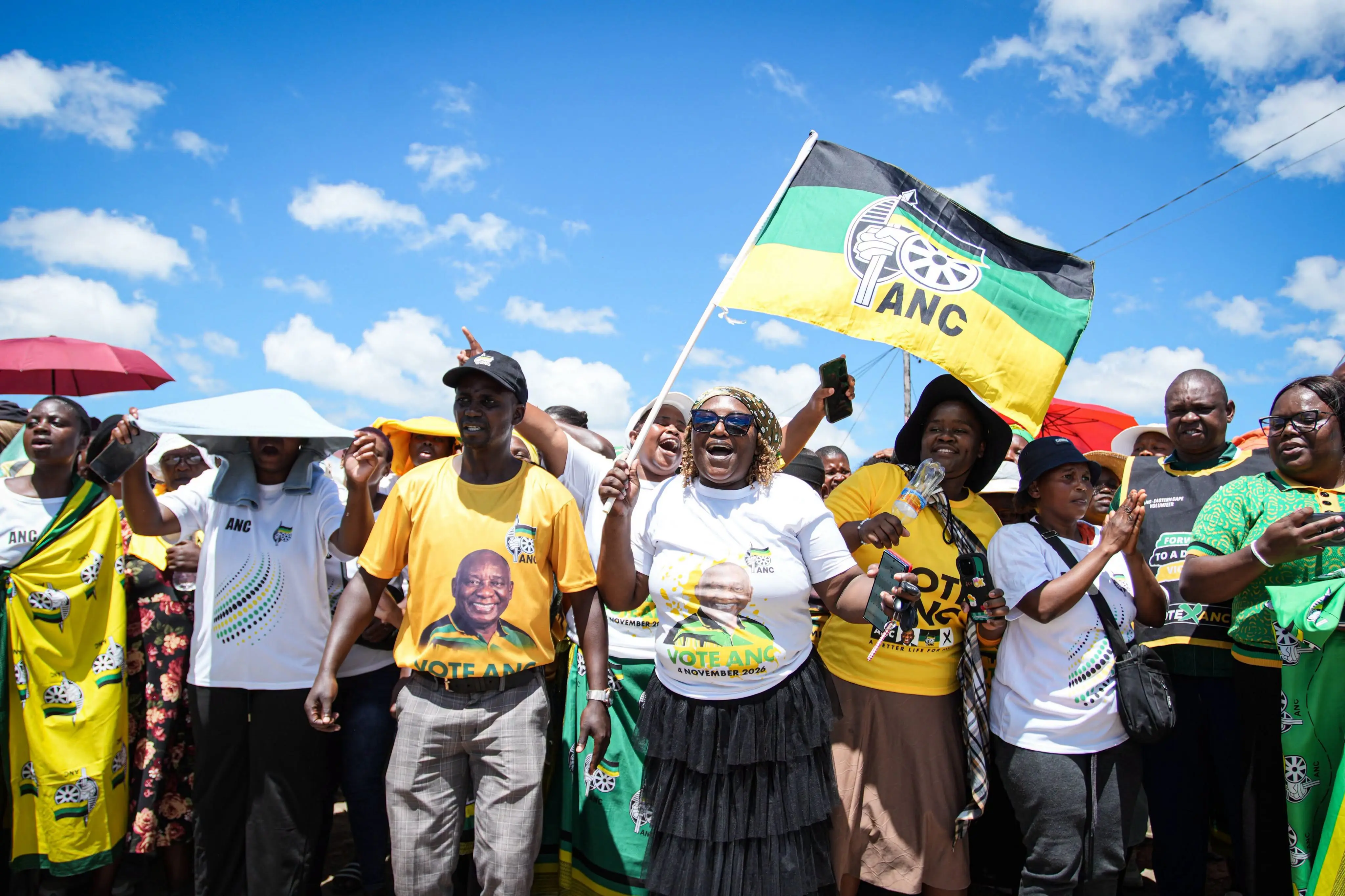
The ANC has endured a turbulent local election campaign, from failing to field mayoral candidates and tension in the tripartite alliance to concerns over Deputy President Paul Mashatile’s health and secretary-general Fikile Mbalula’s collapse after the Constitutional Court reinstated the 181 candidates the party had failed to register before the Electoral Commission’s deadline.
The ANC’s support has fallen from 65% in the 2006 municipal elections to 40.2% in the 2024 national elections. The 4 November local government elections will be a crucial test on whether the once-dominant liberation movement can arrest its electoral decline.
Can the party regain lost ground before the 2029 national elections and remain a key player in coalition governments or will it be relegated to the opposition benches and risk political obscurity?
Recent polling points to more hung councils and continued reliance on multiparty coalitions across major municipalities.
The number of hung councils rose from 27 in the 2016 local elections to 70 in 2021. After the 2021 elections, the Democratic Alliance (DA) controlled 24 councils, while the Inkatha Freedom Party (IFP) governed 16, with other parties taking control of several smaller municipalities.
Projections suggest the ANC could lose at least six percentage points from its 40.2% national vote in 2024, falling into the mid-30s.
Several key battlegrounds are expected to produce no outright winner, among them Johannesburg, Tshwane, Ekurhuleni, Nelson Mandela Bay, Buffalo City and eThekwini, adding to its setbacks in Cape Town and Nelson Mandela Bay, where it has been relegated to the opposition benches.
The ANC faces the prospect of falling below 30% in some areas amid intense competition from the DA in Gauteng and the uMkhonto weSizwe Party (MK Party) in KwaZulu-Natal. Its support in rural municipalities has historically proved more resilient than in urban centres. However, the rise of smaller and regional parties, coupled with persistent complaints about water and electricity supply, could erode its stronghold.
Ipsos projects that multiparty coalitions will be necessary to govern several municipal councils, making post-election negotiations unavoidable. Its polling puts the ANC at 31%, the DA at 25%, the MK Party at 14%, the Economic Freedom Fighters (EFF) at 11%, ActionSA at 6%, the IFP at 3% and the Patriotic Alliance at 2%.
Polling analysis reported by eNCA paints a similarly fragmented picture. In Johannesburg, Markdata projects the DA will lead with 35% support, followed by the ANC at 22%.
News24’s reporting on Sabi polling also points to hung councils in key metros. In Tshwane, the DA is projected to secure 32% support, followed by the ANC at 24%, the EFF at 14% and ActionSA at 11%.
The projections suggest that coalition governments are evolving from a response to the ANC’s declining electoral dominance into a defining feature of South African local politics. The proliferation of smaller parties has further fragmented the political landscape, making it difficult for any single party to secure an outright majority.
Political analyst Wayne Sussman told the Mail and Guardian that the 2026 local elections would also be the last local elections under President Cyril Ramaphosa’s leadership of the party and would be critical for the ANC as it prepared for 2029.
“President Ramaphosa ran a very energetic campaign the past couple of days. It has been a difficult campaign. We have seen Gwede Mantashe fighting with the tripartite alliance and apologising for remarks, Paul Mashatile’s ill health and Fikile Mbalula’s collapsing at the Constitutional Court judgement.”
Sussman identified the three Gauteng metros — Johannesburg, Ekurhuleni and Tshwane — as well as Nelson Mandela Bay, Mogale City and Emfuleni as key battlegrounds where coalition negotiations could determine who governs. He said the ANC’s failure to field mayoral candidates in several municipalities could hurt its performance. “We started seeing a big focus on mayoral candidates in Cape Town from the early 2000s and then an uptick in 2016. Although voters don’t choose the mayor, the ANC missed an opportunity by not appointing mayoral candidates,” Sussman said.
He said voters wanted to know who would lead their municipalities and that the ANC’s failure to name mayoral candidates, unlike other major parties, could weaken its appeal.
However, Sussman noted that the party retained substantial support in rural communities during the 2024 elections, helping it maintain a significant share of the national vote. The elections would provide a clearer indication of the ANC’s remaining electoral support, despite its historically strong rural base.
“We are going to see a lot of parties move into the space and it looks like coalitions will stay. Even though the ANC is very vulnerable, they hold more cards in a coalition than parties like the DA and MK,” he said.
He highlighted the electoral ceiling faced by the DA and EFF, adding that the MK Party might slightly decline from its 2024 breakout performance. Political strategist Jonathan Moakes expects the ANC to perform poorly: “Up until the Constitutional Court ruling, Mangaung was in trouble because they were not putting candidates forward. They will now probably be able to cobble a coalition … It does not look particularly good for them.”
Moakes said factionalism and fears of defections, particularly to the MK Party, might have contributed to the ANC’s reluctance to select mayoral candidates in several municipalities.
He said the party has attempted to use mayoral candidates to strengthen its electoral appeal. In 2016, it nominated Thoko Didiza as its candidate for Tshwane mayor but the decision provoked resistance from party branches.
In Johannesburg, the ANC has considered national executive committee member Frank Chikane, current mayor Dada Morero and deputy mayor Loyiso Masuku, with uncertainty over its final mayoral strategy.
Moakes said losing control of Johannesburg would be damaging because of the city’s economic importance and the potential long-term consequences for the party.
“If they are shut out from Johannesburg … it will be devastating as they lose the economic hub. Especially if they are shut out for a long time, like the Western Cape, their internal structures collapse. Their one saving grace is coalition negotiations,” Moakes said.
He cautioned against assuming the MK Party would repeat its strong performance in the 2024 national elections. Its local election campaign had been underwhelming, pointing to organisational weaknesses, limited funding and internal divisions. The party had also struggled to pro-vide campaign posters for its candidates, he said.
Moakes said the ANC could struggle in the eastern half of Mpumalanga, where substantial Zulu-speaking communities were present. However, it would probably remain relatively strong in parts of the Eastern Cape. Limpopo could deliver some of its best results, while the Northern Cape and North West remained fragmented and difficult to predict.
The ANC’s rural strongholds were also shrinking, particularly if its support in KwaZulu-Natal, Mpumalanga and Limpopo weakened.
“Their campaign has certainly been the worst that I have ever seen. They typically start slowly and build momentum at the end,” he said, adding that the ANC’s final Siyaqoba campaign rally on Sunday, 1 November, would be a test of its ability to mobilise supporters.