


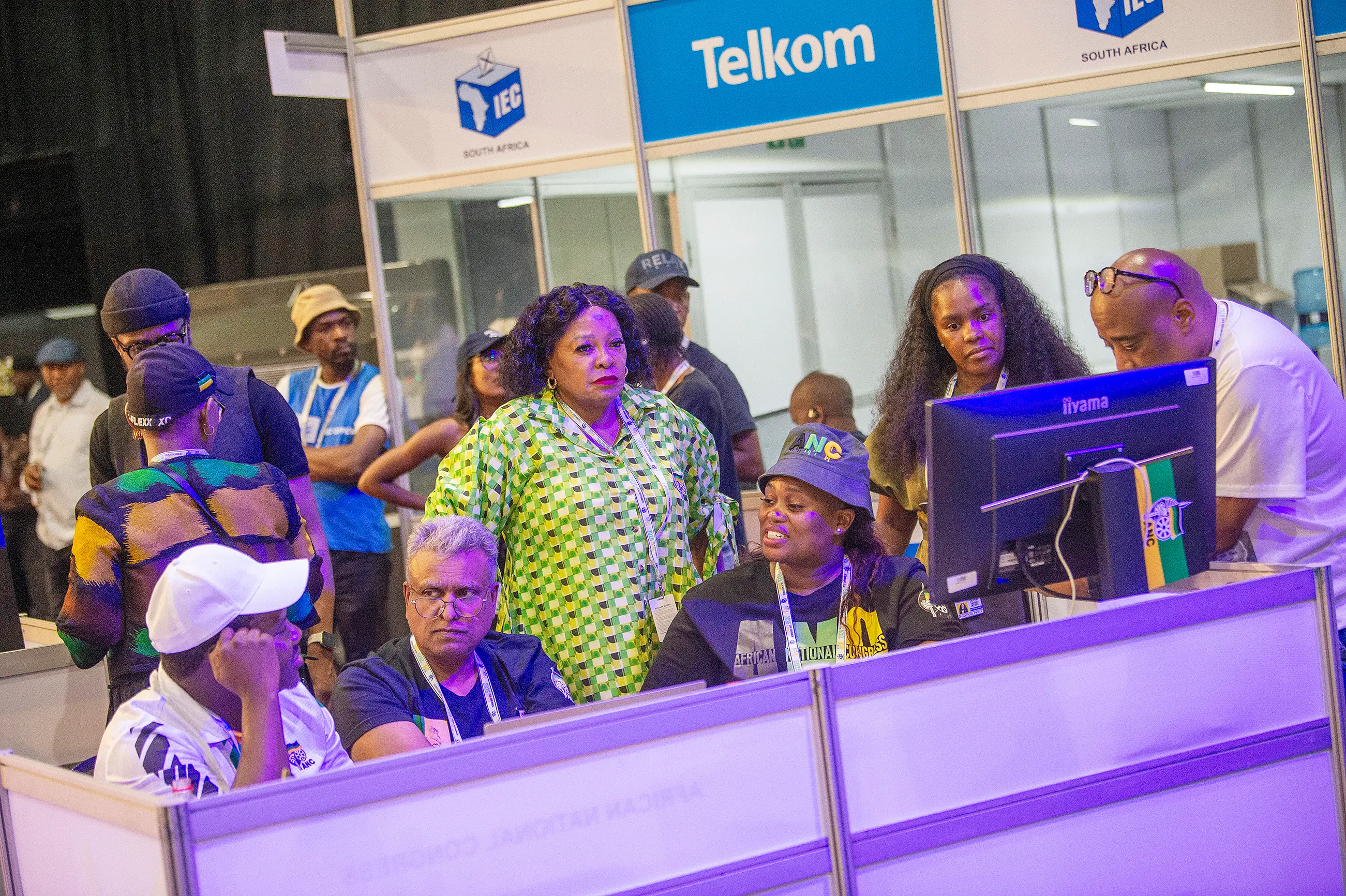
Despite the ANC in Johannesburg saying that it would prefer not to work with the Democratic Alliance (DA) in a coalition in the city, the party might be forced to form a coalition with the blue party, as the numbers on the Electoral Commission of South Africa (IEC) results board indicate that the DA is likely to win the city. The ANC leadership appears to be amenable to working with the DA in Johannesburg, but the region wants to work with parties it considers like-minded.
On Thursday, the DA was leading the race in Johannesburg, followed by the ANC and ActionSA.
Speaking to the Mail & Guardian on Wednesday, ANC Johannesburg regional secretary Sasabona Manganye said that if the national leadership gave the region a mandate to negotiate coalitions on its behalf, the DA would not be its first priority for coalition talks.
Manganye said that despite the challenges they had faced with their coalition partners in the city, they would rather maintain the existing coalition. They were happy not to be working with the DA and would also be happy not to form a coalition with the party in Johannesburg.
“The ANC is not a liberal organisation, so if national was to take a different decision, we are going to abide by that decision. But if they were to allow us to lead the negotiations, I think the DA will be the last party I would want to engage,” he said.
He said that despite that, the ANC was contesting the elections with the aim of winning the city and governing alone. However, historical trends suggested that a coalition was the most probably outcome.
He said the ANC’s coalition framework did not exclude any party, but that the party viewed the DA as a representative of white monopoly capital, which it considered an enemy of the National Democratic Revolution. He added that the ANC would not want the DA to be its first choice in a coalition because the two parties did not advance the same agenda.
“We believe and hope that, just as national allowed the province to manage coalition discussions under its guidance, they will also allow us to lead that process through their guidance. The coalition partners that we have been working with, we have worked very well. Yes, there are weaknesses and areas that we will need to correct when we negotiate coalitions. However, the coalition has been very stable, especially since the ANC took over as mayor.”
Speaking to the M&G at the results centre, DA federal chair Solly Msimanga said the ANC at local and provincial level did not have a say in deciding which parties the DA should work with in a coalition. He said they were therefore not concerned about the Johannesburg region’s opposition to working with the party.
Msimanga said coalition discussions would take place at a national level because the working relationship between the parties needed to be considered broadly rather than focusing only on Johannesburg.
Asked whether the DA would consider working with the ANC across all municipalities, Msimanga said the party was considering its principles before engaging with any political party. He said it was also too early to make any decisions before the results had passed the 50% mark.
“It is going to be a clearer picture if you look at municipalities broadly because it is not going to be about Johannesburg and Pretoria or Ekurhuleni. [Look at] what happens in Nelson Mandela Bay, what happens in eThekwini and what happens in Polokwane, as an example.”
“We need people who are looking at it from a national perspective, where, if we are negotiating at a national level, this is what it means, and if we negotiate at a municipal level, this is what it means.”
Asked whether the DA would be willing to give the Johannesburg mayoral position to another party if it formed a coalition, Msimanga said that for the party, it was not about positions but about principles and what needed to be done when in government.
DA leader Helen Zille was coy about whether she would be willing to work with the ANC in Johannesburg, saying she was not dealing with coalition discussions.
Zille said that if the party did not win Johannesburg outright, it would consider different coalition options. In July 2024, after failed negotiations between the ANC in Gauteng and the DA, Zille said that if her party formed part of a government of provincial unity in Gauteng, it would consider a deal to govern all the hung municipalities in the province together.
The Gauteng ANC at the time refused to work with the DA, with both parties accusing each other of negotiating in bad faith.
At the time, Zille said that if the ANC in Gauteng did not want to work with the DA, it should say so, as her party was comfortable remaining in opposition, which she described as its comfort zone. “We know that the next election is two years from now, which is around the corner; we will see what happens.”
ActionSA president Herman Mashaba said they were willing to work with any political party whose numbers make sense, even the DA, as long as Zille was not involved. Mashaba accused her of being a racist, dishonest and a backstabber.
“There are good people in the DA, they must bring someone else. Us as ActionSA, we can’t support a racist.”
Speaking to the M&G on Tuesday after voting at Orange Grove Primary School, ANC secretary-general Fikile Mbalula said the party would wait for the results before discussing coalitions, adding that he did not have a mandate to declare who they would work with or against.
Previously, Mbalula said the ANC needed to review its coalition arrangement with the DA after the latter joined opposition parties in a Constitutional Court case against the IEC concerning issues surrounding candidate lists. “That decision can only be taken by the national executive committee. All I am is a chief negotiator of the ANC, and I work with the team where there are coalitions and so on.”
Speaking at the IEC results centre on Thursday, ANC deputy secretarygeneral Nomvula Mokonyane said the party was open to engaging with anyone, irrespective of the positions they held towards it. The engagements would be guided by principles. Mokonyane said the numbers reflected on the IEC results board showed a recovery from the 2016 local government elections, when the party lost Johannesburg.
“In 2021, we actually recovered but not to our satisfaction. Now we have also grown a bit; however, we have declined if you look at 2021. We remain a very key player in bringing stability in Johannesburg, and upon receiving the final results, we will consider putting together a package that promotes stability, efficiency and accountability.”
Mokonyane added that it would be premature to discuss whether the ANC would work with its current coalition partners in Johannesburg or even the DA. She said the party needed to consider the characteristics of the various political parties available for possible coalitions.
Asked whether the ANC would allow the region to negotiate coalitions independently, she said all decisions concerning the way forward would be determined by the party’s national leadership, working with the regions and provinces.