


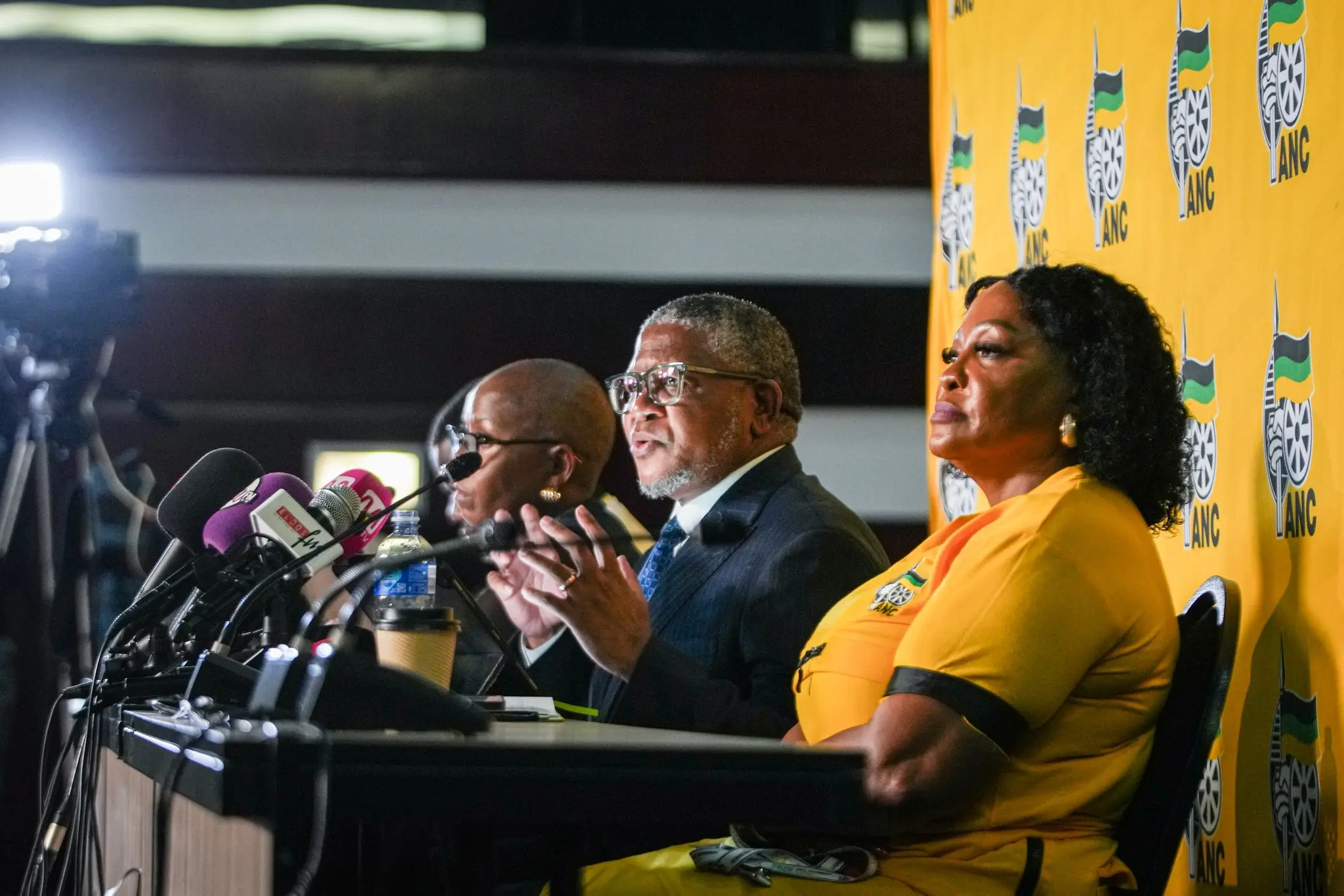
The African National Congress (ANC) struggled to convince voters to support it in communities where residents were frustrated by water shortages, electricity problems and the rising cost of living, secretary-general Fikile Mbalula has acknowledged, as the party begins confronting the scale of its losses in the local government elections.
Reflecting on the campaign, Mbalula described volunteers going door to door to persuade residents to vote for the governing party, only to be confronted with complaints about basic services. In some areas, he said, campaigners found it difficult to defend the ANC when residents were still struggling to access water and electricity. The rising cost of petrol and other household expenses had made the task even harder, with some people unable to afford to use their cars as frequently as they would like.
“You don't need many ways to convince the person that don't vote for the ANC,” Mbalula said, describing the difficult conversations taking place on the campaign trail. His comments offered an indication of the challenge facing a party that has increasingly struggled to persuade voters that it can address problems in municipalities where it has governed. Although the ANC remains the largest party nationally, Mbalula described the election outcome as catastrophic for the organisation, acknowledging that its history could no longer be relied on as a reason for people to keep voting for it.
“Our history gave us a responsibility to serve. It does not give us an entitlement to govern,” he said. But Mbalula's assessment extended beyond service delivery. He acknowledged that internal divisions had also weakened the party in some communities, particularly where disagreements over candidate selection left residents unhappy with the people chosen to represent them. In some instances, he said, communities had responded by voting for independent candidates or supporting individuals who had been overlooked by the ANC.
He also admitted that some senior party leaders who had been deployed to campaign in particular areas were not visible on the ground, although he praised volunteers and other members who had worked extensively to reach voters. He said the party needed to examine whether its campaign had been effective rather than rush to defend its performance or blame individuals.
“There are probably certain things we did not do that we're supposed to do,” he said, adding that the ANC could not allow organisational problems to continue unchecked. “We can't put up with wrongness for a long time.”
The decline was also reflected in the figures Mbalula presented at the briefing. Comparing the ANC's performance with the 2021 local government elections, he said the party had held 4,548 of 8,794 council seats, representing 51.7%. Based on the Electoral Commission's allocations available at the time of the briefing, it held 3,040 of 8,825 seats, or approximately 34.5%. This represented a loss of more than 1,500 seats.
Mbalula questioned whether low voter turnout had contributed to the ANC's decline, arguing that opposition parties had benefited from stronger participation among their traditional supporters. He pointed to the gains made by ActionSA in townships and the Democratic Alliance in areas where its support base had turned out in greater numbers. He also challenged suggestions that the DA had benefited directly from its participation in the Government of National Unity, saying the reasons behind changing voting patterns required closer examination.
The ANC's immediate challenge will be deciding how to govern municipalities where it no longer has an outright majority. Mbalula said the party was not prepared to rush into coalition agreements simply to retain political positions. It would consider coalitions, confidence-and-supply arrangements or remaining in opposition, depending on the circumstances in each municipality.
He said there were no formal coalition negotiations underway at the time of the briefing and insisted that the ANC would not enter arrangements through informal deals or political horse-trading. The party would have to consider whether participating in a coalition would allow it to govern effectively and serve communities.
Deputy secretary-general Nomvula Mokonyane said the results would inform a broader process of organisational renewal. ANC branches would be expected to examine what went wrong in their respective wards and identify the changes needed to improve service delivery and reconnect with communities. She said the party's recovery ahead of the 2029 elections had to begin immediately.
Mbalula said the ANC's leadership would conduct a detailed assessment of its campaign, internal organisation, coalition experiences and the reasons voters had turned away before deciding on a way forward. He cautioned against offering quick solutions before the party had properly examined its performance.
For the ANC, the election has left more than a question of how many municipalities it can retain. It has raised a harder question about whether the party can rebuild the trust of communities that have become increasingly difficult to convince. Its response will depend not only on what it says during its post-election review but on whether residents begin to see a difference in the services they receive.