


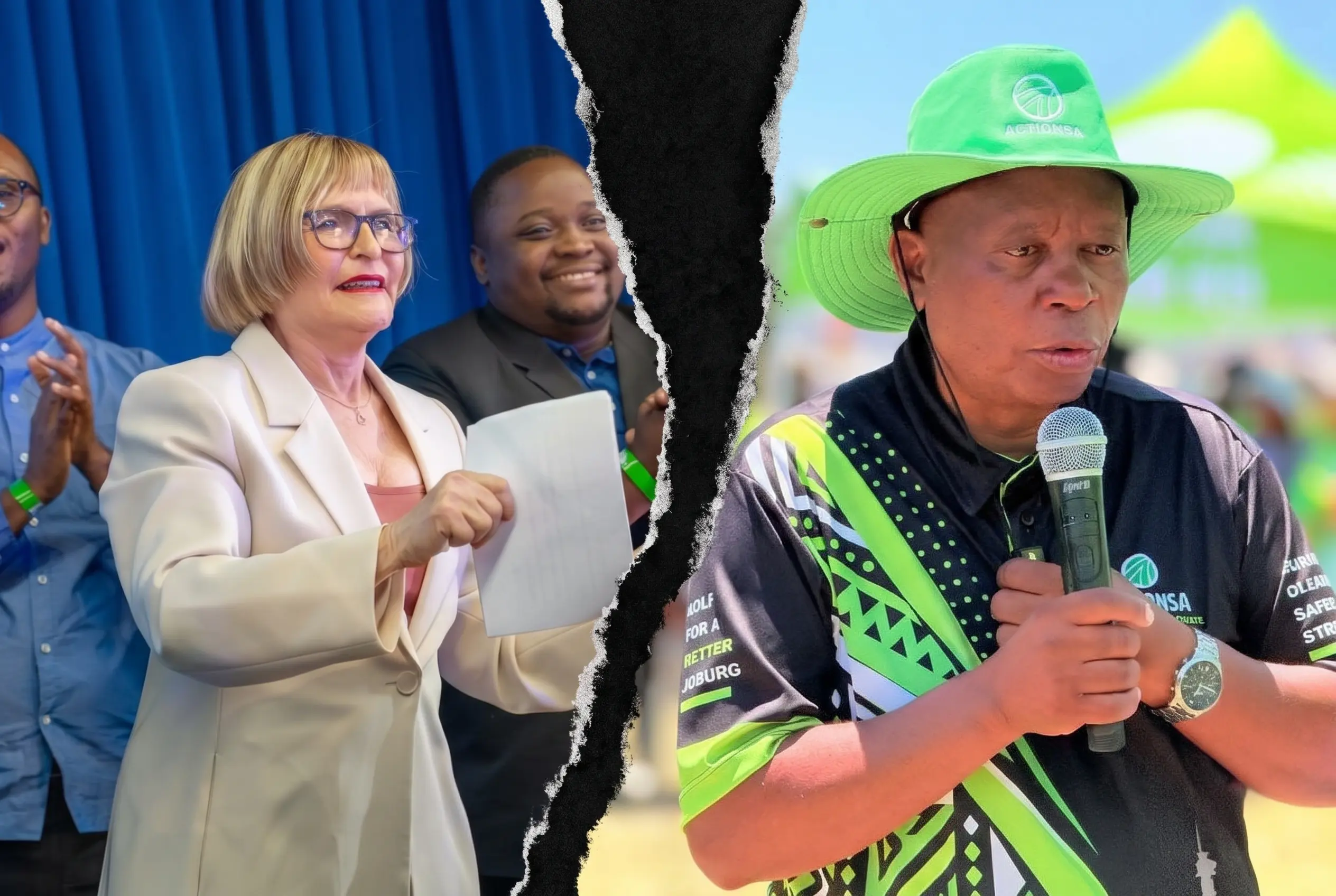
The Democratic Alliance (DA) and ActionSA could find themselves having to set political differences aside as coalition negotiations take shape in Gauteng’s major metropolitan municipalities following the 2026 local government elections.
With no outright winner emerging in several councils, including the City of Johannesburg and Ekurhuleni, the two parties are among those whose electoral support could prove decisive in determining who governs the metros.
Political analyst Vusi Gumbi said coalition negotiations were likely to be complex, with the outcome in each municipality depending on the numbers, the parties involved and the conditions attached to possible agreements.
He said political parties needed to remain flexible while being careful not to compromise on their core principles.
Although the DA appears to have secured the largest share of support among the three major parties in these metros, this does not automatically translate into control of the municipalities. ActionSA’s support could therefore become an important bargaining factor in negotiations.
However, the relationship between the two parties has not always been straightforward. Their political differences and competing expectations around leadership positions could complicate efforts to reach an agreement.
The analyst also cautioned against taking parties’ pre-election coalition promises as definitive, citing previous elections in which political leaders who had ruled out working with certain parties eventually entered into agreements with them.
He said negotiations were dynamic and that an arrangement suitable for Johannesburg might not necessarily work in Ekurhuleni or Tshwane.
As parties begin considering their options, the challenge will be finding common ground without allowing disagreements over political influence and leadership to derail the formation of stable local governments.