


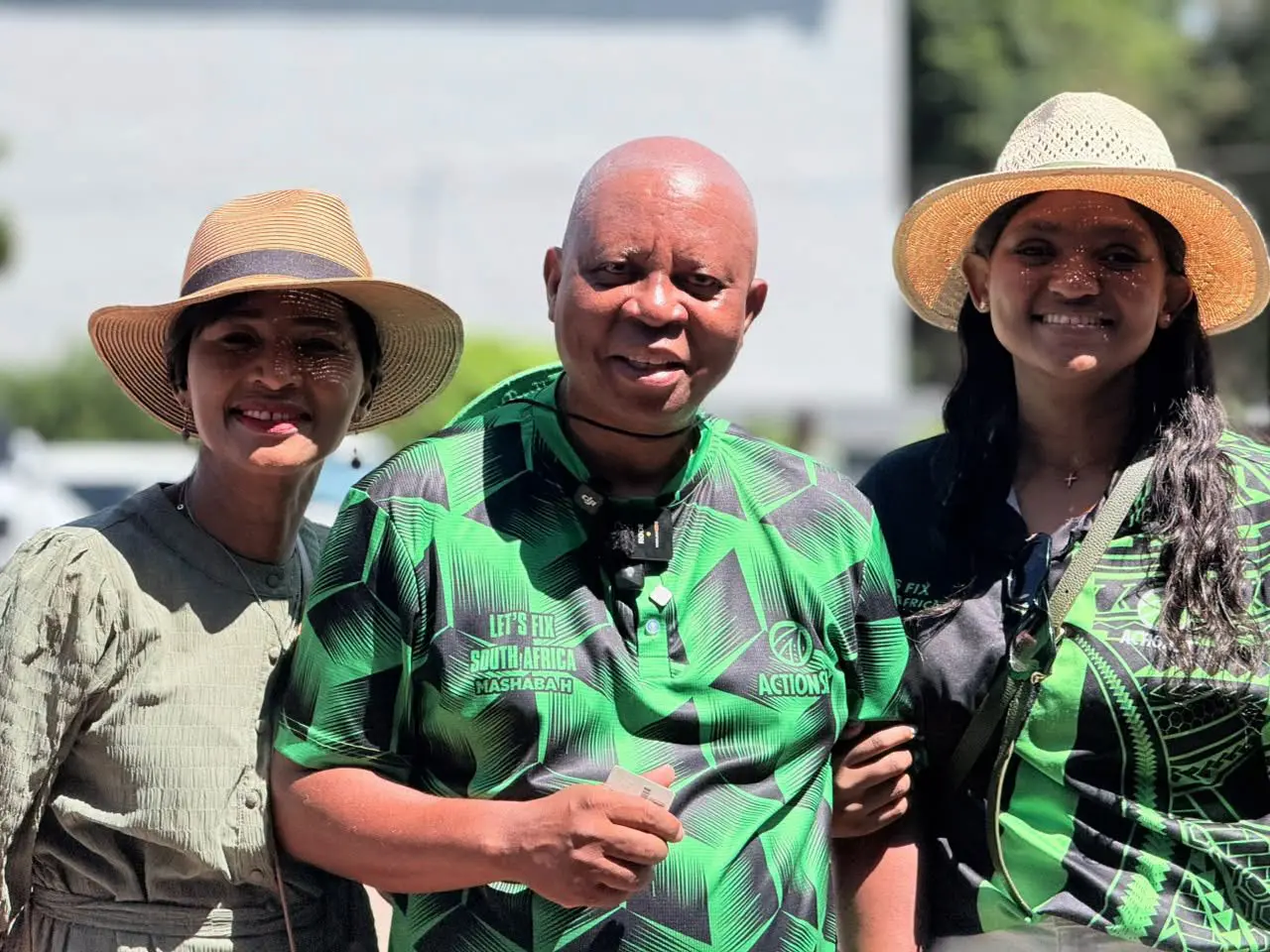
Stricter immigration enforcement. A professional public service. Water reform. Building projects. These are some of the focus areas for ActionSA Joburg mayoral candidate Herman Mashaba’s first 100 days in office should he ascend to power next week.
Mashaba says he will initiate a deal with national government to establish city-funded facilities where undocumented immigrants will be processed and deported.
He said he would also establish a unit in the Johannesburg metropolitan police department (JMPD) that would focus on undocumented foreign nationals.
“I’m not going to wait for them to say they don’t have the money to keep these people. We will have a memorandum, we will negotiate with the national government, Home Affairs and SAPS for the city to pay for those facilities so that when we find undocumented foreign nationals, we put them there and they can come and process them there. If they find that they don’t qualify to be here, they can send them back.”
He said the JMPD would have a dedicated unit to ensure that undocumented, as well as documented foreign nationals, did not operate spaza shops.
“You can’t run a spaza shop in Soweto and Alexandra. We are going to pass this strict by-law that no foreign national, illegal or legal, will run a spaza shop.”
With the Economic Freedom Fighters’ (EFF) position on migration differing from that of ActionSA, questions have been raised about whether the proposed coalition between the EFF, ActionSA, the ANC and the uMkhonto weSizwe Party would last for the next five years.
Mashaba said the issue would form part of the coalition agreement they were going to sign.
Responding to questions from the M&G in Ekurhuleni on Wednesday, EFF secretary-general Marshall Dlamini said there had been no hindrances on the issue.
On tackling crime, Mashaba said he would expand the JMPD. He had committed in his manifesto to having at least 2500 police officers within five years. He wanted to begin with the recruitment of at least 500 police officers by February, followed by another 500 each year.
“The police play a very important role in building any nation.”
To address the persistent water crisis, which has left several communities without water, Mashaba said he would replace the environment and infrastructure department with a dedicated water department. He added that he would personally lead the water crisis action plan.
“In our proposal, we are taking water out of EID. We are having a department specifically for water. I’m going to need a water crisis plan because water is life. You will see there is going to be an MMC for water and sanitation.”
He said that understanding the city’s finances would be crucial to its turnaround strategy. One of the first things he would do was balance the city’s books.
“In the event that I’m elected on Friday, on Monday I need to get together with the city manager and all the Section 56 managers to really make sure that we understand how to balance the books, so that by the end of February we can present a funded budget.”
During his first tenure as mayor, Mashaba introduced the Inner City Rejuvenation Action Plan, which saw several hijacked and abandoned buildings being taken over by the city and sold to private investors, who would then convert them into affordable housing. He would table the report on the plan before council. One of his biggest fears after leaving office was that the policy would be rescinded but it had remained.
“I need to table this report for noting so that we can start working with the private sector to reclaim the city and turn it into a construction site.”
“I can guarantee you, if elected mayor of Johannesburg, within the next six months, the City of Johannesburg will become a construction site. When I left, I had identified 643 properties and had awarded 154 properties. That project has stalled, but luckily that policy is still in place.”
Communities across Johannesburg continue to suffer from potholes and the government’s failure to provide basic services, leaving some residents questioning whether the current political status quo is capable of turning their fortunes around.
Many homes and streets in Soweto, Alexandra, Diepsloot and Orange Farm, among other areas, are flooded by sewage, posing a health hazard.
In addressing the challenges, Mashaba described himself as a practical man, saying it would be unfair for him to promise to repair all streetlights within 100 days.
“Obviously, I know that streetlights are very important, as are potholes, road infrastructure and so forth. But it would be wrong to make statements right now when I don’t know how much money I’ve got … I’m sitting with an unfunded budget and I’ve first got to balance the books.”
Mashaba said that within 90 days, he would present an institutional review to council, with the aim of dismantling entities such as Joburg Water and City Power, which operate as companies. He wanted them run by executive directors who would report directly to the city manager.
Mashaba said that within his first 90 days, his administration would conduct a skills audit, starting with senior management. He wanted to create a professional public service. “If it’s rotten at the top, then nothing works. We will make sure people are in jobs because of what they know.”
Mashaba said he would also conduct a feasibility study into insourcing and building internal capacity, rather than limiting insourcing to security personnel and cleaners.
He said the aim was to build internal capacity.