


You know that old saying, “the enemy of my enemy is my friend”? Apparently, the enemy of my enemy, even though also my enemy, is also a potential coalition partner.
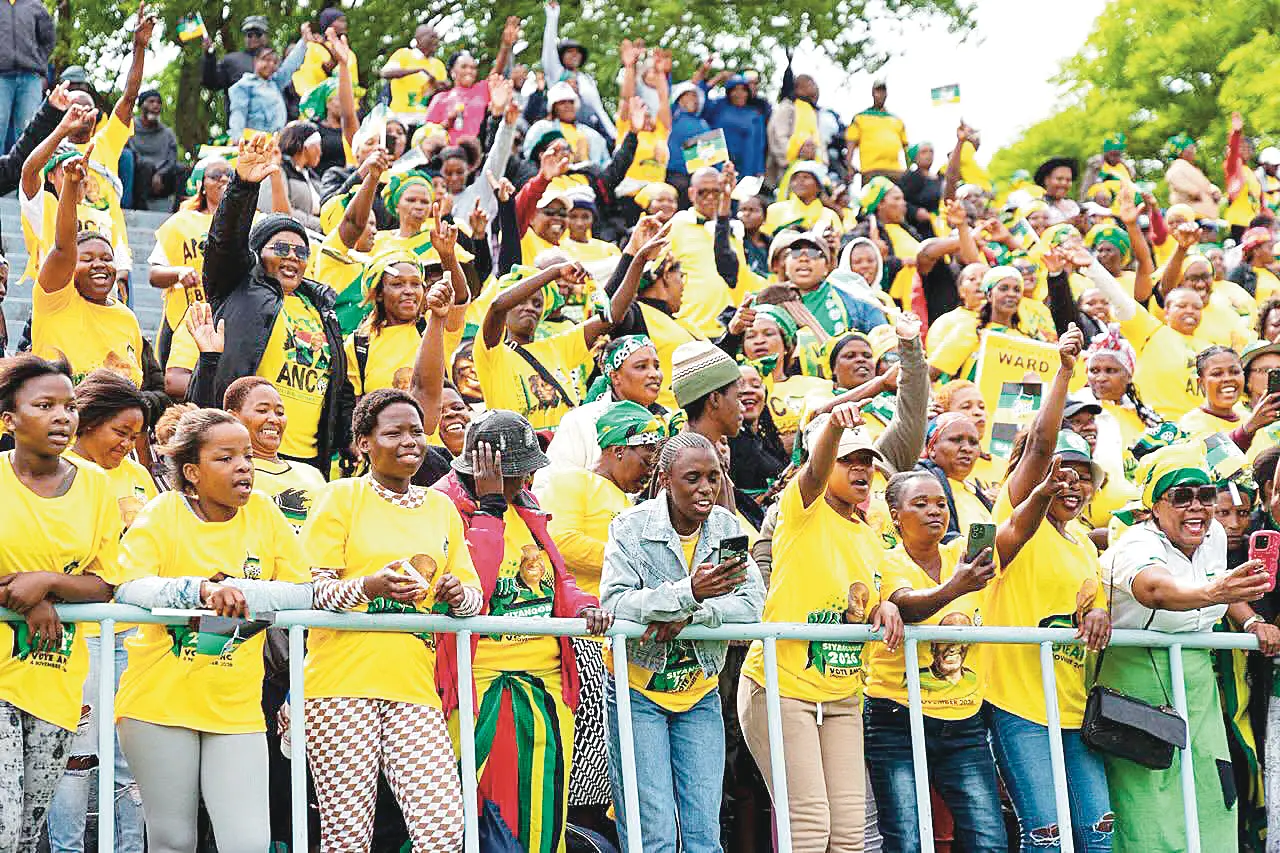
South African politics has taken that old proverb and given it a municipal makeover. Despite coming in second in Johannesburg and Ekurhuleni, and third in Tshwane, the ANC has joined fellow losers ActionSA, EFF and MK Party in common cause as a coalition of minority parties to snatch victory from the jaws of defeat and keep the supposedly winning DA out of power.
The foursome totals 138 seats in Joburg — two more than needed to get a majority, with the ANC and Action SA holding the bulk (106 combined). Hardly a mandate, but hopefully functional. And even though the EFF and MK Party’s totals are much smaller, the tiny increment over 50% makes their participation critical. Every seat counts. The situation is similar in the other municipalities.
If you voted for one of these four parties, you surely did not envision yours allying with these others. Put the four in a room together previously and you might expect someone to call security. It’s a marriage of convenience that you would normally expect to last about as long as a Las Vegas marriage. Except what may hold it together more magnetically is that for all four, it’s also an insurance policy.
The ANC is insuring against becoming an opposition party. ActionSA is insuring against being seen as a DA offshoot. The EFF is insuring against being shut out of executive power as its electoral share diminishes. And the MK Party is insuring itself to be part of the mainstream.
The four parties have vastly different conceptions of how to govern. Their fears are different, their ambitions contradictory, and their policy positions dissociated from one another. But for now, they have found a simple common interest: keeping the DA out.
Voters have watched the various parties campaign against one another, denounce one another, and promise to rescue them from the very people with whom they are now preparing to govern collectively.
Such fun!
What tangible benefit does this Machiavellian bargain get them all?
Action SA aims to snag the two prize mayoralties (Joburg and Tshwane) and a number of key portfolios.
The ANC, to take the mayor’s position in Ekurhuleni, deputy mayor everywhere, and important portfolios such as finance, roads, transport, and human settlements, as well as the speakerships. EFF may get the important positions of health, environment and agriculture in each city.
In short: the ANC keeps its fingers on the buttons of power; ActionSA gets to demonstrate that it can govern and become a viable national alternative; the EFF gets to move from opposition to executive responsibility; and MK Party establishes itself as an institution.
Meanwhile, the DA sits peering through the looking glass, wondering what has happened.
Helen Zille has taken the whiplash defeat to heart after the DA’s brief triumph. She has accused the four partners of negotiating in bad faith, describing their arrangement as a “doomsday coalition”.
Many feel Zille and her team are at fault, having misread the political landscape, assuming that being the largest party would make ActionSA a natural partner, underestimating Mashaba’s ambitions, overestimating the DA’s leverage, and failing to create their own coalition fast enough.
What Zille and the DA didn’t count on was that a year plus of pre-election campaigning would matter less than the developments in the fortnight after the election.
Yes, it’s an irony that the DA benefited from precisely this technique in 2021. The ANC was the largest party in all three Gauteng metros, but DA-led machinations put the DA in government.
Yes, another irony is that the EFF and MK Party are products of anti- ANC rebellions, just as ActionSA’s departure from the DA produced one of the DA’s most consequential competitors. Now they’re all jumbled up, pulling together.
And yes, yet another irony, almost poetic — the ANC relying on Herman Mashaba, a former DA mayor, leading his DA breakaway party to keep the DA out of power. Did anyone see this coming a month ago?
ActionSA now becomes a kingmaker, not just for the ANC but also for itself. Like any kingmaker, it risks being thrown into the dungeon when things start to go sour. Will the ANC accord ActionSA the level of respect it deserves? Or will it succumb to the same type of first-place snootiness that has shut the DA out?
The ANC has suffered its worst loss in history, yet it remains central to Gauteng political power. Being the most voted party in the coalition gives it pole position, even without the mayoralties. Like a company whose customers are bailing but whose competitors still need access to its distribution network, the ANC can remain potent even as its market share dwindles, by being the best of the runners-up.
How might the coalition change the current Government of National Unity? The GNU will not abruptly collapse. But the situation does seriously test its founding premise. It becomes an increasingly peculiar arrangement: the government forged in the Union Buildings shivers as the ANC and DA play out their rivalry in the municipalities.
The ANC might be careful about celebrating the coalition too massively. It hasn’t exactly acquired three loyal BFFs. These are frenemies and their peace treaty is fragile. ActionSA, the EFF, and the MK Party have not signed up to help the ANC recover its former glory. Each is here for themselves.
Will the coalition hold?
What will happen after the photographs and smiles and speeches and handshakes?
Will these parties manage to roll up their sleeves and govern together?
In leading this coalition, the ANC may be digging its own future grave, helping fortify the competition it will face in the next election. While the ANC buys time to overcome its diminishing appeal, the other three parties get an opportunity to establish themselves, build networks and demonstrate what they are capable of.
They may attract voters who have abandoned or will yet abandon the party of liberation. If the ANC performs worse next time, it can only blame itself for helping its competitors master the business of government.
Yes, the ANC and friends have outsmarted the DA for now. But ultimately South Africans need delivery. Our growing water crisis, ongoing electricity problems, mounting financial pressures and crumbling infrastructure need serious attention. Our citizens are more interested in what’s coming out of the taps than in the ingenuity needed to keep out Mayor Zille. A coalition agreement is not a civic turnaround strategy.
Yes, the ANC has shrewdly created a gap for itself to heal. Can it use this gap well? Will it confront its factionalism, reinvigorate its leadership, fix what is broken, and give voters a reason to reconsider their rejection of the party? Or will it spend the next few years congratulating itself on having survived another political crisis, but achieving nothing? We have heard the language of renewal many times before. The ANC has never been short of resolutions, commissions, conferences, or promises. What voters want is evidence that the party is prepared to lead the coalition genuinely, to bring real change for the benefit of the populace.
The ANC should not mistake the DA’s failure to organise well for a vote of confidence. To stay in power, it has strengthened its fiercest competitors, and if it is not careful, we may discover in a few years that this coalition did more to help South Africa prepare for life after the ANC, than to elevate the ANC itself.