

Water Hyacinth
latest news & developments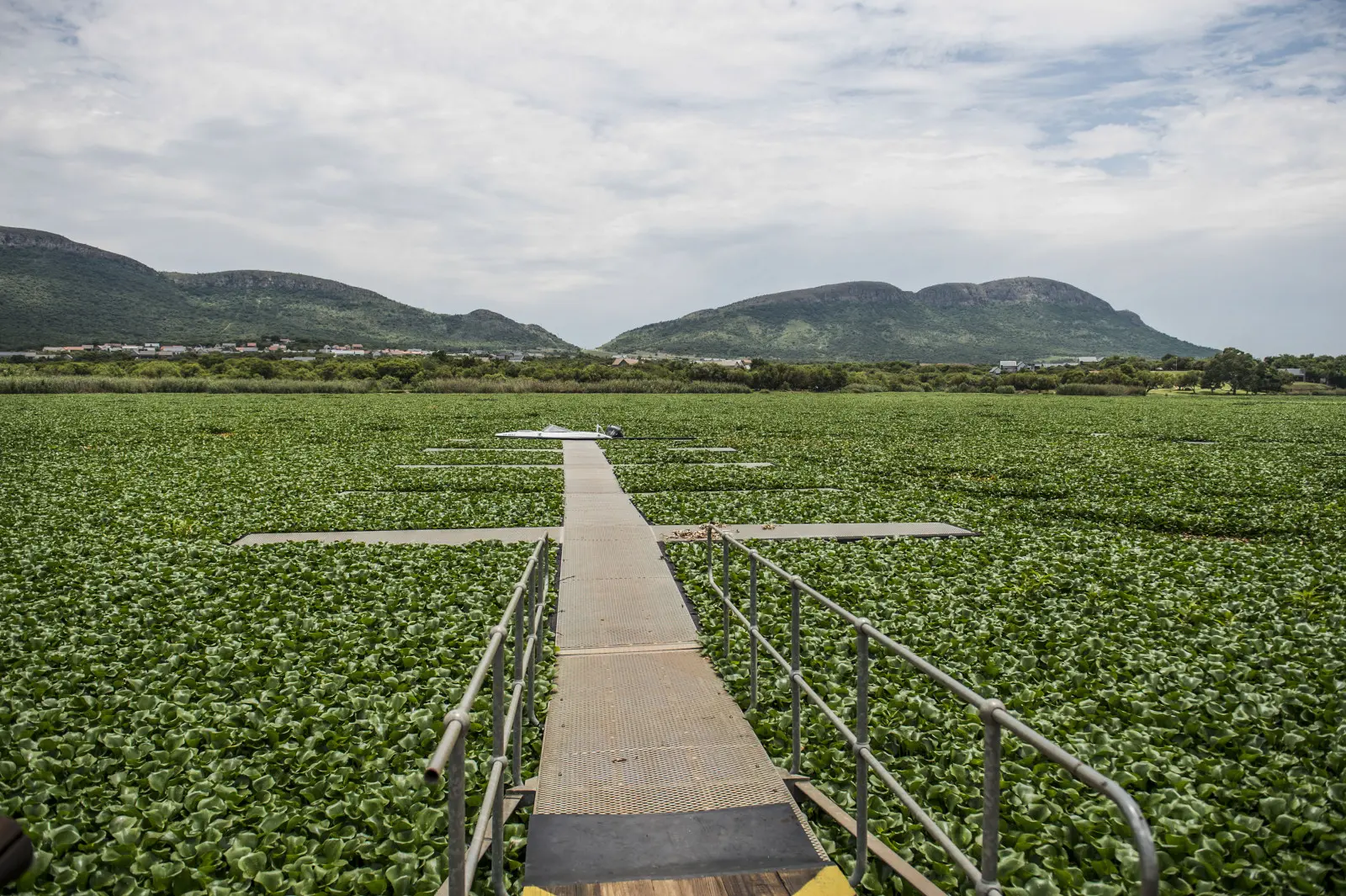
A 50-year seed bank and tiny hoppers: Hartbeespoort’s water hyacinth battle
Tiny biocontrol insects, released by the Centre for Biological Control, are preventing flowering and suppressing growth — a long-term solution to South Africa’s most problematic…

Tiny bugs winning the fight against invasive water hyacinth in Hartbeespoort Dam
Without biocontrol, Hartbeespoort Dam could be 70% covered in superweed

Invasive weeds cleared from Vaal River through community-government collaboration
This was achieved through a partnership involving the Vaal community, Rand Water, Rhodes University’s Centre for Biological Control, the water and sanitation department and the…

Developing a bioeconomy in Africa could drive nature-positive economic growth
But more research, development and innovation, as well as investment is needed

Powerful insect army reduces water hyacinth on Hartbeespoort Dam to 2.5%
The tiny planthoppers are biological control agents and natural enemies of the world’s worst aquatic weed

Vaal River residents say water lettuce is ‘national crisis’
If allowed to pass the Vaal River Barrage, the plant has access to a journey of about 1 000km of the middle and lower Vaal river, the Bloemhof Dam and then into the Orange river

SA rivers, dams, used as waste disposal systems, says ecologist
The nutrient enrichment problem can’t be solved unless appropriate levels of wastewater treatment are applied
Tiny bugs reduce water hyacinth on Hartbeespoort Dam to 5%
Biological control is effective but the real solution would be to fix wastewater treatment plants in Joburg and Pretoria and stop sewage spills

Bottoms up! Gin crafted from invasive water hyacinth plaguing Bronkhorstspruit Dam
Green Devil and Purple Monster gins are made by resident at the water’s edge using the otherwise-unwanted superweed

Contaminated or none at all: South Africa’s water affairs are cause for concern
With La Niña bringing much-needed rain, it is inexcusable that South Africans do not have access to their most basic human need: water
Insect army winning war against invasive superweed in South Africa’s waterways
Tiny bugs – water hyacinth planthoppers – have reduced the coverage of an invasive superweed to below 5%

Insect army winning fight against invasive water hyacinth
The coverage of the invasive superweed has been reduced to 12.5% from 40% in February

Insect army tackles Hartbeespoort Dam’s water hyacinths
About 300 000 planthoppers have been released on Hartbeespoort Dam to control the green horror

South African rowing in peril as Roodeplaat dam gets choked by plant colonies
Poorly treated wastewater in Tshwane is to blame for the water hyacinth and cyanobacteria colonies