


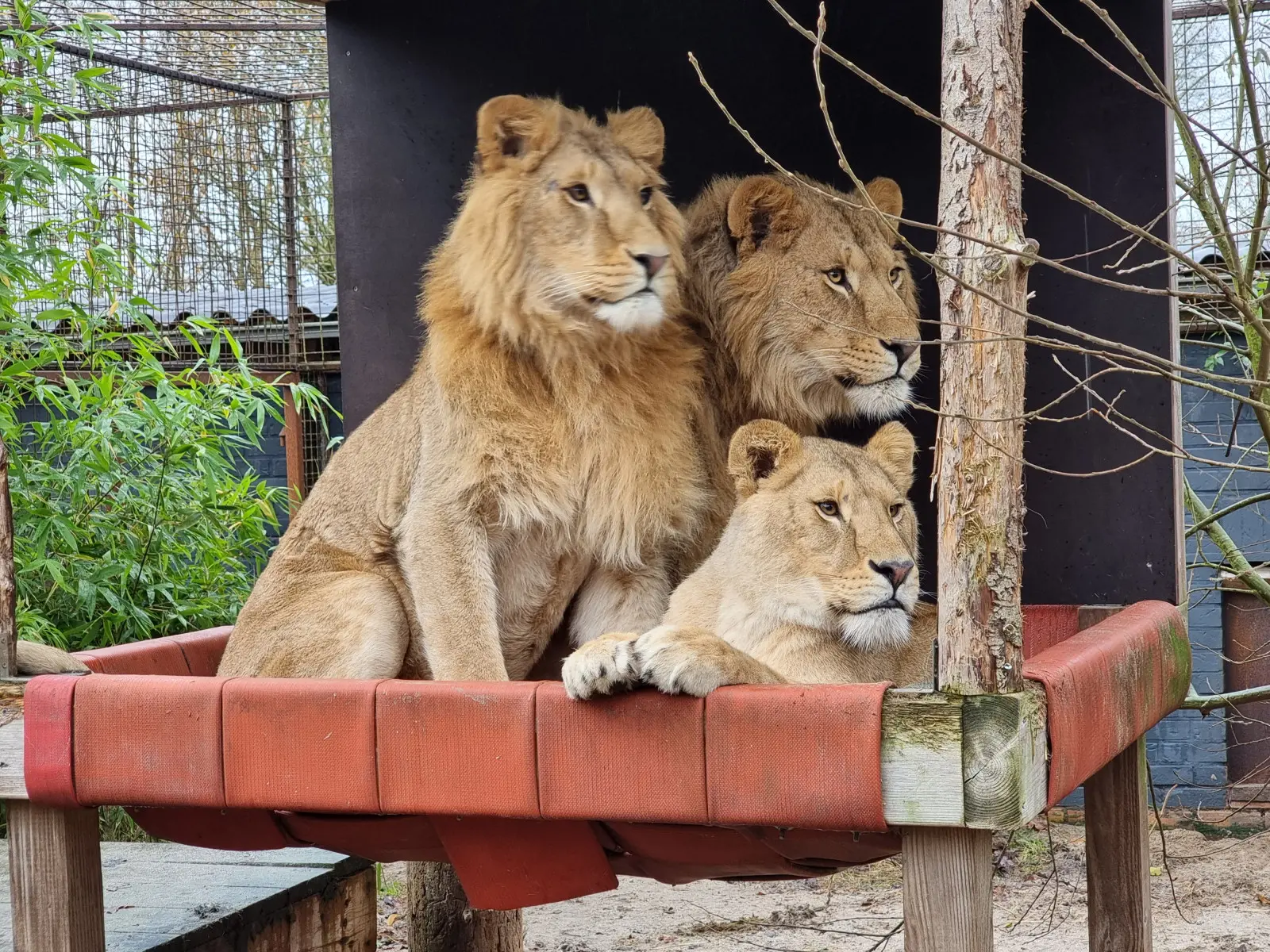
South Africa’s commercial captive lion breeding industry remains legal and largely operational more than five years after the government committed to phasing it out.
The conservation and animal welfare organisations say the gap between government policy and what is legally permitted remains significant, despite years of parliamentary scrutiny, expert reviews and government commitments to phase out the industry.
“The key message today is that there remains a significant gap between policy intentions and reality,” said Fiona Miles, the director of Four Paws South Africa, at a recent briefing marking World Lion Day.
“The government has committed to phasing out the captive lion breeding industry, yet captive lion breeding remains legal and the industry remains largely operational.”
Four Paws South Africa, Humane World for Animals South Africa, Voice4Lions and Blood Lions are calling for South Africa’s captive lion population to be the last generation bred for commercial exploitation.
They want the government to prohibit the establishment of new captive lion breeding facilities and prohibit the breeding of captive lions.
The issue has been under scrutiny since 2018, when parliament’s portfolio committee on environmental affairs held a two-day colloquium on captive lion breeding for hunting and the lion bone trade. The committee called for an urgent policy and legislative review with a view to ending the practice.
The then-environment minister Barbara Creecy subsequently appointed a High-Level Panel to review policies and practices relating to the management, breeding, hunting and trade of elephant, lion, leopard and rhino.
When the panel’s report was released on 2 May 2021, Creecy adopted its majority recommendations on captive lion breeding. The panel recommended that South Africa should not captive-breed lions, keep lions in captivity or use captive lions or their derivatives commercially.
At the time,she said she had instructed the department to action the recommendations and undertake the necessary consultation for the implementation of phasing out the commercial captive lion industry.
The panel found that the captive lion industry posed risks to wild lion conservation, tourism and South Africa’s international reputation, while the trade in lion parts created risks of stimulating poaching and illegal trade.
In December 2022, Creecy appointed a ministerial task team to assess the industry and identify voluntary exit options and pathways out of it. Cabinet approved the task team’s final report and recommendations for implementation in March 2024.
The policy position on the conservation and sustainable use of elephant, lion, leopard and rhinoceros, published in April 2024, set out the government’s objective to end the captive keeping of lions for commercial purposes, close captive lion facilities, halt intensive breeding in controlled environments and end the commercial exploitation of captive and captive-bred lions.
“The reality is that the industry that the government has committed to phase out remains largely operational,” Miles said. “For lions on the ground, what matters is what is legally permitted today and not what may happen in the future.”
Prohibition notice
One of the key legislative steps has been a proposed lion prohibition notice. The department first published a draft notice in September 2023. An amended draft was published for public comment in November 2024.
In July last year, former environment minister Dion George said his department was making progress towards promulgating the prohibition notice banning new captive lion breeding facilities for commercial purposes.
The notice, which implements recommendations from the ministerial task team and the government’s 2024 biodiversity policy, had completed key administrative steps and was awaiting promulgation by the executive authority.
But the notice has yet to be promulgated and is therefore not yet in force. If promulgated, the notice would prevent new captive lion facilities from being established, but it would not provide for the closure of facilities or the removal of lions in captivity.
Linda Park of Voice4Lions said the distinction was important because public expectations had become confused. “The notice prohibits the opening of new facilities but does not bring existing infrastructure to an end.
“And that’s also an important thing to remember because people talk about the whole industry is going to come to an end but what happens to the existing infrastructure is unknown at this stage.”
Park said delays in implementing the government’s policy had created uncertainty and could make a future phase-out more difficult as lions continued to be bred into captivity.
Blood Lions director Dr Louise de Waal said the captive lion population remained substantial. There were about 8 000 lions in 350-odd facilities and that hadn’t changed,” she said.
De Waal said the prohibition notice had gone through the required processes and was “sitting on the minister’s desk for promulgation”.
She said years of evidence-based policy processes had been disrupted by successive changes in the environment portfolio, leaving the NGO sector uncertain about the progress of the phase-out and the next steps required.
One province has moved further than the national process. In February, the Mpumalanga Tourism and Parks Agency announced that it would no longer allow captive lion breeding, the establishment of new facilities or the import of captive lions. Park described Mpumalanga as “well ahead” of the national process.

Lion bone trade
The lion bone trade provides another example of the gap between policy and implementation. South Africa has not had a legal export quota for captive-bred lion bones since 2019, according to the ministerial task team’s report.
Lion bones are exported predominantly to Southeast Asia, where they are used as ingredients in traditional medicine, including wines and tonics, as a substitute for tiger bone.
A December 2024 court application by the South African Predator Association seeks to compel the environment minister to set annual export quotas for lion bones and related products from captive breeding operations. The association has challenged the minister’s failure to establish quotas for 2024 and 2025. It argues that the lack of quotas has prevented the industry from exporting legally acquired stockpiles.
In September last year, the department published a notice of intention to set a zero export quota for lion bones sourced from captive breeding operations for the 2025 calendar year. The resulting 2025 quota was set at zero.
Miles said restrictions on lion-bone exports should not be confused with an end to the captive lion industry. “A quota is yet to be set for this year, which in essence has the same implications as a zero quota,” she said.
“But it does not end captive lion breeding, it does not stop facilities from keeping lions [and] it does not stop other commercial activities involving lions or the stockpiling of those derivatives.”
The organisations said the issue illustrated why policy commitments alone had not ended commercial exploitation of captive lions.
Park said that since the parliamentary colloquium in August 2018, “eight years have gone by where lions sit waiting and the can continues to be kicked down the road. The time for policy implementation is now long overdue”.
The organisations are calling for a clear, responsible and humane pathway out of commercial captive lion breeding, including measures to ensure that South Africa’s captive lion population becomes the last generation bred for commercial exploitation.
“We need to bridge this gap,” Miles said. “Until policy commitments are translated into implementation, lions will continue to be born into an industry that the government itself has already recognised does not form part of South Africa’s future wildlife vision.”
The department did not respond to the Mail & Guardian’s enquiries by the time of publication.
Dr Matthew Schurch of Humane World for Animals South Africa called on Forestry, Fisheries and Environment Minister David Maynier to continue efforts to phase out the captive lion breeding industry. He urged the minister to prohibit new captive lion breeding facilities and the breeding of captive lions.
The coalition added that it remained committed to working with the minister, his department, stakeholders and the public to achieve a responsible, science-based and humane transition away from the commercial captive lion industry while protecting South Africa’s international conservation and tourism reputation.