


The failure to chlorinate drinking water in Bronkhorstspruit, east of Pretoria, for three weeks, without warning residents that their water was unsafe, has raised questions about how a critical public health safeguard could fail for so long without being addressed. Between 7 and 18 October, 408 cases of gastrointestinal illness were reported in Bronkhorstspruit and surrounding areas, with most patients under the age of four. No deaths have been reported.
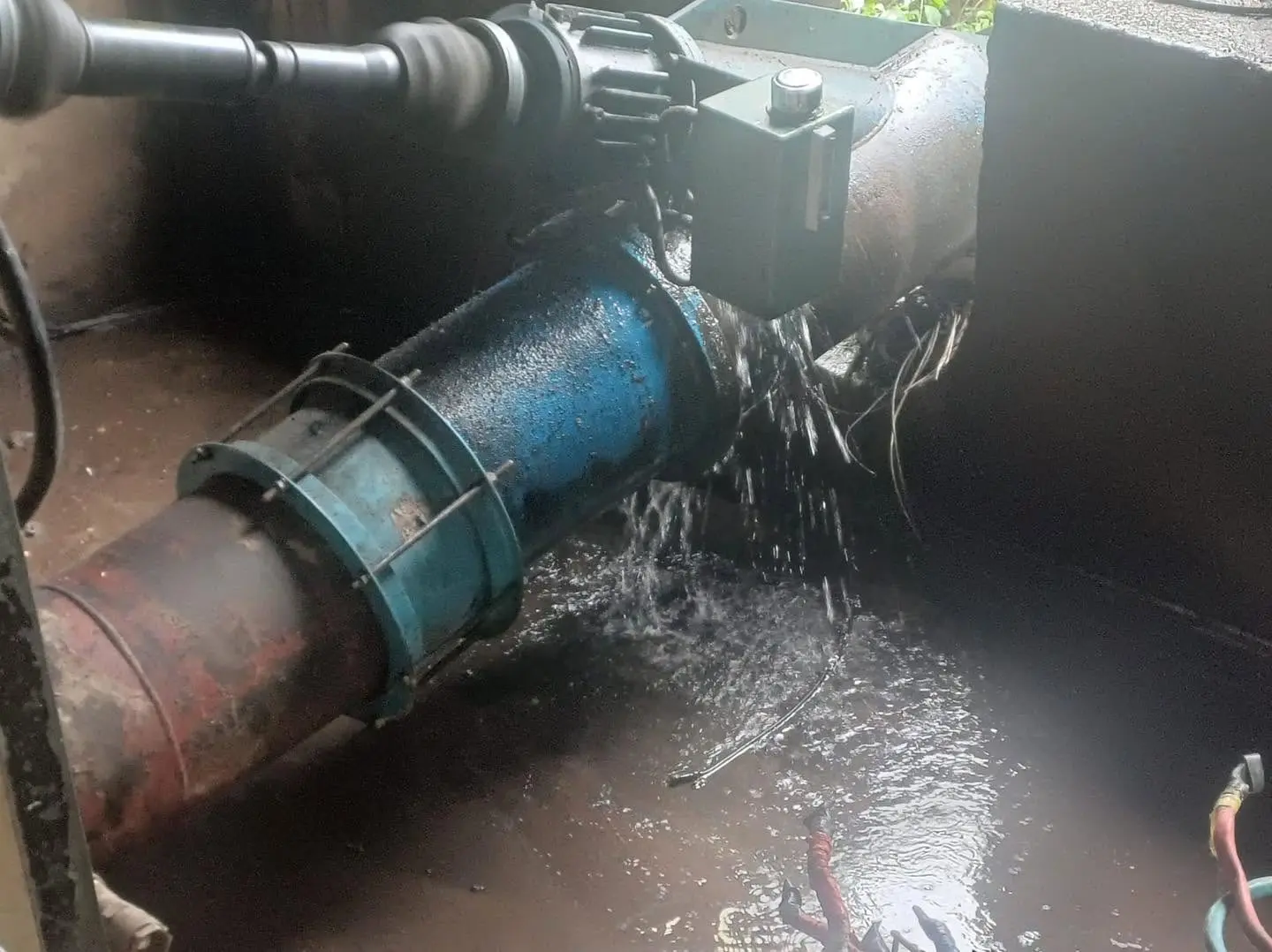
A department of water and sanitation investigation found that the City of Tshwane’s Bronkhorstspruit water treatment works supplied water without chlorination from 24 September to 14 October, after difficulties with its chlorine supplier.
A joint government statement said residents were not warned that the water was unsafe. The plant draws water from the Bronkhorstspruit River, which the department said was contaminated by sewage from dysfunctional wastewater treatment works in Victor Khanye municipality and malfunctioning Tshwane sewage pump stations.
Tests of water from the treatment works and the Ekandustria and Zithobeni reservoirs found high levels of E. coli and total coliforms. Stool samples from patients detected norovirus, campylobacter and shigella in three of the four specimens analysed. The government said the combined results indicated that residents had become ill after exposure to contaminated water supplied by the treatment works.
Dr Jo Barnes, a senior lecturer emeritus in the department of global health at Stellenbosch University’s Faculty of Medicine and Health Sciences, said the failure exposed residents to risks comparable to drinking untreated water.
“[Chlorination] is the major step to kill all the microorganisms that can cause disease. It is almost as if they drank water from the environment without any treatment at all. What breaks my heart, as a public health person and a person who’s done a lot of research in environmental health, is we see a certain pattern over and over again,” Barnes said, describing it as a management failure in municipalities.
She questioned how the plant could supply unchlorinated water for three weeks without management detecting and addressing the failure. “What happened to oversight? What happened to quality control? What happened to systems management?”
Barnes cautioned against allowing senior management to evade responsibility by blaming treatment plant staff for failing to report the problem. “Three weeks? Now that’s the best illustration ever of the fact that there is no chain of command, there’s no checking up and there’s no supervision,” she said. “Even if they inspected the works once a week, they would have discovered that two weeks earlier. Does three weeks mean there is … no management, running this operation?”

On Wednesday, the City of Tshwane said it was working with Rand Water to improve treatment, address water quality problems and stabilise supply. The plant would be switched on and off during the work, potentially disrupting supply.
The city warned that tap water remained unsafe for all uses other than flushing toilets. Residents might notice a stronger chlorine smell because of shock chlorination.
Its latest statement did not provide test results demonstrating that the interventions were working or say when the water would be declared safe. It did not respond to the Mail & Guardian’s enquiries.
Barnes warned that water tankers would not resolve the wider public health risks if sewage continued to contaminate the environment.
“Getting water from a tanker is not going to clean this dirty environment, which the municipality does nothing about.”
She said children and people with compromised immune systems or certain chronic conditions were at greater risk for infections.
Barnes described the failure as a warning of what could happen elsewhere. “This is a real timebomb and the fuse is smouldering. You’re going to get a Bronkhorstspruit, then you’re going to get another [outbreak] in a spruit somewhere else and then you will get one in another part of a city.”
She called for an overhaul of municipal systems, including independent oversight.
“They need inspectors because there is no oversight and I do not see our present political system as going to be able to redesign a municipal system that is free of political inter-ference because everything in South Africa at the moment survives by political grace and favour.”
The crisis comes against a long history of concerns about Tshwane’s wastewater infrastructure.
The South African Human Rights Commission (SAHRC), which has investigated complaints about wastewater treatment works including Rooiwal, Temba and Baviaanspoort since 2018, found in a 2021 report that malfunctioning works were polluting the Apies, Tolwane, Pienaar and Hennops rivers, as well as the Roodeplaat and Leeukraal dams.
The commission attributed the prolonged pollution primarily to failures to manage and maintain treatment works, finding that the failures violated constitutional and legislative obligations to protect health and provide water and sanitation services.
The consequences became starkly apparent during the 2023 cholera outbreak in Hammanskraal, which claimed dozens of lives.
The water and sanitation department said the original source of the infection had not been located but the outbreak was probably related to pollution from the Rooiwal wastewater treatment works.
The government committed to rehabilitating and upgrading Rooiwal and improving the supply of safe drinking water to Hammanskraal. In January 2025, the commission said residents had been without drinkable water for about 20 years and reiterated its concerns about Tshwane’s wastewater infrastructure.
WaterCAN is seeking answers about six criminal cases involving Tshwane’s wastewater infrastructure, some dating from 2020. The cases, identified in parliamentary records, were opened between June 2020 and March 2024.
Two concern Bronkhorstspruit: one involving the Bronkhorstspruit/ Godrich wastewater treatment works, opened in June 2021, and another involving the Bronkhorstspruit pump station, opened in November 2023. The other four involve Mega Ekandustria wastewater treatment works, Rooiwal, Sunderland Ridge and Baviaanspoort, including Zeekoeigat. WaterCAN executive director Dr Ferrial Adam said the organisation had written to the department seeking an update.
Adam said the department confirmed in July 2026 that the Rooiwal criminal investigation had been completed in 2025 and its docket sub-mitted to the National Prosecuting Authority. The submission of a docket does not establish whether charges were brought or a prosecution followed.
A Special Investigating Unit investigation into the Rooiwal refurbishment resulted in six criminal and 13 disciplinary referrals, according to parliament’s standing committee on public accounts in May 2026.
WaterCAN is seeking clarity on their outcomes. “Opening criminal cases cannot be the end of the accountability process,” Adam said. “The public deserves to know what happened to these investigations, what corrective measures were required and whether anyone has been held responsible.”
In a parliamentary reply in 2023, the department acknowledged that it had issued numerous non-compliance notices and directives against Tshwane since 2011. The department had not responded to the M&G by the time of publication.
Adam described the failure to chlorinate drinking water for about three weeks as extremely serious.
“What concerns us equally is the apparent breakdown in management, oversight and public communication that allowed this to happen. “There has been a serious dereliction of duty and an independent investigation must establish whether there are grounds for criminal charges. This cannot simply be dismissed as an administrative mistake. “The plant continued supplying water without chlorination for approximately three weeks and residents were not warned. We need to know who authorised its continued operation, why alternative chlorine supplies were not secured and which officials failed to act.”
The investigation must examine chemical procurement, operational monitoring, laboratory results, maintenance, incident reporting and the chain of responsibility from plant management to senior municipal officials, she said.
“While this latest crisis is shocking in itself, there is a need for a citywide investigation into the capital’s persistent water crises,” Adam added.
The Water Institute of Southern Africa has warned against treating the crisis solely as the failure of individual water treatment operators.
Its chief executive, Dr Lester Goldman, said safe drinking water depended on competent, appropriately registered and adequately supported personnel, reliable monitoring, adherence to operating procedures and effective oversight.
“Water treatment process controllers carry significant responsibility but safe drinking water depends on more than the actions of individual operators,” Goldman said.
Goldman also highlighted the importance of professionalisation, training and operational support under Regulation 3630. He said investigations should establish the circumstances that led to the failure of critical treatment safeguards and identify measures to prevent a recurrence. “Accountability must be based on evidence, and lessons learnt must translate into practical corrective action,” he said.