


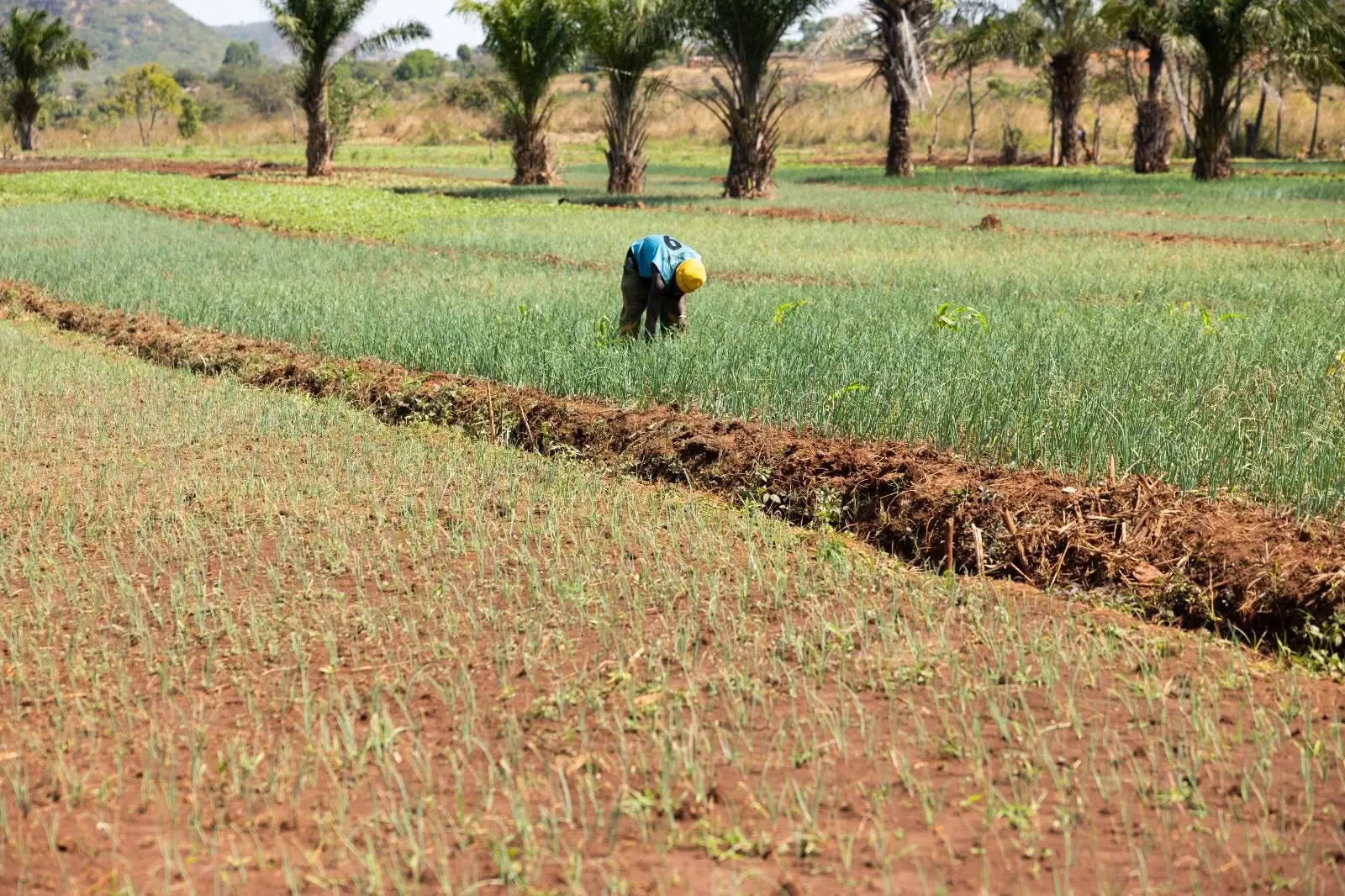
The Bill & Melinda Gates Foundation must be held accountable for agricultural interventions that have failed to deliver on promises to reduce hunger and build resilient food systems in Africa, the United Nations Special Rapporteur on the right to food has said.
In a message supporting African faith leaders’ demand for reparations, Sofía Monsalve Suárez said climate extremes and geopolitical instability had exposed the fragility of food systems weakened by dependence on imports, industrial monocultures and fossil fuel-based agricultural inputs.
The faith leaders are calling on the foundation to stop funding Agra, formerly the Alliance for a Green Revolution in Africa, pay reparations to affected smallholder farming communities and redirect investment towards African-led agroecology.
“Today, a combination of factors is seriously threatening food security in several regions of the world,” Suárez said. The 2026–27 El Niño had reached “super” status and was expected to be the most intense recorded, while war was disrupting supply chains.
She said food systems were vulnerable because decades of policies had encouraged dependence on imports and industrial monocultures reliant on oil and gas-based inputs, alongside the overexploitation of ecosystems and workers and deep inequalities in access to resources.
Powerful actors such as private foundations, she said, must be held accountable when their interventions fail to achieve their stated aims, including reducing hunger, improving nutrition and making food systems more resilient and sustainable.
“The looming food crisis makes more urgent than ever transition pathways towards agroecological and territorial food systems, which centre human dignity and protect life,” she said, adding that peasant farmers, artisanal fishers, pastoralists and Indigenous Peoples had knowledge needed to adapt food systems to climate change.
The open letter, signed by 625 faith leaders and supported by 360 organisations and partners, was delivered to the Gates Foundation on 28 October. Its signatories come from more than 20 countries across West, East and Southern Africa.
African faith leaders first wrote to the foundation in 2021, urging it to stop funding Green Revolution programmes. Safcei said it later met foundation representatives but received no meaningful response.
“The Green Revolution promised to halve hunger. Instead, 55 million more people in Agra’s focus countries are going hungry today than when it began,” said Francesca de Gasparis, executive director of the Southern African Faith Communities’ Environment Institute (Safcei).
The latest letter asks the foundation to meet the regional delegation before making its 2027 funding decisions and to respond publicly to the research findings. The delegation includes faith leaders from Liberia, Kenya, Botswana, Namibia, Malawi, Zimbabwe and South Africa.
Their demands come as Agra marks its 20th year. Established by the Gates and Rockefeller foundations in 2006, the initiative has received more than $1.5 billion, about two-thirds of it from the Gates Foundation, according to the campaign.
According to the faith leaders, Agra set out to double yields and incomes for 30 million farming households and halve food insecurity by 2020.
But research by Tufts University, published in August and based on 18 years of United Nations Food and Agriculture Organisation (FAO) data, found that the number of undernourished people in its 13 focus countries increased by 58%, from about 95 million to 150 million between 2006 and 2024.
Staple crop yields grew by an average of 1.2% a year after Agra’s launch, slightly below the 1.3% annual growth recorded in the preceding 12 years. Maize yields rose by about 40%, short of the target of doubling yields.
The Tufts University research found that production growth came substantially from expanding cultivated land rather than improving yields. Maize production increased by 139%, with 71% of that growth coming from expanding the area planted. Total cropland across the 13 countries increased by 46%.
Traditional crops also lost ground. The combined share of cropland planted with millet and sorghum fell from 25% to 17%, while millet production declined by 27%. There were 55 million more undernourished people; only Ethiopia and Ghana recorded declines.
The same research found that Senegal halved its number of undernourished people while using about half as much fertiliser per hectare as the Agra countries.
“The evidence is clear. More than a billion dollars has been spent, soils have been degraded and more Africans are hungry in the countries Agra set out to help,” said Tolbert Thomas Jallah Jnr, board chair of the Alliance for Food Sovereignty in Africa.
Funding should move away from corporate input supply chains and towards community-governed agroecology and soil restoration, he said.
In a response to the Mail & Guardian, the Gates Foundation referred to reflections published on Monday by Enock Chikava, its director of economic opportunity for Africa, on two decades of agricultural investment on the continent.
“These goals were not met and civil society organizations have urged accountability for this failure. We agree. As a longtime funder, we share responsibility,” Chikava wrote.
He acknowledged that hunger across Africa remained unacceptably high and that gains in agricultural productivity had not translated into the food security and farmer incomes needed.
Chikava said the foundation had continued investing in Agra after a 2022 evaluation found mixed outcomes for farmers, because its revised approach was more closely aligned with countries’ priorities and placed greater emphasis on connecting farmers to finance and markets.
“But continued investment cannot mean business as usual. It must mean learning from what fell short, listening to farmers, governments, civil society and critics, and being willing to change course,” he wrote.
The foundation said: “We share Safcei’s commitment to ending hunger, protecting the land farmers depend on and helping African farming families build stronger livelihoods. Foundation leaders have written to Safcei welcoming the chance to meet, listen to their concerns and discuss our approach.”
Gabriel Manyangadze, Safcei’s food and climate justice manager, said that reparations should address biodiversity loss, damage to soil health and the erosion of farmer-managed seed systems, which had reduced smallholders’ control over their seeds and the diversity of crops they grow.
“Reparations should directly benefit African smallholder farmers, local agricultural communities and indigenous food networks – particularly women and youth – who bear the brunt of soil degradation, seed loss and food insecurity caused by industrial agricultural initiatives.”
In its response to the M&G, Agra acknowledged that it failed to achieve its ambition of transforming African agriculture, conceding that its original targets did not match the scale of resources and time required.
The organisation set itself “ambitious public goals” in 2006 and again in 2017, but “did not achieve the ambition for transformation”, it said in response to questions about its 20-year record.
Some shortfalls reflected forces beyond any single organisation, including conflict, the pandemic, climate shocks and the 2022 food and fertiliser price crisis. But Agra also acknowledged that agricultural transformation required collective action, public and private investment, sound policy and functioning markets.
Through the Comprehensive Africa Agriculture Development Programme, governments have committed to allocating at least 10% of public expenditure to agriculture, a target that remains largely unmet, it said.
Responding to Tufts University’s finding that undernourishment had increased by 58% across its 13 focus countries, Agra said it did not dispute the FAO figures.
It argued that populations in those countries had grown by roughly two-thirds over the same period, faster than the number of hungry people. The proportion of undernourished people had declined in most countries, and fallen significantly in Ethiopia, Ghana, Rwanda and Zambia, it said.
“That is not a defence; our goal was to halve food insecurity, and a marginal decline falls far short of that,” it said.
It acknowledged that productivity gains among farmers reached by its programmes had not been sufficiently large or widespread to keep pace with population growth, conflict and climate shocks.
Its 2025 outcome survey, covering supported farmers and enterprises in six countries, found that crop sales among participating smallholders had risen by 10.5%, while participation in structured markets had increased to 31%. Women-led enterprises reported average revenue growth of 21%.
Agra said that its historical monitoring had not rigorously measured farmer incomes and food security.
“We acknowledge that as a weakness,” it said, adding that future success would be judged by changes in farmers' incomes, resilience, nutrition and decent work, rather than the number of people reached.
Its next strategy would focus on entire agricultural value chains rather than inputs, put governments and national institutions in the lead, concentrate on fewer country partnerships and build climate resilience through soil restoration and support for diverse, nutritious crops.
“None of this will matter unless we are held to it and we intend to be,” it said.
Agra said it had read the faith leaders statement “with respect”.
“Faith leaders speak for communities that live with hunger, failed harvests and rising food prices every day, and we share their concern that hunger in Africa has risen. Our own report says so,” it said.
The demands were addressed to the Gates Foundation and it was for the foundation to respond, Agra added.
It said there was common ground on the importance of healthy soils, diverse crops and seeds suited to local conditions, adding that farmers, including women, should be able to choose the seeds and practices that worked for their land, families and markets.
Agra said it remained committed to “a dialogue that is honest about our shortcomings and grounded in what improves farmers’ lives”.