


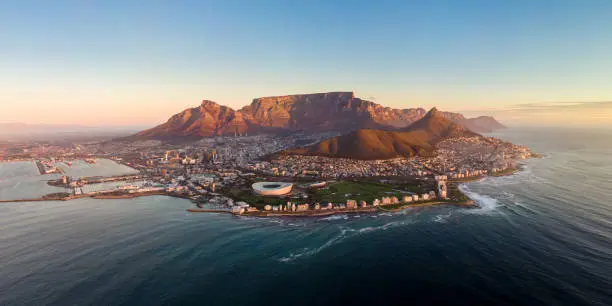
A very strong El Niño, expected by the World Meteorological Organisation to become the most powerful on record by December, could compound the risks of extreme heat, wildfires and water shortages facing Cape Town over the coming summer months.
The city has acknowledged that its early warning systems do not necessarily reach all residents, particularly those living in informal settlements and people facing barriers to accessing digital information.
This comes as C40 Cities, a global network of nearly 100 mayors, has launched a taskforce to strengthen urban preparedness for extreme weather, with the ambition of having effective early warning systems and emergency response plans in place across all 97 member cities by the end of 2027.
Cape Town was named among six cities whose mayors established the new taskforce, alongside Curitiba, Paris, Quezon City, Miami and Mumbai.
But the city has clarified that its membership of the taskforce has not yet been formally established and will be explored through ongoing engagements with C40.
In response to questions, city spokesperson Luthando Tyhalibongo said forecasts and recent briefings from the Western Cape government indicated elevated risks of above-average temperatures, more frequent heatwaves, increased fire danger, below-average rainfall and growing pressure on water resources over the coming summer months.
According to C40, the initiative aims to make early warning systems a basic standard of protection for people living in some of the world's largest cities, ensuring residents receive timely alerts about approaching dangers and that authorities have practical plans to protect lives, homes and livelihoods.
The potential to save lives is significant. C40 cited WMO data showing that countries with comprehensive early warning systems covering most of their populations experience nearly six times fewer disaster-related deaths than those with limited coverage.
The initiative comes as the El Niño threatens to disrupt weather patterns across the world, bringing heightened risks of flooding, drought and extreme heat. While El Niño is a natural climate phenomenon, C40 said it was unfolding against a backdrop of human-caused global heating, which was increasing the severity of many climate extremes.
The city’s main concerns included extreme heat, which could increase heat-related illness, energy demand, pressure on vulnerable communities and wildfire risk.
Its climate change action plan identified urban cooling and heat responsiveness as priority adaptation areas, while a heat action plan and associated programmes were mobilised to support residents during the summer season, he said.
Tyhalibongo cautioned that recent winter flooding did not necessarily mean that dams would have sufficient water to meet demand through the dry season.
“Despite recent winter flooding, authorities have cautioned that this does not necessarily translate into filling our dams with enough water to navigate the dry season ahead with high water demand and more unpredictable rain,” he said.
“Lower-than-average rainfall, coupled with high water use/demand especially over summer, could place additional strain on dam storage and water supplies.”
Although El Niño is generally associated with drier conditions in the Western Cape, climate change is increasing rainfall variability and the likelihood of severe storm events.
Tyhalibongo said the city continued to treat flood readiness and stormwater management as critical priorities, particularly given the damaging floods experienced in recent years.
It was implementing measures under its climate plan that included diversifying water supplies through groundwater, water reuse and desalination projects, improving climate monitoring and early warning systems, protecting critical infrastructure and expanding resilience programmes in high-risk communities.
The city and provincial government were also emphasising water conservation, disaster preparedness and readiness for heat and fire events, alongside investment in long-term water resilience measures, he said.
The city operates a multi-channel warning system involving disaster risk management, the South African Weather Service, emergency communication platforms, community networks, social media and local media.
However, Tyhalibongo acknowledged that challenges remained in ensuring warnings were received, understood and acted upon by all vulnerable groups.
“While these systems reach a large proportion of residents, challenges remain in ensuring that warnings are received, understood and acted upon by all vulnerable groups, particularly residents in informal settlements, individuals with limited access to digital communication, and those facing language, literacy or mobility barriers,” he said.
The city continued to strengthen community-based preparedness, stakeholder partnerships and targeted awareness campaigns as part of broader efforts to improve risk communication and resilience.
It was not yet clear what additional funding or technical support Cape Town would receive through the new C40 taskforce. Tyhalibongo said details of the initiative’s support and resources had not yet been disclosed to the city and would be explored through further engagements.
The city had a number of climate resilience initiatives under way, some supported by international technical assistance or grant funding. Of its R40.36 billion 2026-27 budget, about R5.07 billion (12%) was allocated to programmes or projects with climate change as a primary objective, while R20.86 billion (52%) went to projects with climate change co-benefits.
Tyhalibongo said the city monitored progress through its climate plan, annual performance reporting, climate risk assessments and participation in the CDP Cities disclosure process.
Cape Town’s preparations come against a backdrop of worsening global climate extremes.
In its State of the Climate Update 2026, released on Monday, the WMO said 2026 was on track to be among the four warmest years on record, with global average temperatures between January and September reaching about 1.47°C above pre-industrial levels.
The report said the very strong El Niño was expected to increase the risks of extreme heat, drought and heavy rainfall well into 2027.
The phenomenon was acting as a risk multiplier, intensifying the effects of a planet warmed by greenhouse gas emissions.
The WMO also reported that global sea levels had reached a record high in 2026, while ocean heat content was on track for a 10th-consecutive year of record levels. It warned that heatwaves, tropical cyclones and rainstorms were intensifying faster than historical baselines had anticipated.
There had, however, been progress in early warning coverage. The number of countries reporting multi-hazard early warning systems increased from 56 in 2015 to 136 in 2025, the WMO said. It stressed that sustained weather observations and reliable forecasting were essential to protecting communities from escalating climate risks.