


To paraphrase the late great Ali Mazrui, South Africa's modern history can be read through a sequence of "V" metaphors: victim, valiant, victorious, vanguard, villain, vision and virtue.
It was once a victim. For nearly half a century, apartheid subjected millions of South Africans to a brutal system of racial domination. The country became a global symbol of injustice, exclusion and institutionalised inequality. Yet from that suffering emerged valiant resistance. Trade unionists, students, religious leaders, intellectuals and ordinary citizens challenged apartheid at immense personal cost. Their struggle was strengthened by solidarity from across Africa, where newly independent states provided diplomatic support, military training, scholarships and sanctuary to South African exiles.
The result was a victorious triumph. The collapse of apartheid and the democratic transition of the 1990s represented one of the great political achievements of the 20th century. South Africa avoided civil war, dismantled a legal racial hierarchy and offered the world a powerful lesson in reconciliation. Under leaders such as Nelson Mandela, Desmond Tutu and Thabo Mbeki, the country became more than a successful democracy. It became a moral project.
For a time, South Africa emerged as a continental vanguard. It championed African renaissance, peacekeeping, constitutionalism and human rights. Across the continent, South Africa was admired not only for its economic strength but also for its moral authority. Students from Lagos to Nairobi, from Addis Ababa to Harare, saw post-apartheid South Africa as proof that another future was possible. The country seemed destined to lead Africa into a new century.
Yet history does not move in a straight line. Nations, like individuals, can lose their way.
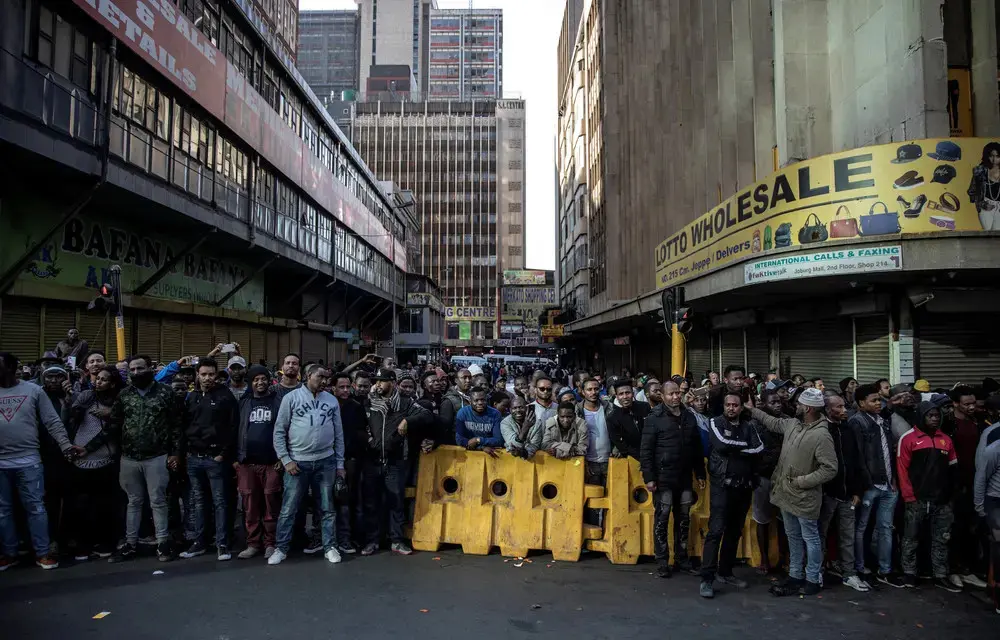
The recent xenophobic attacks against African migrants raise uncomfortable questions about South Africa's trajectory. In recent weeks, anti-immigrant violence and intimidation have spread across several communities, forcing migrants to flee their homes, seek shelter in public buildings or even request repatriation to their countries of origin. Mozambique reports that several of its citizens have been killed, while more than a thousand Nigerians have registered for voluntary return amid growing fears for their safety. Governments across Africa, from Ethiopia to Ghana, have expressed concern and South Africa has itself dispatched envoys in some cases to repair diplomatic damage.
The events are not isolated incidents. They are part of a recurring pattern that stretches from attacks more than a decade ago and subsequent waves of anti-immigrant violence. Human rights organisations and African institutions have repeatedly warned that foreigners are being scapegoated for problems rooted elsewhere: unemployment, inequality, crime, corruption and state failure. Evidence consistently shows that migrants are convenient targets rather than genuine causes of South Africa's socioeconomic difficulties.
The tragedy is especially profound because many of the victims come from countries that supported South Africa's liberation struggle. During apartheid, neighbouring African states absorbed refugees, hosted liberation movements and bore economic and military costs for opposing white minority rule.
Ethiopia, a country from which many of the migrants recently victimised in South Africa originate, also played a meaningful role in the anti-apartheid struggle. It is worth remembering in particular the direct and memorable role Ethiopia played in Mandela's life. In 1962, while travelling secretly across Africa to seek support for the liberation movement, Mandela spent time in Ethiopia, where he received military training with the assistance of the Ethiopian government under Emperor Haile Selassie. Ethiopia was the first independent African country Mandela visited. He later recalled its profound impact, describing it as a source of training and hope during the formative years of his struggle against apartheid.
The recent attacks therefore represent more than violence against foreigners. They constitute a rupture in the ethic of pan-African solidarity that helped make South Africa's own freedom possible.
There is also a deeper irony. Apartheid itself rested on the politics of exclusion — the idea that some people belonged while others did not, that rights should depend on identity rather than common humanity. Contemporary xenophobia does not replicate apartheid but it echoes one of its most dangerous instincts: defining outsiders as threats and reducing human beings to categories of exclusion. A society that suffered from such thinking should be especially vigilant against reproducing it in new forms.
South Africa therefore faces a critical choice. It can continue down a path where economic frustration is redirected towards vulnerable migrants, where vigilante movements flourish and where fear substitutes for policy. Or it can recover the ideals that once made it a source of inspiration across the continent.
The difference between becoming a vanguard and becoming a villain lies in two final "V"s: vision and virtue. Vision is needed to address the structural roots of unemployment, inequality and insecurity rather than blaming foreigners for them. Virtue is needed to remember that human dignity is indivisible — that the rights denied to migrants today might weaken citizens' rights tomorrow.
South Africa's greatest achievement was not merely ending apartheid. It was demonstrating that a people who had suffered exclusion could build a society based on inclusion. The world admired South Africa for transforming victimhood into moral leadership. The challenge now is to ensure that the nation does not betray that inheritance.
The future of South Africa's story remains unwritten. Whether it is remembered as a vanguard of African solidarity or as a villain of African exclusion will depend on the choices it makes today.
Seifudein Adem is a visiting professor, Institute for Advanced Research and Education, Doshisha University, Kyoto, Japan.