


Few issues generate more public consensus in South Africa today than the need for effective border management.
Across political, business, labour and community constituencies, there is broad agreement that sovereign states have both the right and responsibility to regulate the movement of people across their borders.
Yet while border management remains necessary, an important question often goes unasked:
Can border enforcement, on its own, solve migration pressures?
The answer is almost certainly no.
This is because migration is not simply a border phenomenon. It is a development phenomenon.
People rarely migrate because borders are weak. They migrate because opportunities are unevenly distributed. They move towards employment, safety, infrastructure, functioning institutions and economic possibility.
The scale of disparity is stark: South Africa's GDP per capita is approximately $6 000, compared with $1 500 in Zimbabwe and $600 in Mozambique. A Mozambican earns roughly one-tenth of what a South African earns. As long as such gaps exist, migration pressures will persist, regardless of the sophistication of enforcement systems.
The challenge facing South Africa therefore extends beyond border control. It is fundamentally a development systems challenge.
The limits of enforcement
Public debate frequently assumes that stronger enforcement will automatically reduce migration pressures.
In reality, enforcement addresses only one part of a much larger system.
Border agencies can regulate entry. Immigration authorities can process documentation. Law enforcement agencies can address illegal activities. Yet none of these institutions directly influence the structural drivers that motivate migration in the first place.
Those drivers include:
• Unemployment;
• Economic inequality;
• Political instability;
• Weak local economies;
• Infrastructure deficits; and
• Limited opportunities for economic participation.
Consider the cost: the Border Management Authority (BMA) budget for 2025-26 stands at approximately R1.7 billion, yet in a single quarter it intercepted fewer than 10 000 undocumented migrants crossing the border, a fraction of the overall undocumented flow. The BMA has acknowledged that it requires an additional R2.2 billion to function effectively. Enforcement is expensive, reactive and incapable of addressing root causes.
Without addressing structural factors, enforcement systems risk becoming permanently reactive. They manage flows without reducing underlying pressures.
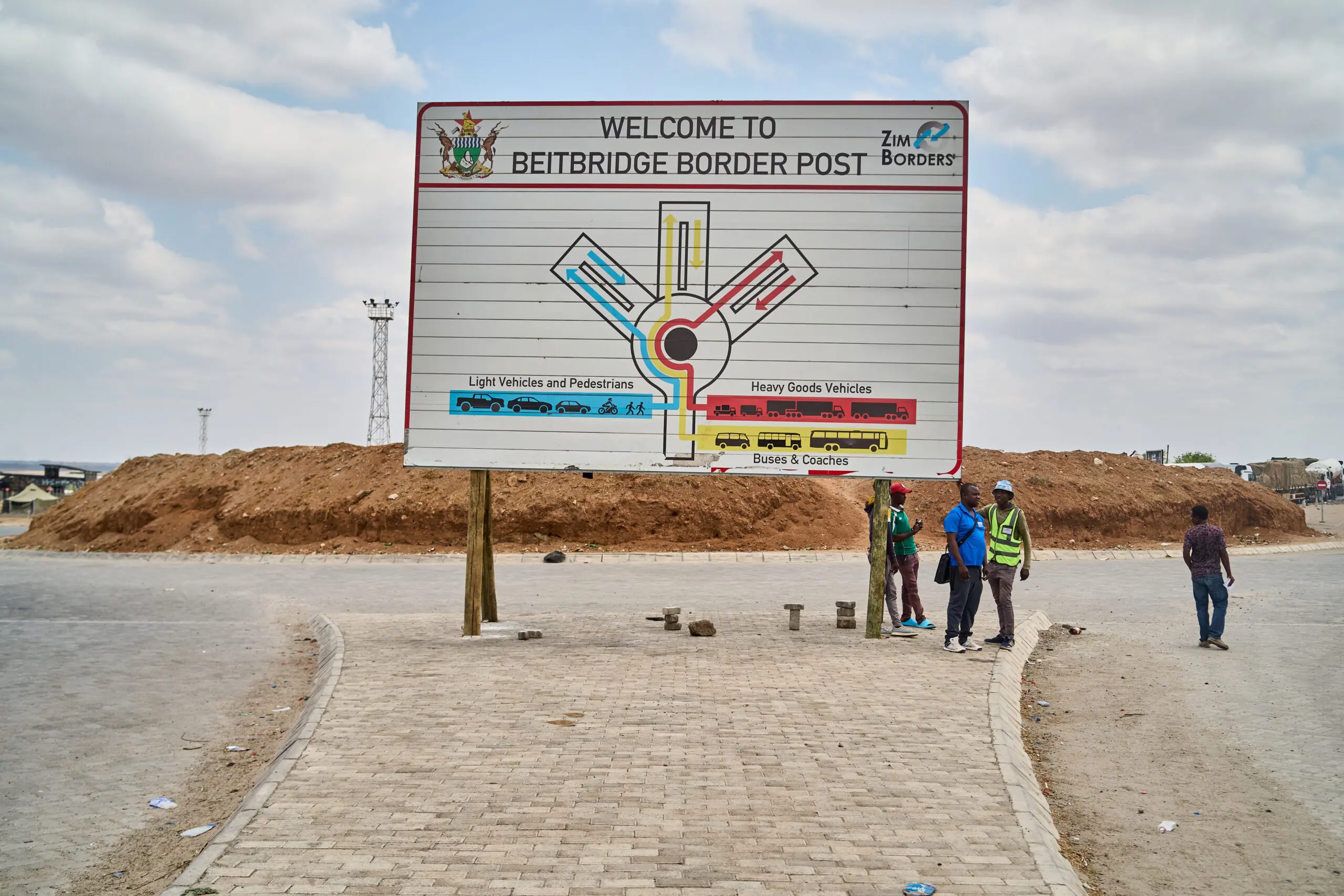
The Beitbridge–Musina Corridor: A practical example
Few locations illustrate this reality more clearly than the Beitbridge–Musina corridor.
As one of Southern Africa's busiest land-border crossings, handling an estimated 40 000 to 50 000 people daily, it serves as both a gateway and a pressure point. An estimated R690 million in smuggled goods passes through annually, alongside undocumented migrants fleeing economic collapse in Zimbabwe.
Public discussion often focuses on border security, documentation and illegal crossings. These are important concerns.
However, viewed through an Integrated Development Systems Lens (IDSL), the corridor reveals something deeper. It highlights the interaction between:
• Labour mobility;
• Regional economic disparities;
• Infrastructure networks;
• Logistics systems;
• Industrial development; and
• Institutional coordination.
In other words, it is not merely a border. It is a development corridor.
The policy question therefore becomes: How can strategic corridors be transformed from migration pressure points into economic opportunity zones?
Applying the Integrated Development Systems Lens Framework
The IDSL framework examines complex challenges between border management and development outcomes.
Lens 1: Institutional Complexity
Migration pressures involve multiple institutions simultaneously: the department of home affairs, the Border Management Authority, the labour department, the trade, industry and competition department, municipalities, provincial governments and regional organisations. No single institution owns the challenge.
Lens 2: Implementation Systems
South Africa possesses migration policies, border regulations and enforcement structures. The challenge lies in integrating these components into an effective implementation system capable of linking enforcement with development outcomes.
Lens 3: Institutional Machinery
Border management often operates separately from economic planning. Yet migration pressures emerge from the interaction between these systems. The machinery remains fragmented.
Lens 4: Governance and Coordination
Migration sits at the intersection of local, national, regional and continental governance. Coordination remains one of the most significant challenges.
Lens 5: Stakeholder Complexity
Governments seek security. Businesses seek labour and market access. Communities seek stability. Migrants seek opportunity. Development institutions seek long-term solutions. Balancing these interests requires more than enforcement. It requires governance.
Lens 6: Development-Linked Financial Architecture
The final lens asks a fundamental question: Can development finance be directed towards reducing the structural conditions that generate migration pressures?
If capital is linked to industrialisation, labour absorption, infrastructure, agro-processing and regional economic development, migration management begins to move from reaction towards prevention.
Currently, enforcement spending (R1.7 billion) dwarfs development investment in border regions. Shifting even a fraction towards economic infrastructure in the Beitbridge–Musina corridor would address both border management and its root causes simultaneously.
From Border Management to Development Corridors
One possible approach is to rethink strategic border regions as development corridors.
Rather than focusing exclusively on enforcement, governments could combine:
• Border management;
• Industrial development;
• Logistics investment;
• Labour mobility agreements;
• Enterprise development; and
• Infrastructure planning.
The objective would not be open borders. The objective would be managed mobility supported by economic opportunity.
A concrete next step would be to pilot a joint agro-processing industrial park at Beitbridge–Musina, linked to a special border-zone work permit and a levy that funds community development on both sides of the border. This is not idealism; it is practical, sequenced and politically defensible.
This shifts policy from controlling movement to creating alternatives.
A Different Conversation
The migration debate is often framed as a choice between stronger enforcement and more open movement.
This is a false choice.
Effective border management remains essential. But borders cannot solve challenges that originate within development systems.
The long-term solution lies in creating economies capable of generating opportunity faster than migration pressures accumulate.
The question is therefore not whether border management matters. It does.
The question is whether border management is being asked to solve problems that development policy has failed to address.
That is not a border question. It is a development systems question.
Closing Line
Borders keep people out. Development keeps them home. Our policy focus is on the former, while the latter remains critically underfunded.
Data sources: Border Management Authority parliamentary budget 2025-26, Stats SA, World Bank and Sars (Beitbridge trade data). Full methodology available on request.
Dr Lehlohonolo Gabriel Mambona is an implementation systems architect specialising in institutional delivery systems, governance integration and development execution frameworks.