


There are documentaries that inform. There are documentaries that entertain. Then there are documentaries that leave you wrestling with yourself long after the credits have rolled.
The Trials of Winnie Mandela, now streaming on Netflix, belongs firmly in the latter category.
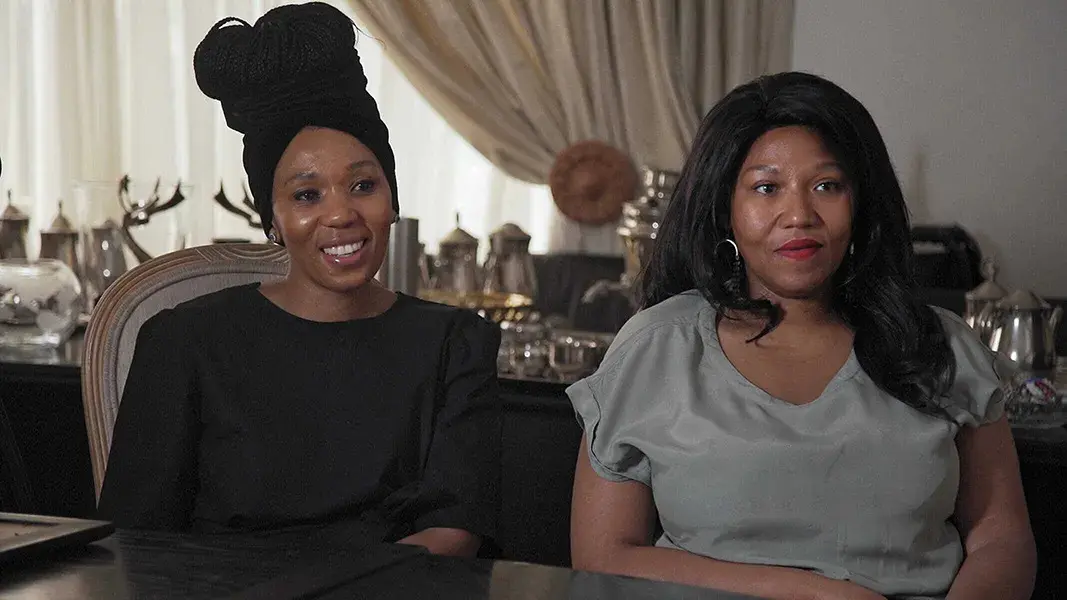
Recently, on my Sunday radio show, Power Week on Power 98.7, I had the privilege of hosting two remarkable women: Swati Dlamini-Mandela and Zaziwe Dlamini-Manaway, granddaughters of Winnie Madikizela-Mandela and co-producers of the documentary that revisits her life and legacy.
It was one of those conversations where an hour simply did not feel long enough. The documentary itself runs for almost seven hours, yet that time seems inadequate to capture the complexity of a woman who remains one of South Africa’s most fascinating and contested figures.
Almost a decade since her passing, she continues to evoke admiration, anger, devotion and discomfort in equal measure.
What struck me most was that this is perhaps the most authentic portrayal of Mom Winnie that I have seen. It neither worships nor condemns her. It listens. In a country increasingly tempted by simplistic narratives, listening may be the most revolutionary act of all.
The Nigerian novelist Chimamanda Ngozi Adichie warned us of “the danger of a single story”. She reminded us that when only one story is told about a person, a people or a nation, we rob them of their humanity. Few South Africans have suffered more from the danger of a single story than Mom Winnie.
To some, she remains the mother of the nation, the woman who kept the struggle alive while Nelson Mandela was imprisoned. To others, she remains forever defined by controversies that followed her. This documentary refuses to choose one version over the other. Every voice is given space, even those who hate her. Perhaps especially those who hate her.
There is no subject too sensitive. No accusation too uncomfortable. No wound too painful.
The documentary confronts allegations of excessive drinking. It examines accusations of extra-marital affairs during Mandela’s imprisonment. It revisits the tragedy surrounding the death of 14-year-old Stompie Seipei. It allows critics, supporters, former comrades and victims to speak.
That is what gives it power. It trusts the viewer enough to wrestle with the evidence, the contradictions and the uncomfortable truths that sit between them.
At one point, when asked about allegations of affairs while Madiba was imprisoned, Winnie responds with characteristic wit and mischief: “Do you think he would have waited for me?”
She then jokes that the two granddaughters have too high an opinion of their grandfather, reminding them that he was known to be something of a ladies’ man himself.
I found myself laughing, not because the subject itself is funny but because Mom Winnie had a remarkable ability to inject humour into even the most uncomfortable conversations. The moment reminds us that behind the icon was a deeply human being who refused to fit neatly into anyone’s expectations, yet the documentary never allows humour to obscure pain.
The section dealing with Stompie is particularly difficult to watch. The hurt remains raw and the anger remains alive.
One of the most powerful aspects of the documentary is hearing directly from people whose lives were devastated by their encounters with the Mandela United Football Club. Listening to someone tell you, to your face, that they hate your loved one must be incredibly painful for Swati and Zaziwe.
Yet they made space for it.
The pain of those testimonies cannot be denied. Their anger is palpable. Their wounds remain open. Jerry Richardson emerges as a central figure in this chapter. His role continues to cast a long shadow over Winnie Mandela’s legacy and over South Africa’s collective memory.
One of the lesser-known but fascinating threads in the documentary concerns allegations that Madiba may have been involved in efforts to silence Katiza Cebekhulu, one of those who implicated Mom Winnie in the Stompie matter. The documentary revisits claims that the late Zambian President Kenneth Kaunda assisted in Katiza’s arrest. Today, Katiza still lives in exile in the United Kingdom, his life seemingly never fully recovering from those events.
Whether one accepts these claims or not, their inclusion demonstrates the documentary’s commitment to exploring uncomfortable questions.
No sacred cows. No protected legends. Only questions.
Perhaps that is what mature democracies require. Not certainty. Questions.
Watching the documentary, I was reminded of how far South Africa still is from the nation Mom Winnie hoped to build. She dreamed of a more equal society. A society where the poor would matter. A society where freedom would mean more than the right to vote.
She remained in Soweto until her death. Her home remained accessible. It remained a gathering place. It remained a symbol of proximity to ordinary people.
Coincidentally, shortly before hosting Swati and Zaziwe, I had spoken to Lukhanyo Calata, son of Fort Calata, one of the Cradock Four. Lukhanyo is still fighting for access to apartheid-era records. His frustration resonated deeply with me.
More than 20 years ago, while at the South African History Archive (SAHA), I was part of efforts to test and strengthen the implementation of the Promotion of Access to Information Act. We believed that democracy would unlock the archives of apartheid and allow families to find answers.
Yet here we are. Decades later. Families still searching. Still waiting. Still asking.
Lukhanyo asked a question that should haunt us all:“What interest does a democratic government have in keeping apartheid secrets?”
The search for truth is not only the responsibility of families. It is a national obligation.
Closure is not a private project. It is a collective duty.
A nation that asks victims to move on while withholding the truth asks them to carry an impossible burden.
The documentary also forced me to think about innocence and its loss. When asked whether she regretted anything, Mom Winnie famously replied that if circumstances demanded it, she would do it all over again.
Then she added something even more revealing: “They did all these things to me and then they are surprised I turned out the way I did.”
The statement is not necessarily a defence. It is an explanation and there is a difference.
Too often, society judges individuals without examining its own role in producing the circumstances that shaped them. We condemn the outcome while ignoring the conditions. We are quick to ask what happened to people.
Mom Winnie spent 491 days in detention, much of it in solitary confinement. The diary she kept during that period later became the basis for the book 491 Days, written by Swati and Sahm Venter.
The psychological violence of apartheid is often overlooked because it leaves fewer visible scars than physical violence. Yet the documentary reminds us that isolation, humiliation and relentless persecution leave their own wounds. Some wounds never fully heal.
Forgiveness is another recurring theme. Mom Winnie openly admits that she struggled to forgive. She speaks candidly about her difficulty forgiving figures such as Reverend Frank Chikane and Archbishop Desmond Tutu. Yet she eventually concludes that she had to do the impossible. She had to forgive the unforgivable. Perhaps that is what forgiveness always is: an act of impossibility, an act of faith, an act of defiance against pain.
But the documentary raises another uncomfortable question. How long can a nation keep forgiving without healing? At what point does forgiveness become a bandage placed over a wound that still requires surgery?
South Africa continues to wrestle with this tension. We celebrate reconciliation while many wounds remain untreated. We praise forgiveness while avoiding difficult conversations about accountability, inequality and justice.
The documentary does not answer these questions. It simply insists that we confront them.
Another theme that lingers is the double standard with which history often judges violence. Acts committed by liberation movements are frequently viewed differently from those committed by oppressive regimes. War has its own moral vocabulary.
The documentary left me wondering whether some of Mom Winnie’s denials stemmed from viewing certain actions through the lens of war rather than criminality. I am not certain but it is one of many questions the documentary leaves hanging in the air, questions that deserve thoughtful engagement rather than easy answers.
The documentary also brought back memories of my own interactions with Mom Winnie over the years. Her aura was unmistakable and, whenever she entered a room, her presence was immediately felt. What impressed me most was never her stature, her reputation or even her influence but her concern for ordinary people and her willingness to become personally involved when she believed someone needed help.
I remember receiving a call one Sunday morning from Pitso Maleka regarding a missing University of Johannesburg student named Palesa Madiba, who was unrelated to Nelson Mandela. As concern for her safety grew and options seemed limited, I contacted Mom Winnie in the hope that she might be able to assist.
What followed left a lasting impression on me. She did not merely lend her name to the matter or offer words of encouragement from a distance; she became personally involved and remained actively engaged throughout the search.
Every Monday she would call for an update, wanting to know what progress had been made. She would put pressure on the police, demand answers and insist on progress. Every Monday.
Tragically, Palesa was murdered. However, her killer was eventually arrested and her remains were returned to her family for burial. Mom Winnie’s contribution to that process was significant and undeniable and it revealed a side of her that is often overshadowed by the larger political debates surrounding her life and legacy. That side of her often gets lost in public debates. The woman who cared. The woman who followed up. The woman who refused to forget.
As my conversation with Swati and Zaziwe drew to a close, I found myself reflecting on the burden they carry. They are not simply protecting a legacy; they are engaging with it honestly, confronting both its triumphs and its contradictions. That requires courage, particularly when the person at the centre of that legacy continues to evoke such strong and opposing emotions.
Ultimately, the documentary does not ask us to love Mom Winnie, nor does it ask us to hate her. Instead, it asks something far more challenging of us: it asks us to see her.
Fully.
The hero.
The victim.
The fighter.
The mother.
The accused.
The survivor.
The flawed human being.
The giant.
By the end, I found myself thinking less about her and more about South Africa.
About our unfinished journey.
About our unresolved pain.
Sello Hatang is the executive director of Re Hata Mmoho