


The Public Investment Corporation's latest governance crisis did not begin with a whistleblower complaint against chief executive Patrick Dlamini.
Nor did it begin with last week's extraordinary meeting between the PIC board and Finance Minister Enoch Godongwana.
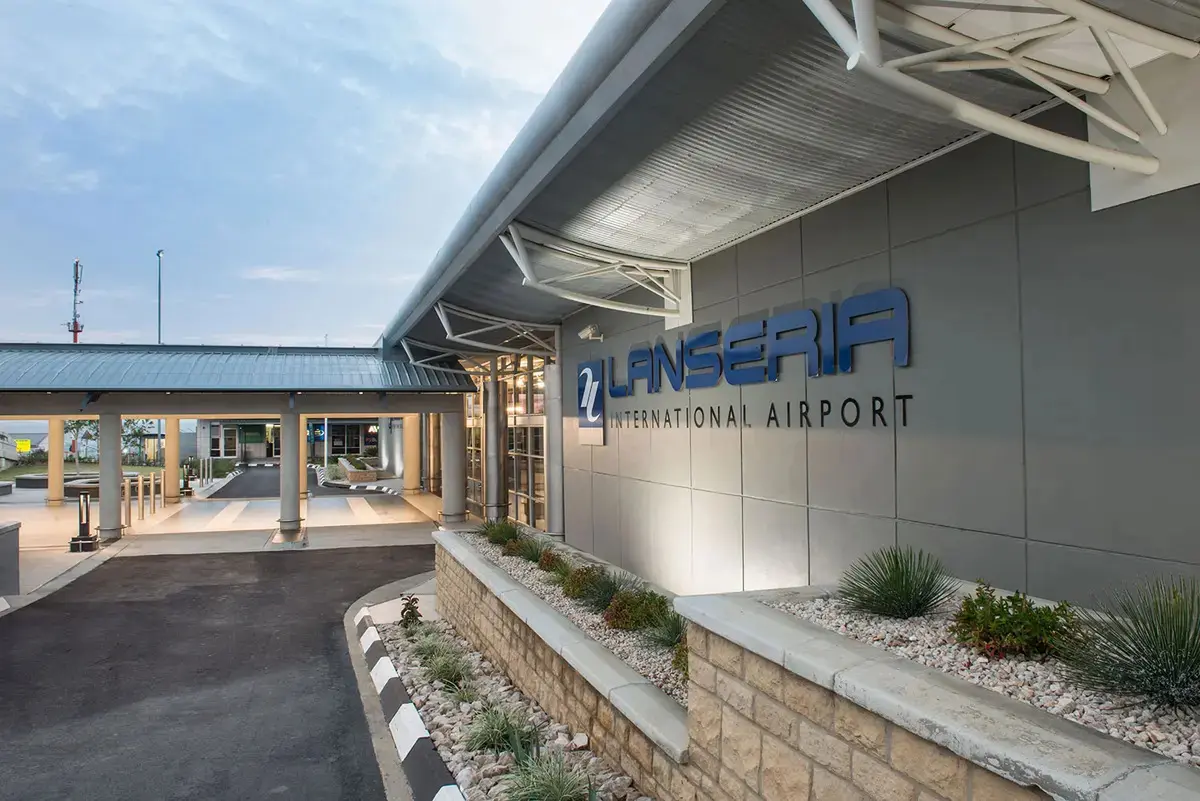
It began years earlier, with a dispute over Lanseria Airport that many believed had been settled.
Today, the dispute sits at the centre of a widening struggle involving the PIC board, executive management, the Government Employees Pension Fund (GEPF), businessman Kagiso Matjila and competing views about how Africa's largest asset manager should be governed.
What initially appeared to be a whistleblower complaint against a chief executive has evolved into a broader contest over authority, oversight and accountability at the institution entrusted with managing R3.6 trillion in public funds.
Every major development in the saga appears to lead back to Lanseria.
The origins of the current crisis lie in a long-running dispute between the PIC and Acapulco Trade and Invest 164, a company controlled by Matjila.
After a breakdown in a shareholder arrangement linked to Lanseria Airport, the parties ended up in arbitration.
Matjila said the PIC insisted on arbitration, participated fully in the proceedings and ultimately lost.
"The PIC lost on every point of substance and paid," Matjila said recently. "Buyer's remorse is not a ground of appeal."
For Matjila, that should have been the end of the matter.
A final and binding arbitration award had been issued. Payment had been made. The dispute had been determined.
But the matter resurfaced after Dlamini became chief executive of the PIC.
Under his leadership, the corporation commissioned a forensic review by PwC into the Lanseria transaction and the arbitration award.
The PIC has consistently defended the decision, saying the review was necessary to determine whether all reasonable steps had been taken to protect pension fund investments and the interests of the GEPF.
For critics, however, the question is not whether the PIC had the right to investigate.
It is why the investigation was commissioned at all after a final arbitration award had been issued.
That disagreement has become the fault line running through the current crisis.
The whistleblower complaint lodged against Dlamini earlier this month focuses not on the arbitration but on what followed. It raises questions about the authority under which the PwC investigation was commissioned, governance processes linked to the review and allegations of conflicts of interest.
The complaint shifted attention away from who won the arbitration and onto how the PIC responded after losing it.
For the first time, questions were being asked not only about Lanseria but also about executive authority, board oversight and decision-making inside the institution.
The complaint arrived at a particularly sensitive moment.
The Lanseria dispute had generated a R1 billion legal threat from Matjila and Acapulco. Tension in the PIC leadership was becoming increasingly visible. Questions were being raised about the relationship between management, the board and the shareholder representative.
Dlamini's response was swift.
Documents seen by the Mail & Guardian show that his attorneys, Webber Wentzel, assisted by senior counsel Advocate Vincent Maleka SC, submitted a detailed legal response to the board on 13 June. The submission challenged the complaint's legitimacy and argued that it should not proceed.
Dlamini's legal team argued that the complainants lacked standing under the Protected Disclosures Act, that the allegations did not constitute protected disclosures and that the complaint was anonymous, unsubstantiated and made in bad faith. The lawyers further argued that many of the issues raised amounted to workplace grievances and employment disputes rather than whistleblower disclosures.
The response also challenged key factual allegations.
Central among these was the claim that the PwC investigation lacked proper authority.
Dlamini's legal team said the PIC board itself approved the investigation at a meeting on 30 September 2025 and continued receiving updates through its structures. The lawyers also rejected allegations relating to conflicts of interest involving Lanseria and infrastructure investor Harith and stated that an alleged Development Bank of Southern Africa whistleblower complaint referred to in the complaint "does not exist".
In effect, Dlamini's legal team argued that the board had no basis to proceed.
That is what makes what happened next so significant.
By the time the PIC board met last week, directors had before them the whistleblower complaint, Dlamini's legal response and a rapidly escalating public dispute over Lanseria.
They also had the attention of the finance minister, who convened a special meeting with the board as tension escalated.
Sources familiar with the matter told the M&G that some board members believed the allegations warranted further assessment and the board had begun considering the complaint before the special meeting took place.
The M&G has not independently verified the full account of discussions during the closed meeting.
What is clear is the outcome.
The complaint survived.
Despite receiving a detailed legal submission attacking the complaint's legal basis, the board chose not to dispose of it.
Instead, the PIC announced that the allegations would be dealt with under board oversight and in accordance with legislation, governance standards and the principles of natural justice.
The board has not endorsed the allegations.
Nor has it found Dlamini guilty of wrongdoing.
But it has concluded that the issues raised warrant further scrutiny.
That decision will probably shape the next phase of the battle.
For Matjila, the central question remains why the PIC chose to revisit a dispute that had been settled through arbitration.
For Dlamini and the PIC, the question is whether the institution had a duty to investigate whether public funds were adequately protected.
For the board, the issue is whether proper processes were followed when the decisions were taken.
The questions all converge at the same point: Lanseria.
The airport has become more than an asset.
It has become the fault line running through the PIC's most significant internal battle since the Mpati Commission.
The whistleblower complaint might have triggered the latest crisis.
But the dispute unfolding is ultimately about something much larger: who exercises authority, who provides oversight and how decisions are made at the institution responsible for safeguarding the retirement savings of millions of South Africans.
For now, those questions remain unresolved.
What is clear is that the board had an opportunity to close the matter after receiving Dlamini's legal challenge.
Instead, it chose to keep the process alive.
And that means the battle over Lanseria is far from over.