

On Friday 5 June 2026, South Africa did something rare at an African inter-parliamentary gathering: it abstained from adopting a charter that defines marriage as exclusively between a man and a woman. Not because we were unsure but because our Constitution, Chapter 2, does not allow us to agree.
Zandile Majozi, head of South Africa’s delegation to the 4th Inter-Parliamentary Conference on Family, Sovereignty and Values in Accra, put it plainly: “South Africa would like to reserve our rights in not adopting the charter because it contradicts the Constitution of South Africa, especially Chapter 2 and also does not align with the regional and international laws that we believe in.”
Mozambique also abstained but for logistical and scheduling reasons. South Africa abstained because our founding legal document says we cannot vote otherwise. That matters. It matters in this anniversary year, as we mark 20 years of the Civil Union Act that legalised same-sex marriage and 30 years of our Constitution, a document that prohibits discrimination based on sexual orientation.
But here is the uncomfortable question: why is abstention the best we could do? And why, in a special anniversary year for queer rights, are we still talking about a reservation of rights instead of an outright rejection of a charter that belongs to another century?
The Constitution, our representatives keep forgetting
I have spent years watching South Africa at the United Nations. While working at Outright International in New York, I saw our country up close at the UN LGBTI Core Group – the informal cross-regional group of which South Africa is proud to be a member. I saw the admiration: other UN member states look at our constitutional protections and see what is possible in Africa.
But I also saw the contradictions.
In 2016, when the UN Human Rights Council voted to appoint an independent expert on protection against violence and discrimination based on sexual orientation, South Africa abstained. No African country voted in favour. When asked why, the minister at the time said South Africa could not afford “to be seen walking too far ahead of its African peers”.
In 2008, when a UN declaration called for the universal decriminalisation of homosexuality, South Africa did not sign. The declaration was supported by 66 countries. South Africa was not one of them.
In 2009, South Africa voted to exclude “sexual orientation” from a UN document on racism and xenophobia.
And yet, just a few years earlier, South Africa had sponsored the first-ever UN Human Rights Council resolution on sexual orientation and gender identity (2011) and led a second one in 2014. This is the whiplash of South Africa’s foreign policy: global leader one year, strategic abstainer the next.
In 2023, when Uganda passed its brutal Anti-Homosexuality Act, a law that includes the death penalty for “aggravated homosexuality”, South Africa was silent. A parliamentary question revealed there had been “no diplomatic engagement with Uganda regarding the Anti-Homosexuality Act of 2023.” An open letter from South African parents called for action. A parliamentary motion to condemn the law was blocked.
The pattern is consistent: our Constitution gives us the strongest possible legal framework for LGBTI equality. But our foreign policy is often too timid to use it.
The missionaries who arrived on American dollars
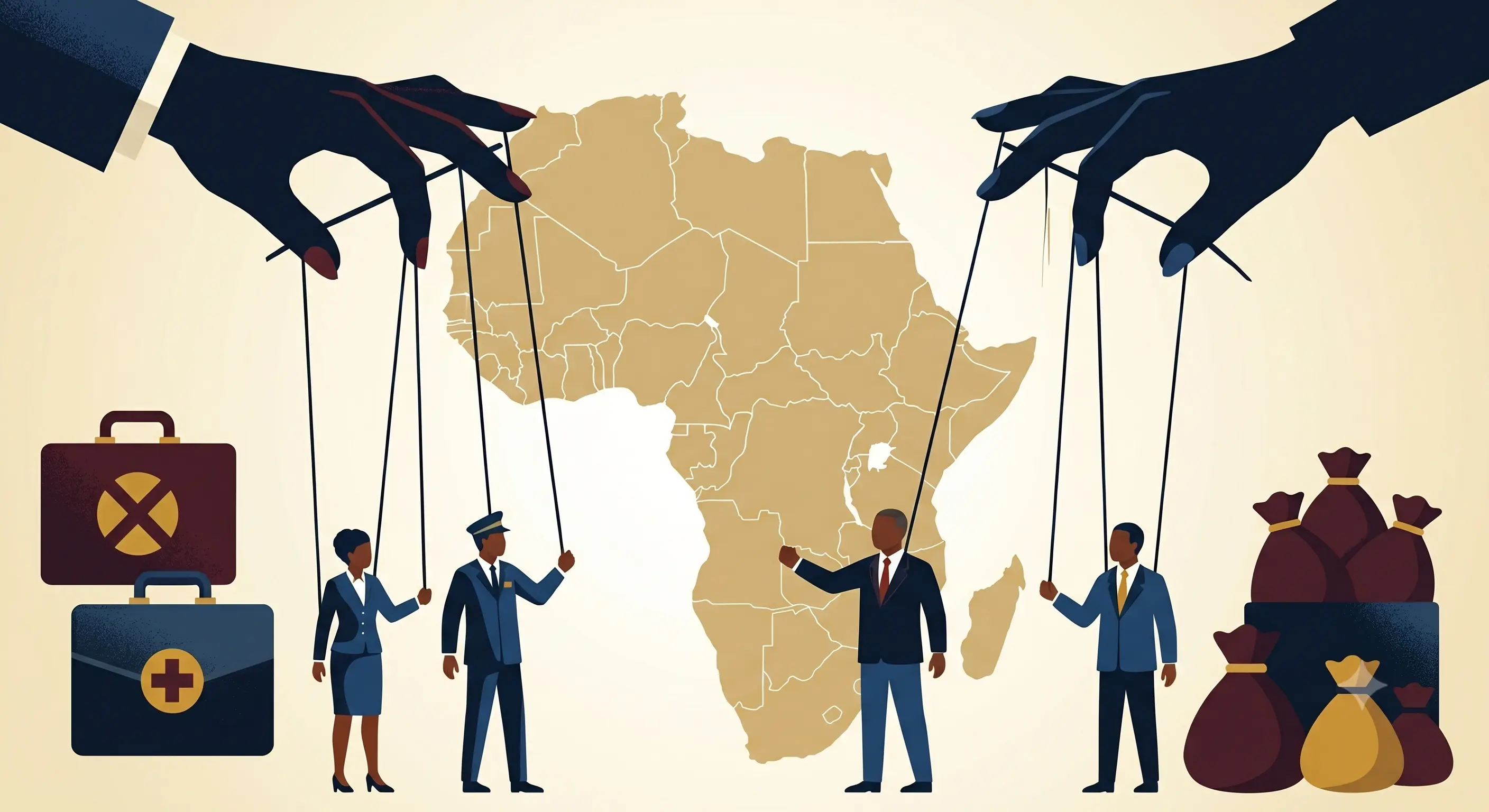
The charter South Africa abstained from in Accra did not emerge from a grassroots African movement. It was part of a coordinated, well-funded campaign by American evangelical organisations that have been exporting their culture wars to Africa for two decades.
Between 2007 and 2020, more than 20 right-wing Christian groups spent at least US$54 million fighting LGBTI rights and sex education on the continent. One organisation, the Fellowship Foundation, sent more than US$20 million to Uganda alone between 2008 and 2018. Their influence is direct and documented: Ugandan MP David Bahati, who introduced the original “Kill the Gays” bill, worked closely with US evangelical groups. Whole paragraphs of that bill were reportedly borrowed from presentations given by American pastors at a 2009 conference in Kampala.
Family Watch International, designated a hate group by the Southern Poverty Law Centre, has been training African diplomats and politicians for years, including through its annual Global Family Policy Forum in the United States. Sharon Slater, its president, travels regularly to Africa for high-level strategy meetings.
It is not only American evangelicals. European right-wing Christian networks, from Italy’s far-right political foundations to Eastern European Orthodox lobby groups, have also poured money into African anti-LGBTI campaigns. The machinery is global, coordinated, and entirely foreign to the continent.
At the same Accra conference where South Africa abstained, Moses Foh-Amoaning, Executive Secretary of Ghana’s National Coalition for the Family Values Bill, told delegates: “Don’t be fooled by the human rights argument. It is a lie from hell.” That is not an African sentiment. That is the language of a global anti-rights movement, funded largely from outside the continent, that has found fertile ground among some of Africa’s most powerful politicians.
Where were these missionaries when we were fighting apartheid?
My father grew up under the Bantu Education Act. My grandparents lived through forced removals and pass laws. Where were these “family values” crusaders when Black South Africans were being killed for demanding the right to vote, to love, to live?
They were not here. Or if they were, they were not standing with us.
The same evangelical machinery that now claims to protect “African family values” has deep historical ties to white supremacist ideology and the defence of colonial and apartheid structures. The Christian Right in the United States worked hard to “erase their bad reputation as supporters of apartheid regimes and replace it with the image of protectors of a supposedly ‘authentic African’ patriarchal family tradition.”
They are not here to save African culture. They are here to advance a political agenda – one funded by American dollars, shaped by American culture wars and dressed up in African clothing.
We once had prophets who saw through this. Archbishop Desmond Tutu, a theologian who stared down apartheid and never confused the gospel with colonial power, wrote in his collection God is Not Christian that a truly inclusive family values system cannot exclude anyone. He called homophobia “a perversion of the gospel” and said he would not worship a homophobic God.
Today, we have fewer clergy like him. Fewer church leaders are willing to risk their congregations for the truth. But I hold onto Tutu’s words not as nostalgia but as a shield. Because when foreign preachers arrive with dollars and damnation, I remember that an African archbishop already gave us a different theology: one where love does not need a passport and family does not need a law.
What Ghana taught us about ourselves
The South African delegation in Accra did something important. They said no – or at least, not yet. They cited the Constitution. They made clear that a document defining marriage as only between a man and a woman is incompatible with our legal order.
But abstention is not leadership. It is a reservation of rights – a holding pattern. And that is precisely the problem: South Africa is the only country on the continent with constitutional protections for sexual orientation. South Africa is the only country in Africa that pioneered same-sex marriage nearly two decades ago. South Africa is a member of the UN LGBTI Core Group. And yet, at the very moment when a charter that would roll back those protections was being tabled, we said: we reserve our rights not to adopt.
That is technically correct. But it is not prophetic. It is not the voice of a country that once told the world that human rights are universal, indivisible, and non-negotiable.
What Mozambique did – citing “logistical and scheduling constraints” – was an excuse. South Africa had a much more principled reason but still chose not to vote against. Why? Because it is easier to abstain. Because speaking out loudly and unequivocally would upset other African nations. Because the ghost of “African solidarity” is still used to silence the voices of those who are different.
The family values we already have
When I think about “family values”, I do not think about the American evangelical definition. I think about my own family: my mother, my siblings, my nieces and nephews. I think about the queer people I know who are parents, who are caregivers, who are churchgoers, who are community builders. We are not a threat to the family. We are the family.
The Civil Union Act turned 20 this year. In those two decades, thousands of same-sex couples have been married, have raised children, have paid taxes, have buried their partners and have nursed their parents through old age. We are not an experiment. We are not a Western import. We are South African.
The Constitution gave us the legal framework to exist. But the Constitution does not speak for itself. It requires defenders. It requires representatives who are willing to do more than abstain – who are willing to vote “no” when a charter seeks to erase us.
A path forward – modest but clear
What should South Africa do differently?
First, convert abstentions into principled votes against. If a charter or resolution conflicts with the Constitution, we should vote no, not reserve our rights. Abstention is for uncertain countries. We are not uncertain. Our Constitution is clear.
Second, name the foreign influence. South Africa should publicly acknowledge that much of the anti-LGBTI legislation sweeping across Africa is funded and advised by US evangelical organisations with deep pockets and no investment in African self-determination. We should support African civil society that is fighting back, and call out the hypocrisy of a movement that claims to defend African values while being bankrolled by American culture warriors.
Third, lead the coalition of the willing. There are other African nations – Botswana, Namibia and Mozambique, in their own way – that are not on board with the “Family Values” agenda. South Africa should convene them. Not to preach but to build a counter-coalition that offers an alternative vision of African humanism: one that includes everyone, not just those who fit a narrow definition of “traditional”.
The 2026 abstention in Accra was not a defeat. But it was not a victory either. It was a holding action. In a year when we celebrate 20 years of civil unions and 30 years of the Constitution, we should ask ourselves: Is “reserving our rights” really all we have left to offer? Or can we find the courage to do what our founding document requires, to stand up, speak clearly, and say that no charter, no law, and no foreign-funded crusade will ever define family without us?
We have the words. The Constitution gave us those. Now we need the will.
Matuba Mahlatjie is the media and communications officer at the Other Foundation