

Israel’s strikes on key Iranian infrastructure, followed by retaliation from Iran and the involvement of the United States, triggered the largest oil supply disruption ever recorded, with the International Energy Agency (IEA) warning of a historic supply shock as the conflict choked global markets. This demonstrated how quickly a regional conflict can translate into economic pain on the other side of the world.
When global oil prices spiked and paraffin rose by R11.67 a litre in April alone, it was ordinary South Africans, already stretched thin by rising electricity tariffs and food inflation, who bore the brunt. This war did not create South Africa’s energy poverty. It exposed it.
Energy poverty in South Africa is not simply about income. It is about infrastructure.
There has been some relief since. Fuel prices dropped again on 1 July 2026, with petrol down by roughly R2 a litre, diesel by more than R3 a litre and paraffin down R5.23 a litre, as global oil prices eased after a ceasefire and the reopening of the Strait of Hormuz. But the relief is only partial: electricity tariffs, food prices and the broader cost of living remain elevated and the structural exclusion of poor households from reliable, affordable energy has not disappeared simply because fuel is briefly cheaper.
Paraffin is priced at the global market rate, with no insulation, subsidy or strategic reserve standing between that market and ordinary South Africans who must manage rising living costs and sudden increases in paraffin prices. This crisis is unfolding amid high unemployment, widespread low-wage and insecure work, rising electricity tariffs, escalating food costs and soaring paraffin prices, placing unbearable financial pressure on already vulnerable households.
The reality is that this war has exposed and deepened a structural energy crisis that has existed for decades. First, it highlighted the volatility of oil markets and showed that ordinary South Africans are likely to bear the brunt of international conflict.
South Africa has one of the most carbon-intensive electricity systems in the world, built around ageing coal infrastructure. Eskom’s persistent failures, generation shortfalls, maintenance backlogs and load-shedding have left millions of households without reliable electricity. These are the households most likely to fall back on paraffin, wood and coal as alternatives.
South Africa’s fuel relief architecture systematically excludes the poor. The country imports both crude oil and finished petroleum products, with prices pegged to international benchmarks and the rand-dollar exchange rate. Brent crude surged by more than 55%, from about $72 a barrel in February to nearly $120 at its peak, a shock that passed through to consumers without any buffer.
The need for a just transition
A Just Energy Transition is the shift away from fossil fuels towards renewable energy in a way that protects workers and communities who depend on the old system, rather than leaving them behind. South Africa has committed, in principle, to such a transition but that commitment has not yet reached the households that need it most.
According to the Presidential Climate Commission (PCC), a just transition is one that builds resilience through “affordable, decentralised, diversely owned renewable energy systems” with a human-centred approach that avoids harming the most vulnerable communities.
The PCC is explicit that a well-managed Just Energy Transition can be a strong driver of new jobs, social justice and poverty eradication, but the transition must be fair and perceived to be fair.
South Africa has the resources to make good on that promise. Many regions receive more than 2 500 hours of sunshine annually and the country’s total solar energy potential is estimated to exceed 6 000GW, according to the PCC’s Solar Outlook Research Report.
South Africa’s electrification rate of more than 90% conceals an underlying reality: many households connected to the grid still rely on candles, wood or paraffin, not because they lack access, but because they cannot afford to sustain regular electricity use, according to research by the Institute for Security Studies (ISS) African Futures programme.
When paraffin prices spike and the state offers no relief, it is not an oversight. It is a measure of how far the just transition still has to travel. The potential to generate clean, affordable, decentralised energy is not theoretical. It is measurable, mapped and increasingly cost-effective.
A just transition in South Africa in 2026
A just energy transition can only be realised by prioritising renewable energy, which would help prepare South Africa for future global shocks and reduce its vulnerability to international crises. It could provide a safe and sustainable cushion that strengthens the country’s energy self-sufficiency.
A Just Energy Transition is not a distant policy ambition in 2026; it is an urgent necessity. Prioritising renewable energy would reduce South Africa’s exposure to the kind of global price shocks that have hit poor households hardest this year.
But the transition will only be just if it is measured not by megawatts added to the grid but by whether it reaches the people who need it most. Energy poverty falls hardest on women and children, and informal settlements, a central feature of South Africa’s cities, remain routinely excluded from energy services.
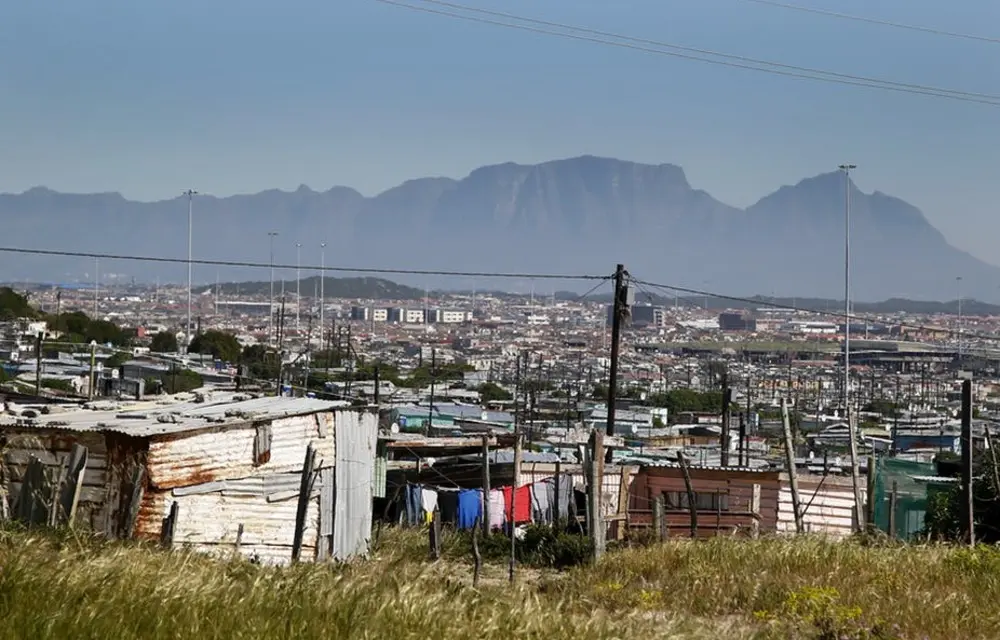
At its core, the challenge is one of exclusion. The national electricity network was created for formal, settled communities, while informal settlements remain outside its original design and reach.
Bokang Galogakoe is a candidate legal practitioner at the Centre for Environmental Rights