


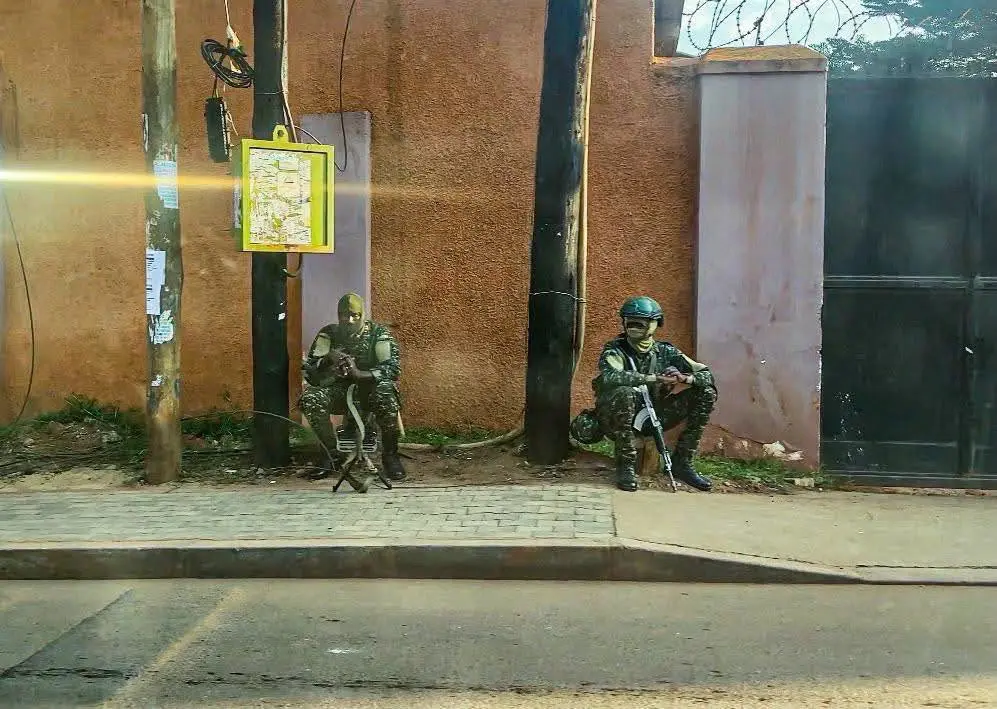
At midnight on 28 June 2026, military operatives of the Uganda People's Defence Forces (UPDF) raided the premises of Daily Monitor publications and NTV Uganda, forcibly shutting the operations of what many consider Uganda's only boldly independent media institutions.
The Nation Media Group (NMG) said the siege was carried out on the orders of General Muhoozi Kainerugaba, the head of the UPDF and son of Uganda's president, Yoweri Kaguta Museveni, who has been in power since 1986.
The military action against the NMG, which owns Daily Monitor, NTV, Spark TV, Dembe FM, The EastAfrican and Business Daily, represents an attack on independent media and press freedom.
The closure has reportedly left 1 142 NMG employees jobless, emotionally distressed and vulnerable to cyber harassment. The public has been denied access to information and participation in public discourse, undermining democratic principles.
The siege has generated public outrage and contributed to concerns about Uganda's international image, with possible implications for tourism, diplomatic relations and trade.
Relations between the Ugandan government and Daily Monitor, in particular, have been strained, with the ruling National Resistance Movement accusing the publication of undermining national security, peace and political stability.
However, Daily Monitor says it is practising principled journalism aimed at promoting accountability, transparency and justice.
In 2013, the state temporarily shut Daily Monitor and NTV over the publication of a leaked security dossier concerning the alleged "Muhoozi Succession Project". Similar actions were taken in 2006 and 2002 over other matters. By 2026, the debate surrounding the Muhoozi project had evolved, with supporters organised under the Patriotic League of Uganda, a political movement advocating for Muhoozi Kainerugaba's future leadership ambitions.
Daily Monitor and NTV have reported on government programmes, service delivery initiatives, diplomatic engagements, poverty alleviation efforts, tourism and economic developments under Museveni's administration.
The outlets have also reported on allegations of corruption, misuse of public resources, deteriorating infrastructure, constitutional concerns, electoral malpractice, human rights violations, inequality and democratic decline. Supporters of independent journalism argue that Daily Monitor and NTV have sought to hold power accountable, a role that often places them at odds with political authorities.
Observers suggest that tension escalated after the January 2026 elections, amid allegations of abductions, arbitrary arrests and torture involving opposition figures and government critics.
Critics contend that state authorities prefer media outlets to frame abductions as arrests or avoid reporting such incidents, an approach that independent media organisations argue conflicts with professional journalistic ethics and standards. Journalists face difficult choices in reporting incidents involving unidentified security personnel, disputed detentions and allegations of human rights abuses.
Some victims of alleged abductions have appeared in public with injuries, psychological trauma and emotional distress, intensifying debates about the responsibilities of journalists in reporting such events.
Pressure on independent media to sanitise reports of alleged human rights violations presents ethical dilemmas. While some media houses have adapted to the pressures, the NMG has been perceived as reluctant to make such compromises.
Uganda's situation has drawn comparisons with The Gambia under former president Yahya Jammeh, whose administration was criticised for harassing, intimidating and detaining journalists.
Analysts argue that restrictive licensing requirements and legal actions against journalists might contribute to a climate of self-censorship in the media.
When a nation fears questions more than its own mistakes, it risks sliding towards authoritarianism. History demonstrates that silencing dissenting voices and restricting press freedom often postpones debates that eventually demand national attention.
A true test of democracy lies in how governments respond to criticism, dissent and alternative viewpoints.
Traditional media faces pressures, including competition from social media and artificial intelligence, cyber harassment, declining revenues, poor remuneration, corruption and restrictive regulatory environments.
The closure of Daily Monitor and NTV could represent a setback for democratic development in Uganda and contribute to greater restrictions on media freedom.
The outcome of discussions between Rostam Aziz, a principal shareholder in the NMG, and General Muhoozi Kainerugaba might have long-term implications for editorial independence and press freedom in Uganda. The question remains: When independent media and press freedom are under siege, what happens next?