


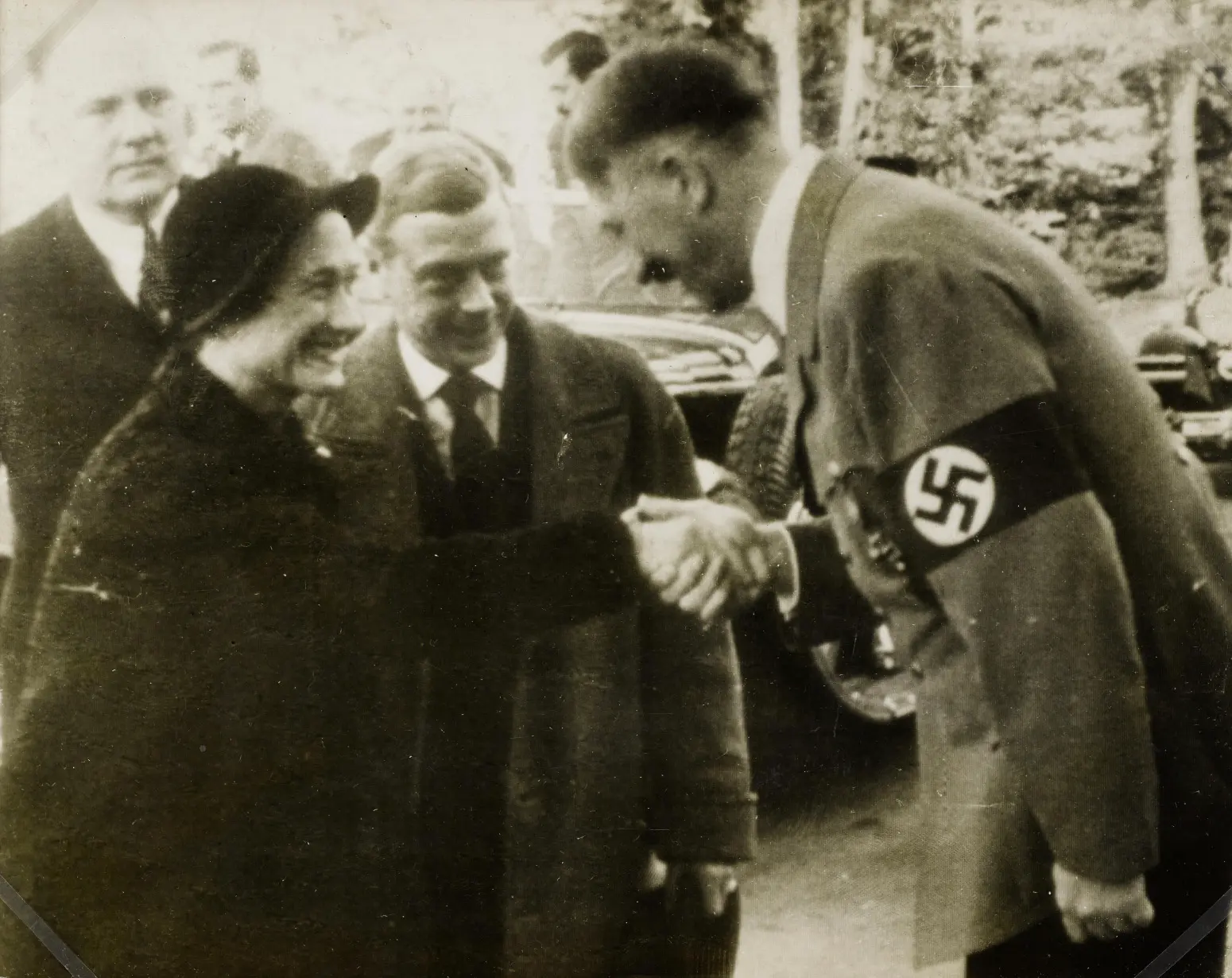
During the Great Depression, the British government, led by Neville Chamberlain and later Winston Churchill, faced a threat from Nazi Germany. In 1937, the duke of Windsor and his wife took an unauthorised private tour of Germany. They met Adolf Hitler, performed Nazi salutes and publicly praised the Nazi regime. This undermined the British government's diplomatic position. Hitler believed he could exploit divisions in the British parliament, creating an image of a country divided over how to approach the Nazi threat.
Similar to a modern monarch, chief, public figure or former president holding unauthorised meetings with foreign rulers or oligarchs, Edward VIII projected a dangerous dual authority. Foreign adversaries sought to exploit this.
This type of behaviour is not unusual in South Africa's democratic era. In recent years, various individuals and groups have participated in international and continental negotiations, talks and visits that conflict with South Africa's established foreign policy, either unintentionally or deliberately.
Archbishop Desmond Tutu's value-based diplomacy (1996)
In 1996, archbishop emeritus Desmond Tutu publicly criticised the South African government for its lenient approach to the Abacha regime in Nigeria. While Tutu's moral authority was clear, his international lobbying for tougher sanctions contradicted the government's multilateral stance. This sent a message to the international community about South Africa's lack of consensus on addressing the Nigerian human rights crisis, complicating the government's negotiating strategy.
Private citizen mediation in Zimbabwe (Post-2000s)
Various South African trade unionists, religious leaders and civil society figures made solidarity visits to Zimbabwe that bypassed South African mediation processes. By publicly pressuring the Zimbabwean government or independently meeting opposition leaders, the groups intervened in the sensitive back-channel negotiations that the South African state was attempting to manage as the regional broker.
Dalai Lama visa controversy (2009, 2011 and 2014)
Public figures, religious leaders such as Tutu and NGOs repeatedly invited the Dalai Lama to South Africa. The South African government consistently denied him a visa. This created a public diplomatic conflict between the government's practical alignment with Beijing and the value-driven foreign policy supported by much of the South African public.
Julius Malema's independent diplomatic visits (2010)
While serving as president of the ANC Youth League, Julius Malema led a delegation to Zimbabwe to support Robert Mugabe and later visited Venezuela to learn about "petro-nationalism" under Hugo Chávez. Malema's outspoken support for Mugabe's land policies and governance style undermined president Jacob Zuma's mediation efforts, creating a perception of a divided South African approach to the Zimbabwean crisis.
Pro-Israel lobbying by domestic political parties (2023-25)
From 2023 to 2025, several political parties, particularly the Democratic Alliance and Patriotic Alliance, together with civil society groups, criticised the South African government's International Court of Justice genocide case against Israel. This signalled to Israel and its international allies that there was no domestic consensus on the government's foreign policy, weakening South Africa's negotiating position and undermining its attempt to present a united moral front globally.
AfriForum and the Washington Memorandum (2025)
A delegation from the civil rights organisation AfriForum and the Solidarity Movement travelled to Washington, DC, to deliver a "Washington Memorandum" to senior US officials. The advocacy was seen as a key factor in the US government's decision to boycott the November 2025 G20 Summit in Johannesburg. By bypassing the South African state to influence a foreign power's policy, AfriForum leveraged international pressure against the government's positions, leading to significant diplomatic and economic tension.
Former president Jacob Zuma's visit to Ajay Gupta (June 2026)
In June 2026, Zuma visited Uttarakhand, India, where he was photographed meeting Ajay Gupta, a central figure in South Africa's state capture scandal and currently a fugitive. The South African government condemned the meeting. It emphasised that Zuma, despite being a former president, lacked the authority to conduct independent foreign policy or engage with individuals involved in major criminal investigations and characterised his actions as disregarding the country's national interest.
For South Africa, the gap between foreign policy and the actions of non-state actors is more than a political annoyance; it creates systemic weaknesses. When foreign policy becomes a battleground rather than an established mandate, risks to national security and global influence grow.
In diplomacy, consistency is key. When the South African government speaks with one voice but prominent figures, opposition parties or civil society groups advocate the opposite position with foreign powers, it creates strategic confusion. South Africa often presents itself as a leader of the Global South. If it appears internally divided, it struggles to maintain the authority needed to lead multilateral initiatives. Other nations in the Global South might regard South Africa as an unreliable partner if they believe government commitments can easily be undermined by domestic political instability.
When domestic factions turn to foreign powers to advance local agendas, they invite those powers to interfere in South African affairs. By creating back channels to Washington, Brussels or elsewhere, the groups provide foreign actors with leverage to pressure or penalise the South African state through diplomatic and economic means.
The Constitution grants the executive responsibility for foreign relations. When this is bypassed, it undermines the state's institutional framework. It signals to the world that the South African government does not exercise full control over its national interests, potentially diminishing its standing in international forums such as the United Nations, African Union or G20.
Foreign investors seek stability. A country where foreign policy shifts dramatically or where organisations can disrupt official international projects is regarded as high risk. This can lead to capital flight or a withdrawal of foreign investment because businesses might view the regulatory and diplomatic environment as unstable.
When private individuals or traditional leaders sidestep national protocols, the state's ability to secure its borders and territory weakens. This could leave the country vulnerable to transnational crime, illegal immigration and intelligence infiltration, which the state might be ill-equipped to manage because official channels have been compromised.
As demonstrated by Israel-related diplomacy, when the state depends on NGOs or activist groups to shape its foreign policy narrative or moral framing, it becomes vulnerable to the biases and agendas of those organisations. This can reduce government to serving the interests of private groups, further weakening its ability to adopt objective, national interest-driven policies.
Bringing opposition parties, traditional leaders, civil society and the business sector to the table before finalising major positions could produce policies that better reflect broad national consensus. This approach would significantly reduce the likelihood of dissatisfied groups pursuing dissenting or parallel diplomacy.
South Africa's Constitution prioritises transparency and public participation. Extending the principles to foreign relations could help ensure that foreign policy reflects the values of the entire nation rather than those of the governing party alone.
Documents later recovered by the Allies, known as the Marburg Files, confirmed that the German government sought to use the duke of Windsor as a diplomatic instrument. The files revealed that the duke believed war might have been avoided had he remained on the throne and suggested that he considered continued bombing could force Britain towards negotiation. By treating the duke as a royal intermediary, Germany sought to create the impression of a divided British establishment and portray him as sympathetic to the Nazi cause.
For a country in the Global South, influence is often linked to perceived unity and clarity of purpose. By allowing foreign policy to become an arena for domestic disputes, South Africa risks shifting from global leader to observer of its own diplomatic future, with its international standing shaped by the loudest voices rather than by the state's long-term interests.