


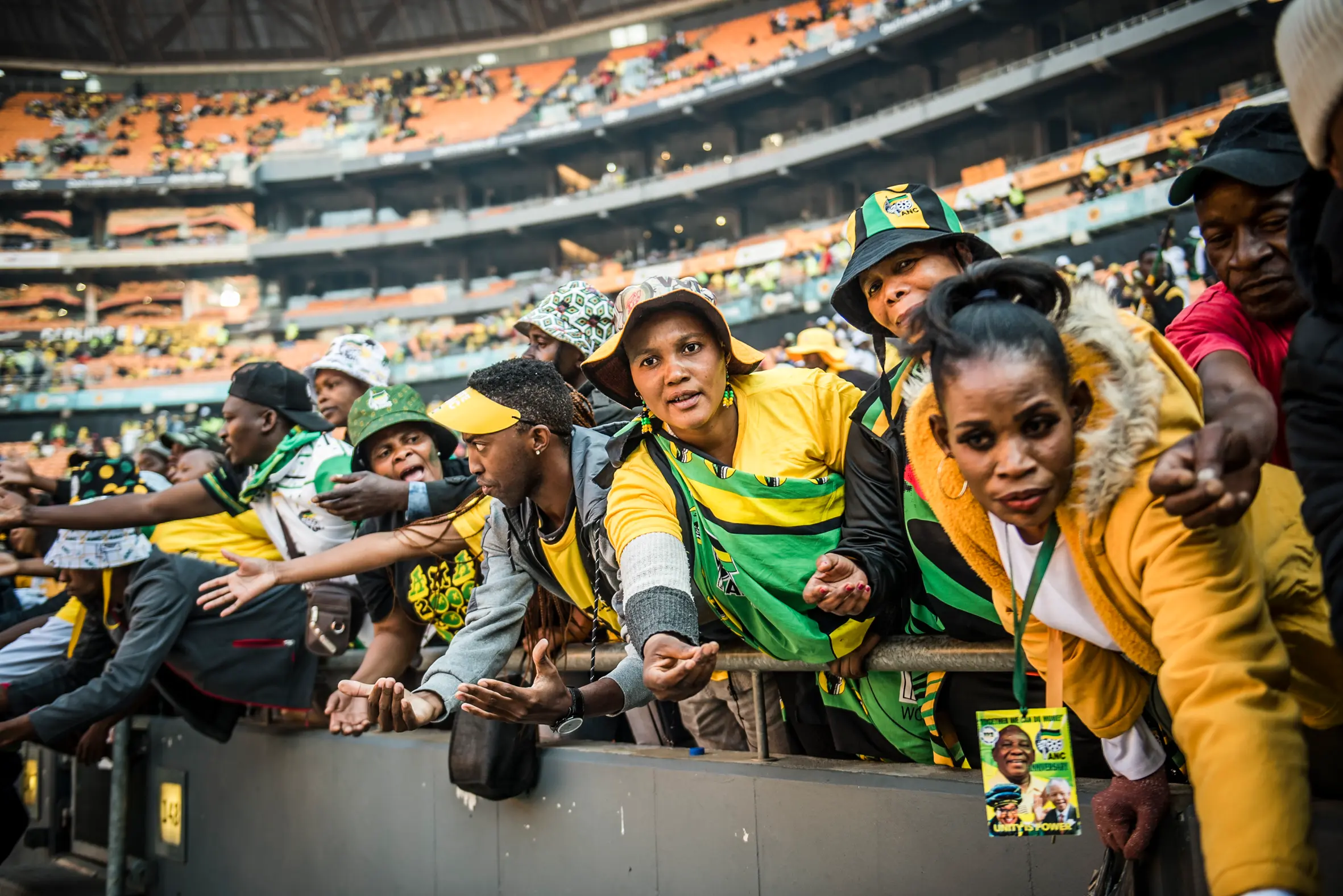
The ANC needs to understand the psychology of brand positioning and risk analysis in the 21st century. A political brand is not built by history alone. It is measured by deeds, decisions and the extent to which a movement remains associated with integrity, competence and the lived concerns of the people.
In business, a brand loses value when the gap between promise and experience becomes too wide. In politics, the same principle applies with greater consequence: citizens withdraw consent from movements that no longer seem able to explain, represent or improve their lives.
For those who lived through the struggle, the ANC's identity as a liberation movement remains powerful. It carries sacrifice, memory and moral authority. But for younger generations, who encounter the party mainly through the outcomes of democracy, that history does not automatically translate into confidence. They judge the ANC by the quality of public services, the strength of the economy, the credibility of leadership and the seriousness with which it responds to corruption and social distress.
The party's central difficulty is therefore not that its history has become irrelevant; it is that history can no longer substitute for performance. This is the new terrain on which the ANC must compete. The electorate is more sceptical, more fragmented and more exposed to alternative political messages than at any point since 1994.
The 2024 election confirmed this shift. The ANC remained the largest party but lost the majority it had held for three decades, winning 40% of the national vote and 159 seats in the National Assembly.
The result was not simply a numerical setback. It was a reputational signal: a significant portion of the public no longer sees the party as a leader of society in the democratic future.
From liberation memory to delivery credibility
The ANC has long promised the development of productive forces: the economic and social capacity required to build a democratic developmental state.
Yet weak growth, unemployment and declining institutional confidence have made that promise harder to sustain.
The question is no longer only whether the ANC can invoke the language of transformation but whether it can demonstrate the leadership discipline required to deliver it. Delivery credibility is built through visible competence: reliable municipalities, working infrastructure, accountable procurement, capable public servants and policy choices that are explained honestly to citizens.
This requires more than slogans about renewal. It requires a practical theory of trust. Voters assess whether a party can manage risk. When local government collapses, when communities see corruption rewarded or ignored, the public reads the failures as signs of institutional decay. Over time, the decay becomes part of the party's brand.
The ANC therefore has to treat governance failure not as a communication problem but as a strategic risk that corrodes its political brand as a liberation movement.
Leadership choices carry reputational costs
History offers a useful warning. South African lawyer and party founder Pixley ka Isaka Seme once responded to claims that the ANC was a dying movement by insisting that Congress was not dead but weakened by internal division, personal jealousies and a lack of focus. A movement that fails to confront internal weaknesses risks allowing its opponents to define it. Internal renewal must therefore be judged by whether it changes incentives inside the party, not by whether it produces another conference declaration.
The later removal of Seme from the ANC presidency and the election of Reverend ZR Mahabane in 1937, showed that renewal sometimes requires difficult internal correction.
In the post-1994 era, the ANC faces a similar principle in a different form: every appointment, alliance and public decision has consequences for the party's reputation. The ANC cannot afford choices that appear to contradict its claim to be a force against corruption and misgovernance. The public will not be persuaded by anti-corruption language if it is accompanied by political arrangements that look like impunity.
Leadership choices should be assessed through a risk lens before they become crises. The question should be whether the decision strengthens or weakens the party's claim to be a credible steward of the state. Political parties often underestimate the cumulative effect of small reputational compromises. But voters notice patterns. They notice who is promoted, who is protected, who is disciplined and who is ignored.
The populist risk
The party's missteps on immigration show how quickly political vacuums are filled. Where the state appears slow, unclear or defensive, populist movements thrive.
Populism often succeeds because it speaks in intuitive, simple claims: immigrants take jobs; imports destroy local industry; crime requires only harsher punishment. The claims might be true, false or incomplete but their force lies in their immediate appeal. They convert complex social pressures into emotionally satisfying explanations.
That is why reputational risk matters. The populist thrives in a fast-moving, low-context information environment. So does the scammer. This does not mean every populist is a con artist, but it does mean that political movements which fail to explain complexity clearly will be outflanked by those who offer certainty, blame and emotional release.
In a society under pressure, ambiguity is politically expensive. If the state cannot tell a convincing story about borders, labour markets, crime, social cohesion and economic opportunity, someone else will tell a simpler one.
The answer is not to imitate populism. That would further damage the ANC's long-term credibility. The answer is to govern with clarity and communicate with discipline.
Immigration policy, for example, must be lawful, humane and firm. Industrial policy must explain how local production can be expanded without pretending that global trade can be wished away. Crime policy must combine enforcement with institutional repair. Citizens can accept complexity when leaders speak plainly, act consistently and show evidence of progress.
Renewal requires risk discipline
If the ANC wants to regain electoral support, it must rethink how it earns public trust.
That starts with taking the masses into confidence, aligning leadership decisions with ethical renewal and screening political risks before they damage the brand. It must also become more serious about consequences. Renewal cannot be credible if poor performance carries no cost, if corruption is handled selectively or if internal politics repeatedly overrides the national interest.
Finally, the ANC's future will depend not only on what it says about itself but on whether its conduct convinces citizens that it remains a credible instrument for democratic transformation.
The party does not need to abandon its history. It needs to make that history legible in present-day performance. A liberation movement that cannot govern effectively becomes a memory. One that learns to manage trust, risk and delivery can renew its mandate.
The choice before the ANC is therefore stark: treat its political brand as a strategic asset to be protected or watch it become another casualty of democratic disappointment.
Ashley Nyiko Mabasa is an ANC Youth League NEC and NWC member and head of drafting and data analytics, as well as coordinator of policy, monitoring and evaluation. He is also the critical minerals and energy strategist.