

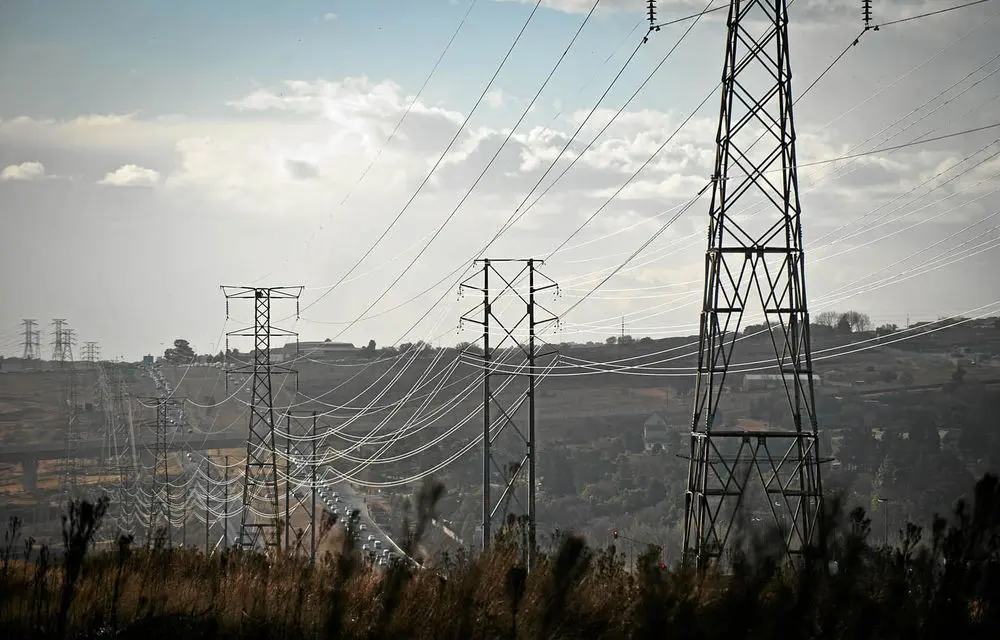
Contrary to popular opinion, Southern Africa doesn’t have a power problem. It has a transmission problem.
To the millions of people and businesses that struggle to get reliable power, it may come as some surprise that the region has more than 4GW of surplus generating capacity – almost six times Botswana’s entire peak electricity demand. Yet that capacity is effectively stranded in Angola, South Africa, Mozambique and Tanzania, while most of their neighbours remain in deficit.
As we meet in Durban for the Southern African Development Community Summit – under a theme centred on industrialisation, infrastructure, agriculture and critical minerals – this should not be left to energy ministries and grid specialists alone. Reliable and affordable electricity is the sine qua non of economic transformation. Almost every ambition we have for the region depends upon it.
The rich regional deposits of critical minerals cannot be mined, let alone beneficiated, without electricity-intensive operations. Agricultural transformation depends on irrigation, cold storage and processing. Industrialisation simply cannot take off on an unreliable grid. And the digital economy – from AI to data centres – will be an ever-hungrier consumer of power.
Yet the regional architecture for sharing power already exists. The Southern African Power Pool (SAPP) provides a market through which electricity can be traded across borders. Volumes on SAPP’s competitive electricity markets grew by almost 70%last year.
The weak link is the physical network: too few interconnectors and too little transmission capacity. In April alone, more than half of the electricity that buyers and sellers were ready to trade could not move because the network could not carry it.
Southern Africa’s energy resources are naturally complementary. Botswana and Namibia have abundant sun; Zambia and Angola hydro; Mozambique gas; South Africa a broad generation mix. At different hours, in different seasons and under different pressures, different parts of the region can carry the load. When drought strikes one country, a plant fails in another, or demand suddenly surges elsewhere, power should be able to move to where it is needed. That interdependence can give all of us greater energy security than twelve separate attempts at self-sufficiency.
But if today’s challenge is making full use of the power we already have, tomorrow’s is producing much more of it for the industrialisation ahead. Better cross-border transmission helps solve both. A generator in Botswana need not rely on Botswana’s demand alone if it can sell into a market spanning Southern Africa. That scale makes the next generation of power projects easier to finance and more attractive to investors.
A new model is beginning to emerge: privately financed generators built to sell directly into the regional market. Botswana is part of that shift. The 100MW Tati Solar Project will be our first utility-scale merchant solar plant – eschewing the traditional arrangement under which a national utility commits in advance to buy its power under a long-term contract.
Botswana, alongside Namibia, sits beneath some of the richest sunshine on Earth. Access to buyers across the region gives Botswana and Namibia the means to turn that natural advantage into generating capacity far beyond domestic demand. Merchant generation barely existed in the region two years ago; today, several hundred megawatts are in the pipeline. An order of magnitude more could be unlocked through stronger transmission links.
Southern Africa has spent years proving that these interconnectors make economic sense. Yet too many remain trapped in feasibility studies, environmental assessments and financing discussions. ZIZABONA, one of the region’s most important planned interconnectors, would link Zambia, Zimbabwe, Botswana and Namibia. It was first agreed nearly two decades ago.
The next decade cannot look like the last. SADC governments must treat cross-border lines as strategic industrial infrastructure – accelerating permitting and financing, coordinating approvals across borders, and moving viable projects from feasibility into construction.
Botswana has begun to act on this. In 2025, we reached agreements with Zambia, South Africa and Namibia to expand electricity trading capacity. In March 2026, we secured funding to advance new interconnectors with Zambia and Namibia and revive the long-planned link with South Africa. At the same time, we are reforming our electricity market to open the grid further to independent generators and allow private providers to invest in and develop new transmission infrastructure.
Botswana’s geography gives it a critical role in a more integrated regional power system. We sit between South Africa, the region’s largest electricity market, and Namibia, Zambia and Zimbabwe – a natural crossroads for power moving across Southern Africa. We also intend to become a substantial source of new supply. By 2029, we are targeting generation capacity more than ten times our current peak demand, with major projects already moving from plans into construction.
Southern Africa has no shortage of interconnector studies. What we now need are deadlines for delivery. The prize is not simply more electricity traded across borders, but the investment, industry and jobs that reliable power makes possible.
Duma Boko is the president of Botswana