

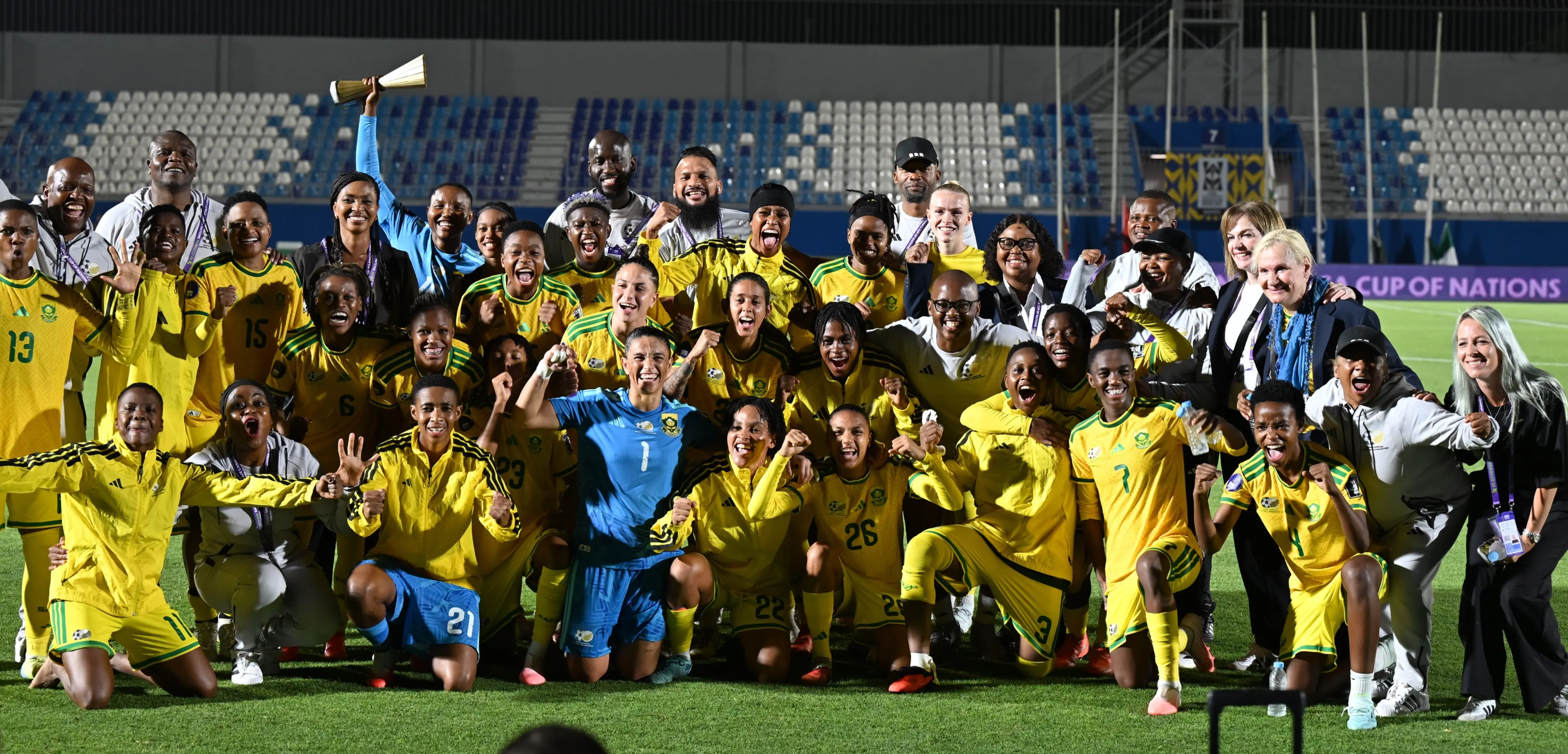
When South African women’s football makes headlines, it is often because our players have achieved something extraordinary against the odds. We celebrate their resilience, applaud their victories and proudly wrap ourselves in the national flag.
Then, too often, we move on.
The cycle should concern us. A country cannot build a sustainable sporting industry by celebrating athletes for succeeding despite weak systems. Resilience is admirable but it should not become a substitute for development. Talent deserves opportunity, not merely admiration.
If South Africa is serious about becoming a football nation that competes consistently on the continent and global stage, growing women’s football is not a peripheral objective. It is central to the future of the game.
This is not simply about equality. It is about a national strategy.
Women’s football is part of one football ecosystem
The first misconception we need to challenge is that investment in women’s football somehow comes at the expense of the broader game. Football is one ecosystem. Its development should be understood as an expansion of the game’s total capacity, not a redistribution of a fixed pie.
Every girl who gains access to quality coaching, safe facilities and organised competition expands South Africa’s potential talent pool. Every woman who becomes a qualified coach, referee, sports scientist or administrator adds expertise to the football workforce. Every competitive women’s league creates opportunities for broadcasters, sponsors, event organisers, media professionals and entrepreneurs.
The economic logic is straightforward: excluding half the population from meaningful participation in football limits the size of the market and the depth of the talent pipeline.
Growing women’s football therefore grows football.
South Africa has demonstrated what is possible. Banyana Banyana have achieved success on the continent and competed with distinction internationally. Their achievements have given millions of girls role models and demonstrated that football can be a pathway to excellence.
Inspiration is only the beginning.
From inspiration to infrastructure
A girl may watch a national team player lift a trophy and decide that she wants to become a footballer. But what happens next?
Does her school have a girls’ team? Is there a safe pitch nearby? Is there a qualified coach? Can she participate in regular competition? Is there transport? Does her community club have the resources to develop her? Is there a provincial pathway? Can she progress into professional football without abandoning her education?
The questions expose the difference between inspiration and development. Talent does not develop simply because it exists. It develops when institutions create the conditions for it to be identified, nurtured, tested and rewarded.
That requires investment across the entire football pyramid; schools football, grassroots clubs, provincial structures, coaching, refereeing, player welfare, sports science, facilities and elite competition.
The mistake would be to concentrate resources at the top while neglecting the foundations beneath it. A successful national team cannot indefinitely compensate for a weak development system.
If South Africa wants a deeper and more competitive pool of women’s talent, development must become systematic rather than episodic.
Governance is the foundation
This is ultimately a governance challenge. Women’s football needs more than good intentions and occasional funding announcements. It needs institutions capable of making long-term commitments and being held accountable for delivering them.
Good governance means that women’s football is incorporated into strategic plans, budgets and performance measures rather than treated as a programme that receives attention when results generate public enthusiasm.
It means transparent resource allocation. It means clear development targets. It means monitoring participation numbers, player progression, coaching capacity, competition quality and commercial growth. It means understanding where the system is failing and being prepared to change course.
Most importantly, it means institutionalising responsibility.
Leadership should not have to be persuaded every few years that women’s football matters. Its development should be embedded in the architecture of the game.
This is where equality and governance intersect. Equality is not achieved through slogans. It is achieved through systems that consistently remove unnecessary barriers to opportunity.
Economics of opportunity
There is also a compelling commercial argument. Women’s football is increasingly becoming an important part of the global sports economy. Audiences are growing, sponsorship opportunities are expanding and broadcasters are recognising the value of women’s competitions. The most significant opportunity may not simply be existing revenue but the new audiences and markets that a stronger women’s game can create.
South Africa should be positioning itself for growth rather than waiting for the market to mature elsewhere.
But commercialisation must be approached intelligently. Investment will not follow sentiment indefinitely. Sponsors need credible competitions, professional administration, compelling storytelling, reliable audiences and measurable returns. Broadcasters need predictable schedules, quality production and marketable content.
This creates another reason to strengthen governance.
Commercial growth and institutional credibility reinforce each other. Better governance makes the game more investable; investment enables professionalisation; professionalisation improves the product; and a better product attracts larger audiences and further investment.
The objective should therefore be to build a sustainable economic model for women’s football, not simply to secure short-term sponsorships.
Representation changes the meaning of possibility
There is also a profound social dimension to the conversation.
When girls see women succeeding as players, coaches, referees and administrators, they begin to imagine themselves in those roles. Representation changes the boundaries of what young people believe is possible. But representation must extend beyond the pitch.
Women should be visible throughout football’s decision-making structures and professional ecosystem. Their participation in leadership, administration, technical development, officiating, media and commercial roles strengthens the game by broadening the experiences and perspectives informing its future.
This matters because football is not merely an entertainment product. It is a social institution. It influences identity, belonging and aspiration, particularly among young people.
A stronger women’s game can therefore contribute to stronger communities by creating opportunities for participation, leadership, employment and social connection.
Everyone has a stake
The responsibility cannot rest with football administrators alone.
Schools must create meaningful opportunities for girls to play. Municipalities and communities must prioritise safe sporting facilities. Clubs must develop sustainable women’s structures. Sponsors should look beyond one-off campaigns towards long-term partnerships. Broadcasters can help build audiences by treating women’s competitions as valuable sporting content rather than filling schedules only when convenient.
Supporters, too, have agency. Audiences influence commercial markets. Attending matches, watching broadcasts, following teams and engaging with women’s football sends a powerful signal that there is a market worth investing in.
The value we assign to women’s football will ultimately influence the value the market assigns to it.
The question is what kind of football nation we want to be
South Africa possesses the ingredients required to become a continental leader in women’s football. We have extraordinary talent, a deep football culture, passionate supporters and a growing generation of young women who refuse to accept that football belongs to men.
What has been missing is not potential. It is consistency.
We need to move from celebrating exceptional individuals to building exceptional systems. From short-term interventions to long-term investment. From symbolic commitments to measurable outcomes. From treating women’s football as a separate initiative to recognising it as an integral component of national football development.
The question is therefore no longer whether South Africa can afford to invest in women’s football. It is whether South African football can afford not to.
Investing in girls’ participation expands the talent pipeline. Professionalising women’s competitions creates economic opportunity. Strengthening governance creates confidence. Improving pathways turns inspiration into careers.
When we grow women’s football, we do more than strengthen the women’s game. We strengthen South African football and the communities and economy that surround it.
Sandile Zungu is the chairperson of Zungu Investments, president of AmaZulu Football Club and a South African Football Association presidential candidate ahead of its Elective Congress in September 2026.