


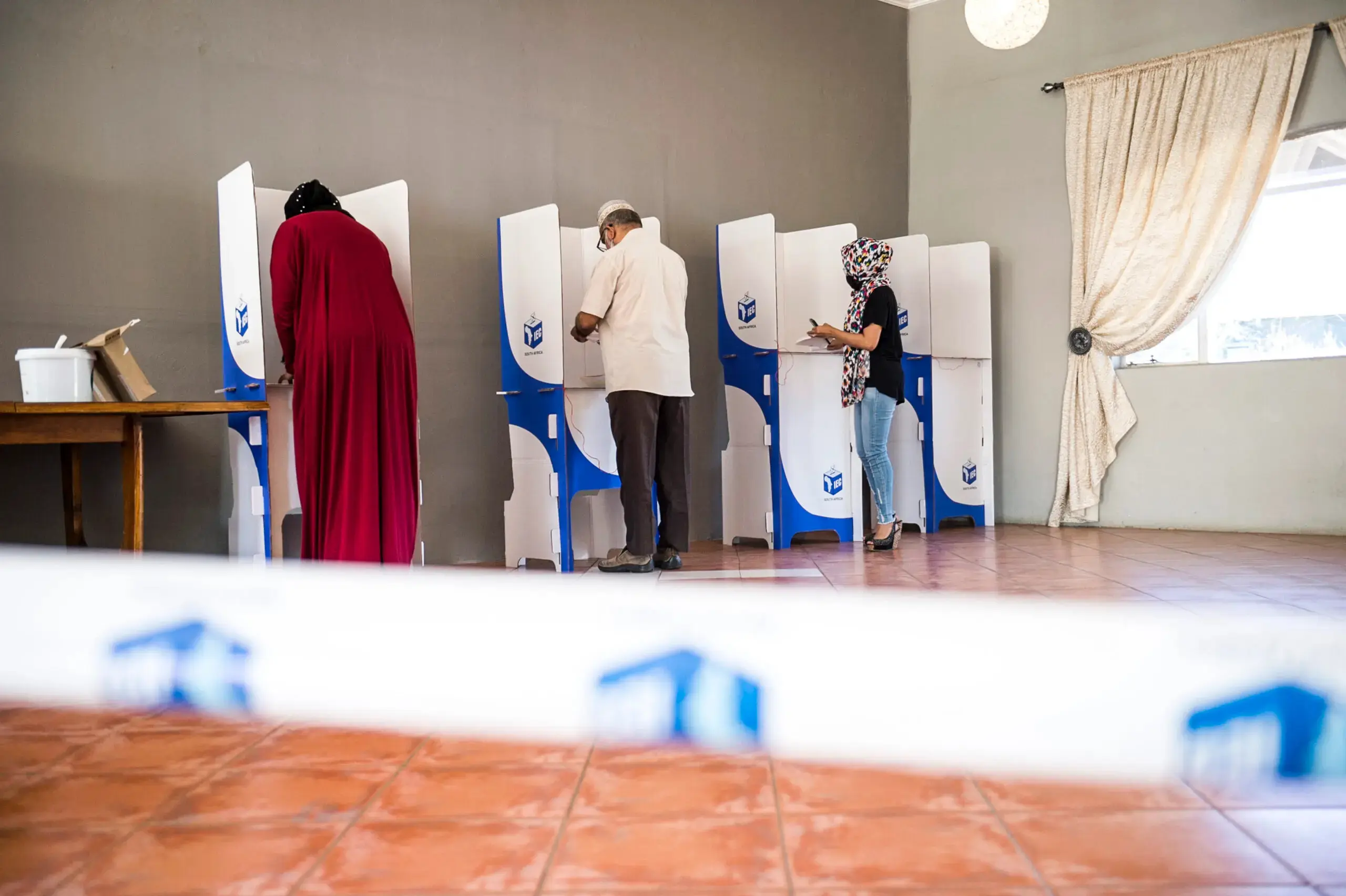
As South Africa approaches another electoral cycle, political parties are once again unveiling manifestos filled with familiar promises.
Yet there is little that appears genuinely transformative.
The public is presented with variations of ideas that have circulated for decades, while many of the country’s most pressing problems persist.
Unless something fundamental changes, the same debates will probably be repeated in 2029, with South Africa continuing to struggle against stagnation and institutional decline.
South Africans devote considerable energy to debating service delivery, unemployment, skills, policies, personalities, crime, corruption scandals and ideological differences. These discussions are important in any democracy.
However, the country’s governance problems might stem from a deeper and less frequently examined problem: a deficit of statecraft.
Across the political spectrum, parties compete vigorously for power. They differ in ideology, rhetoric, constituencies and policy priorities.
Yet many appear to share a common weakness.
Political mobilisation often receives greater emphasis than the practical work of governing at the highest level of statehood.
Winning elections, articulating historical grievances and cultivating political identity frequently command more attention than the less glamorous but indispensable task of building, maintaining and strengthening state institutions.
There is a widespread assumption that formal academic study of politics is either non-essential or merely a discretionary, intellectually ornamental activity because participation in practical politics is characterised by relatively low entry barriers, .
The modern state is far more than a government occupying public office. It is a complex set of institutions governed by laws, administrative rules, professional bureaucracies, financial systems and mechanisms of accountability.
Its effectiveness depends on continuity, competence, predictability and the ability of leaders to preserve and improve institutions across generations. Economic growth, public safety, infrastructure development, social welfare and democratic stability all rest upon these foundations.
South Africa’s contemporary political traditions emerged from a history of colonial domination and apartheid. Political movements were initially organised around resistance, liberation and the pursuit of political inclusion.
Their contribution to achieving democracy was both necessary and historic.
However, the skills required to challenge an unjust political order are not necessarily the same as those required to govern a modern state effectively.
Liberation politics is often centred on identifying injustice, mobilising support and pursuing political transformation.
Statecraft requires a different orientation. It demands administrative discipline, strategic planning, institutional continuity and a commitment to preserving public institutions even when doing so offers little immediate political reward.
The transition from liberation movement to governing institution is therefore neither automatic nor guaranteed.
The conceptual vocabulary of national interest, national sovereignty, national security, citizenship, territorial integrity and the right to self-determination appears to be largely unfamiliar to these emergent political parties competing for political authority.
These parties engage in debate even over ostensibly self-evident issues, such as whether national borders ought to be enforced.
Their objectives seem predominantly oriented towards occupying public office — at both municipal level and in the Union Buildings — rather than towards the substantive pursuit of these broader and more complex attributes of statecraft.
To most of them, merely occupying public office is the ultimate goal and, once that is achieved, they focus on maintaining their middle-class lifestyles.
This distinction helps explain why South Africa continues to experience recurring governance crises. Public debate frequently revolves around race, colonialism, anti-imperialism, inequality and Pan-African solidarity.
These are legitimate and important subjects of political discussion.
Yet no degree of ideological commitment can substitute for effective municipalities, capable public administration, functional infrastructure, sound financial management and respect for the rule of law.
Ultimately, citizens experience the state not through political speeches but through the quality of institutions that affect their daily lives.
After more than three decades of democracy, it is increasingly difficult to argue that the crisis of governance is solely an ANC problem.
The evidence suggests a broader problem across much of South Africa’s political establishment.
Despite their ideological differences, many parties continue to excel at mobilisation, protest and political messaging while paying insufficient attention to the demands of statecraft.
This should prompt a moment of honest introspection. South Africa does not simply need parties that can win power; it needs parties that understand how to govern, preserve institutions and sustain the conditions necessary for a modern state to function effectively.
The paradox is striking. Political leaders and citizens alike benefit from institutions associated with the modern state, including universities, courts, regulatory agencies, public finance systems and constitutional governance.
Yet there is often insufficient recognition that these institutions are neither self-sustaining nor permanent. They survive only through constant maintenance, investment and protection.
States do not decline solely because of external threats. They can also weaken from within when political elites lose sight of the principles that sustain institutional effectiveness.
When cadre deployment and loyalty supplant competence, when
factional interests take precedence over public purpose and when administrative capacity is neglected, the foundations of governance gradually erode.
Viewed from this perspective, South Africa’s problem is not simply one of policy design or leadership selection.
The more profound problem is the cultivation of a political culture that values state-building. Such a culture would regard institutional competence as complementary to democratic legitimacy rather than subordinate to it. It would recognise that functioning institutions are not obstacles to transformation but preconditions for sustained transformation.
This critique extends across much of the political spectrum. Parties ranging from the ANC and EFF to the uMkhonto weSizwe Party, DA, SACP, PAC, IFP, United Democratic Movement, Build One South Africa , RISE Mzansi and others often demonstrate considerable strength in political mobilisation and ideological positioning.
Yet South Africa’s long-term success will depend less on rhetorical sophistication than on the capacity of political actors to strengthen institutions and improve governance outcomes.
The question is not whether political transformation remains necessary. It is whether South Africa’s political class has fully internalised the responsibilities that accompany governance.
A capable state requires more than democratic legitimacy.
It requires leaders who understand how institutions are built, why they matter and how they are reproduced over time.
South Africa’s future therefore depends on more than electoral competition or policy innovation. It depends on whether political leaders can cultivate a deeper appreciation for statecraft itself.
The country does not merely need new policies or new personalities.
The real question facing South Africa is not which party claims to represent the people. It is whether those who seek power fully understand what is required to sustain a modern state.
Until that question is answered convincingly, many of the country’s political and developmental problems are likely to persist.
In the end, South Africa’s greatest political deficit is not a lack of ideas, manifestos or ideological contestation. It is the insufficient cultivation of statecraft.
Dr Mabutho Shangase is a senior lecturer in political studies and international relations at North-West University. @nativconscience