


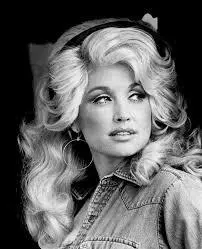
The world feels a little quieter today, a little less bright and infinitely more incomplete. Icon, trailblazer, songwriter, actress, philanthropist and pure force of joyful light, Dolly Parton died on August 25, 2026.
Aged 80, the woman whose voice could soothe a broken heart, ignite a dance floor or make a mountain cabin feel like the centre of the universe, died peacefully.
The news, delivered with grace and deep emotion by her nephew Bryan Seaver, struck like a sudden silence after a lifelong song.
Seaver, who served as her head of security for more than two decades (following in the footsteps of his father, Larry), announced the passing in a video shared on her social media, fulfilling a request Parton had made years earlier.
“My name is Bryan Seaver, son of Cassie Parton, and I’m representing the Parton and Owens family today announcing the passing of my aunt, Dolly Rebecca Parton; Dean, Sister, Sis and Granny to one generation and Gigi to the next,” he said.
“This video announcement is something Dolly asked of me years ago, before I fully absorbed it as a future reality. As her head of security for more than two decades, a role my father Larry held before me, I have imagined the heaviness of this moment but haven’t truly felt it until now. It is an honour, an honour that is mixed with absolute pride and great sadness. But sadness lies with us, not with Dolly. Dolly has lived in the light and is in the arms of Jesus, surely met by Carl, her parents and countless others who have watched her and longed to meet her in the heavens.”
The words carried the weight of family love and the finality of a life that had given so much.
For many South Africans, Parton held a uniquely cherished place in their hearts, made all the more special by her collaboration with the legendary isicathamiya group Ladysmith Black Mambazo. Their recording of Knockin’ on Heaven’s Door, from the group’s 1997 album Heavenly was more than a musical partnership; it was widely felt as a genuine love letter to South Africa and its culture. Parton’s clear, emotive voice intertwined with the rich, layered harmonies of the South African ensemble, turning Bob Dylan’s song into something both intimate and universal.
The track, also featuring Bonnie Raitt on bottleneck guitar, felt like a meeting of mountain and veld, of Appalachian storytelling and Zulu vocal tradition.
Many South Africans were deeply honoured that this global country icon chose to sing alongside one of the nation’s greatest cultural treasures. It affirmed a mutual respect and created a lasting bridge of shared humanity through song.
That collaboration, along with their earlier work on Peace Train, cemented Parton’s presence in South African hearts far beyond the usual reach of American country music. Fans recognised in her the same resilience, humour and spiritual depth that run through so much of the country’s own musical heritage. She was not a distant star, she was someone who had reached across oceans with warmth and sincerity.
Parton’s music was never merely entertainment. It was beautiful, warm as a Tennessee sunrise, sharp as mountain air and generous as the woman herself.
Her style blended pure country storytelling with pop accessibility, gospel heart and an unapologetic sense of fun. She wrote songs that felt like conversations with an old friend who somehow knew your secrets. From the aching vulnerability of Jolene and the bittersweet farewell of I Will Always Love You to the working-woman anthem 9 to 5, the childhood memory of Coat of Many Colors, the crossover magic of Here You Come Again and the pure joy of Islands in the Stream with Kenny Rogers, her catalogue is a masterclass in emotional honesty wrapped in melody.
She scored dozens of country number ones, crossed over into the pop charts and wrote songs that other artists turned into global phenomena. Whitney Houston’s towering version of I Will Always Love You only amplified what Parton had created: a song so true it could belong to anyone.
Her voice was bright, clear and full of character, never trying to be something it wasn’t. It celebrated where she came from: a one-room cabin in the Smoky Mountains of eastern Tennessee, one of 12 children in a family that knew hardship and fierce love. That background infused everything she did with authenticity.
She never forgot the little girl who wore a coat made of rags and still felt rich because it was made with care. That same spirit turned her into a shrewd businesswoman who built Dollywood into a beloved destination, launched literacy programmes that put millions of books into children’s hands and supported countless causes with quiet determination.
She inspired eras. From the country pure of the 1970s through the glamorous pop-country of the 1980s and into later decades where younger artists claim her as a north star. Generations of songwriters, singers and dreamers looked at Parton and saw permission to be themselves. The big hair, big heart, bigger talent and zero apology.
Parton’s style of music was beautiful in the truest sense. Not polished perfection but lived-in beauty. She could make you laugh with a wink and a rhinestone quip, then break your heart with a single sustained note. She inspired entire eras of artists who learnt that country music could be expansive, that femininity could be glamorous and grounded and that commercial success and artistic integrity were not opposites. She showed that a woman from the mountains could conquer Hollywood (with films like 9 to 5 and Steel Magnolias), build an empire and remain the same Parton who wrote songs on the backs of dry-cleaning receipts.
She will be greatly missed. Missed by the millions who found comfort in her songs during long nights and hard days. Missed by the children who received books through her Imagination Library. Missed by the fans who made pilgrimages to Dollywood and left feeling lighter. Missed by fellow musicians who counted her as friend, collaborator and example. And missed especially by those in South Africa, where her collaboration with Ladysmith Black Mambazo was received as an honour and a heartfelt embrace of the country’s culture. That recording remains a lasting reminder of the connection she forged.
Thank you, Dolly Parton, for the songs, the laughter, the rhinestones, the honesty and the boundless heart. You inspired eras. You brought beauty into the everyday. You made South Africans feel seen and honoured through a collaboration that celebrated their culture. And though you have gone to join Carl and so many others, your music remains — knocking gently, insistently, on the doors of our hearts. You will be greatly, deeply, forever missed.
Rest in the light you always lived in. The world is richer for having known you.