


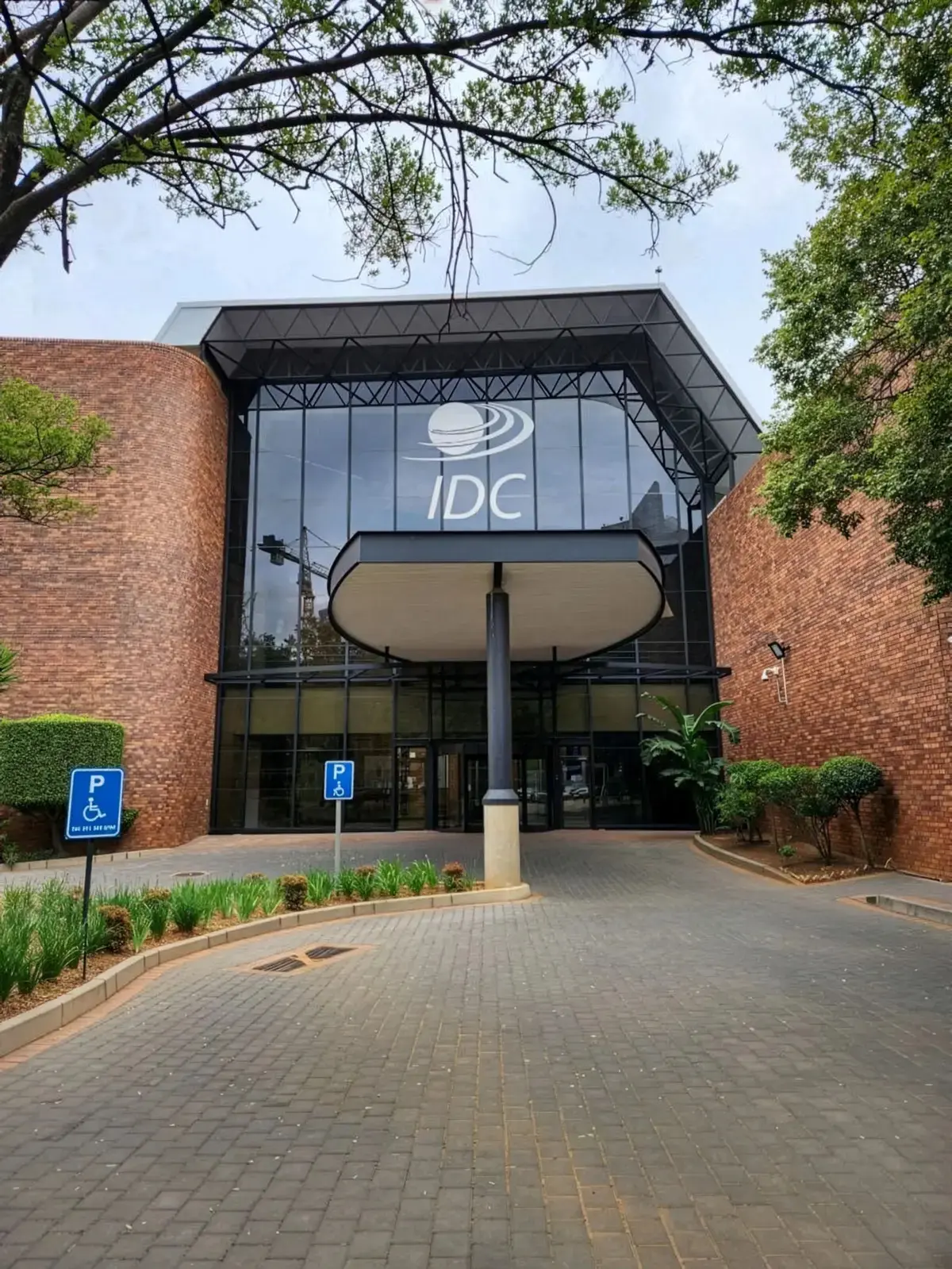

When the Industrial Development Corporation (IDC) confirmed its equity partnership with Vision Sugar Group in the restructured Tongaat Hulett, what should have been lauded as a good deal for the IDC was instead met with unwarranted criticism.
Some on social media even rushed to call it a bailout. It is worth pausing, setting aside the noise, and examining what the IDC has actually secured.
Through this single transaction, the IDC has acquired an estimated 33% stake in Tongaat Hulett South Africa, alongside strategic equity across Vision Sugar's operations in Zimbabwe, Mozambique and Botswana. The Zimbabwe business alone generated more than R1.2 billion in profit in its most recent financial year.
In one move, the IDC has positioned itself inside a pan-African sugar platform spanning four countries within the 500-million-strong SADC region, generating approximately R20 billion in annual revenue.
Finding a comparable development finance transaction with that geographic reach, operational scale and partnership with experienced, hands-on entrepreneurs would be a difficult exercise.
Debt converted to equity, not a bailout
The nature of the IDC's entry into the deal warrants careful attention. The IDC is not funding this transaction. It is converting approximately R4.5 billion in existing claims into equity across Vision Sugar's operations in all four jurisdictions. No new BBBEE loans have been extended to Vision shareholders or to Vision Sugar itself.
The IDC is acquiring shares in a restructured, debt-free entity. This underscores that those characterising it as a bailout are completely off the mark. Those who have followed the Tongaat Hulett matter closely will grasp that, through this deal, the IDC transformed distressed exposure into productive ownership.
The Vision Sugar Group's principals, Robert Gumede and Rute Moyo, together with their partners, purchased claims of approximately R12 billion from 13 banks that were owed the debt which precipitated Tongaat Hulett's business rescue in 2022. They acquired those claims with their own capital in 2024, subsequently converting them into equity.
In doing so, they prevented the liquidation of a 134-year-old enterprise, kept sugar mills operational and protected an estimated 250 000 livelihoods across the value chain, including more than 15 000 sugarcane grower enterprises.
Entrepreneurs who commit R12 billion of their own capital to rescue an industrial asset from collapse are not seeking a handout. They are shouldering risk that few others were prepared to accept.
It is also necessary to recall how Tongaat Hulett arrived at the point of business rescue. The company's distress was not the product of market failure or sectoral decline. It followed alleged fraudulent conduct by the previous management team, led by then-CEO Peter Staude and CFO Murray Munro, who now face criminal charges running into billions of rands.
The rescue of Tongaat Hulett is, in this sense, the work of cleaning up a mess created by those who have not faced sufficient public scrutiny.
Serving the aational interest — and the road ahead
The IDC's intervention sits squarely within its mandate. Tongaat Hulett supports entire communities in KwaZulu-Natal. It anchors sugar production across southern Africa. Preserving its productive capacity, protecting employment and backing entrepreneurs who have already demonstrated their commitment through significant personal financial exposure: these are precisely the objectives for which the IDC was established.
It is worth noting that the IDC is reported to be pursuing the acquisition of ArcelorMittal South Africa, the continent's largest steel producer, from its foreign owners, with a similar rationale of protecting strategic industrial capacity and employment. The new IDC board and leadership appear to understand that stabilising the steel and sugar sectors is not a discretionary ambition. They need to be supported as they make calls in support of the national interest.
The real test for this partnership lies ahead. Turning around the South African operations will require operational discipline, capital commitment and, crucially, government support in addressing the structural threat of cheap sugar imports from Brazil, Thailand and India — countries whose sugar sectors benefit from substantial state subsidies. Those who import this subsidised sugar into South Africa do not pass the savings on to consumers. The damage flows in one direction: towards the livelihoods of South African growers and mill workers.
The IDC has converted distressed debt into equity in a profitable, multi-country enterprise led by partners who have already committed billions of their own capital. The structure is transparent. The rationale is sound. The strategic value, across four SADC jurisdictions, is difficult to replicate.
The IDC and Vision Sugar consortium should not be spared from oversight, but equally, they deserve recognition for a transaction that saved a quarter of a million jobs. In a jobs-starved market such as South Africa, a deal that saves this many jobs in a critical sector is one that should be supported. This deal helps preserve a cornerstone of South Africa's agricultural economy and simultaneously positions a development finance institution at the centre of a genuinely pan-African industrial platform. That outcome is something to build on.
Sizwe sama Yende is a veteran journalist, editor and podcaster who has extensively covered the Tongaat Hulett story.