

As the West grew terrified of the geopolitical implications of China's double-digit meteoric economic growth in the 40 years between 1980s and early 2010s, some Western scholars conjured a comforting narrative. They argued that China's economic growth would soon screech to a halt when it hit the so-called middle-income trap.
China, so the argument went, lacked the cultural attributes of the West, such as personal freedom, individualism, non-conformity and tolerance for failure viewed as indispensable in developing indigenous innovative capabilities which were the only pathway to escape the middle-income trap.
The theory served to assure China hawks in Western capitals, particularly Washington where the former US president Richard Nixon famously lamented that the West might have created a Frankenstein monster by opening to China, that China was never going to catch up.
As it turns out, nothing could be further from the truth.
China achieved a historic feat last year when it became the first and only middle-income country to break into the ranks of the top 10 most innovative countries in the world, according to the 2025 Global Innovation Index report published by the World Intellectual Property Organisation.
The country has defied the odds to find itself in the company of nine other countries whose GDP per capita is, on average, three times that of its own.
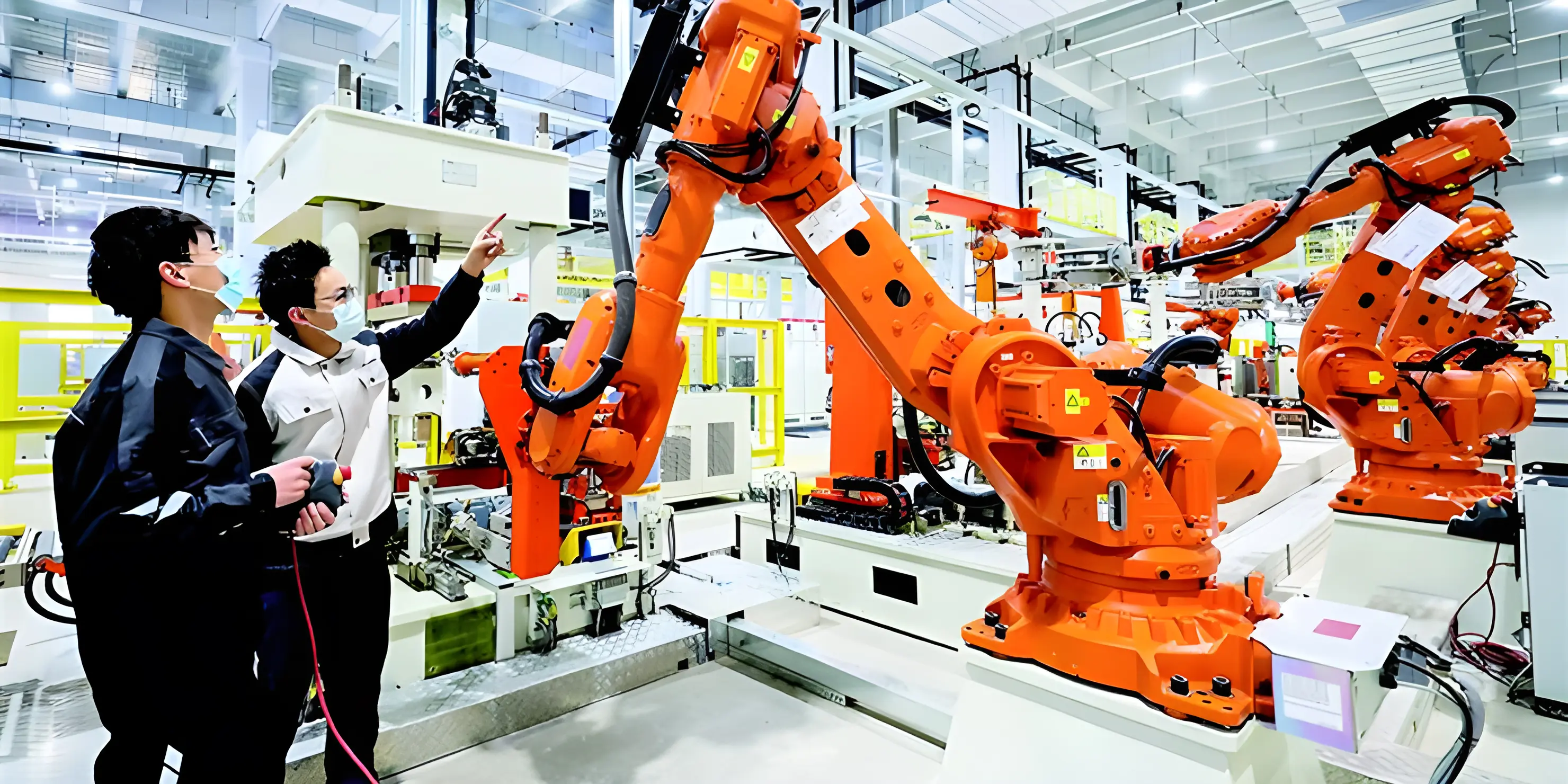
China is clearly punching above its weight when it comes to innovation. It has established itself as a world leader in some high-tech industries including robotics, electric vehicles, high-speed railways, artificial intelligence and green energy.
The 2026 Hamilton Index shows that China's share of the global output in innovation-driven and advanced sectors such as machinery and equipment, computers, electronics, motor vehicles, pharmaceuticals and fabricated metals, among others, stands at 25%. The US is in second-place with 22%.
Furthermore, Chinese scientists publish more than a third of science papers in leading international science journals which have cemented the country's transition from knowledge acquisition to knowledge production.
China is not in this position by chance. For the past 77 years, the government has built an effective and efficient national science, technology and innovation system through trial and error.
With only 30 research institutes and 500 full-time scientists when the Communist Party of China (CPC) assumed the reins of power in 1949, China barely had any science and technology infrastructure.
The country was almost devoid of indigenous innovation capabilities because it depended on the Soviet Union for advanced technology.
Comprising a set of policies, institutions (political and scientific) and their interrelationships, legislation, funding agencies and advisory bodies, the national innovation system determines the level of a country's innovation capabilities.
The efficacy of the technological innovation processes through which enterprises and research institutions introduce new products and new manufacturing or service provision processes hinges on the effectiveness of a country's innovation system. It seems China has got this right.
According to the State Council Information Office, China spent a staggering $569 billion on research and development in 2025 representing 2.8% of the country's GDP which is on par with developed countries. The R&D expenditure comes from various actors including the government, private enterprises, state-owned enterprises and foreign direct investment.
As of 2023, the country was home to more than 24 000 research and development institutions distributed between the government agencies, universities and industrial enterprises.
The Chinese Science and Technology Talent Develop-ment Report of 2022 revealed that China boasted more than 6.3 million R&D personnel — more than any other country in the world.
Furthermore, China's technology market has also witnessed robust growth over the years.
While the aggregate value of domestic technology transactions was 20 billion yuan in 1992, the figure stood at 6.8 trillion yuan in 2024. This reflected the increasing confidence Chinese enterprises had in indigenous technology and how China's research institutions are producing technologies that address the needs of the enterprises.
Moreover, the number of national high-tech industrial development zones more than tripled between 2000 and 2026, increasing from 53 to 179 housing more than 31 000 high-tech enterprises generating about 20.4 trillion yuan (14.5%) of GDP.
The major high-tech industrial development zones include Zhongguancun Science Park in Beijing, Hefei National High-tech Industry Development Zone and the Shenzhen High-Tech Industrial Park.
The zones were devised as a policy tool to improve China's indigenous innovation capabilities and reduce the country's dependency on foreign technology which was undermining national security and the modernisation drive.
Through generous preferential policy package offers from the government including fiscal support, financial injections, infrastructure development and talent attraction and retention, the zones have become the main engines of the innovation value chain in China.
They invest 6% of their output towards R&D activities, host the lion's share of the country's national manufacturing innovation centres and national key laboratories.
Moreover, the zones are responsible for generating more than half of China's more than 5.3 million invention patents, with most of them designated high-value invention patents. They are playing a crucial role in China's quest to shift its position from the low end to the high end of the global value chains in key sectors like green energy, pharmaceuticals, automobile, semiconductors and artificial intelligence to mention a few.
Chinese universities and other institutions of higher learning have been key in China's national innovation system.
Throughout the past seven decades, China has been seized with finding effective ways of optimising the role and input of tertiary institutions in China's industrial development and modernisation.
Universities in China have been primarily responsible for talent development and cultivation and conducting basic science and technology research which feeds into the country's innovation centres and high-tech industrial enterprises.
Numbering around 3 000, Chinese universities produce more than five million graduates annually in science, technology, engineering and mathematics. This is a huge talent pool which has been described as the first resource for innovation-driven development. According to China's National Intellectual Property Administration (Nipa), Chinese universities had produced around 794 000 valid invention patents by the end of 2023.
This is more than 15% total patents produced in the country.
The Chinese government is working to find best ways to open commercialisation and industrialisation avenues for these patents by linking Chinese universities with high-tech enterprises.
Also playing an important role in China's national innovation system is Nipa which oversees strict adherence to the country's patent laws, ensures high standards by granting patents to highest quality research and facilitates the linkages between basic research and industrial application and commercialisation.
Without an efficient innovation value chain that expedites the commercialisation of new ideas and research breakthroughs and protects intellectual property, innovation-driven development would be impossible. China passed its first patent law in 1985.
Although there continues to be legitimate concerns about the integrity of the country's intellectual property right regime, a lot has been done to strengthen it over the years.
Perhaps the most important element in China's national innovation system is the political will and commitment from the government and the top organs of the ruling party, the central committee of the CPC which set the tone and the policy direction.
The Chinese government has always been awake to the strategic importance of science, technology and innovation for China's national security and national development.
The CPC, government ministries, funding agencies, local and provincial governments and the National People's Congress all play a key role through the disbursement of resources, regulations, preferential fiscal, industrial, and financial policies and legislation designed to incentivise technological innovation.
Science, technology and innovation have been consistent themes in the country's five-year development plans since the 1950s.
While the ruling party and the government have, at times, especially in the pre-1978 era, been a stumbling block to an effective national innovation system, they have played an important catalytic role to foster China's innovation capabilities over the past four decades.
As Africa seeks to escape economic stagnation and the dependency trap, it is important that countries on the continent study the model of China's innovation system.
Without nurturing indigenous innovation capabilities economic transformation will remain elusive for the continent.
Sizo Nkala is senior research fellow at the University of Johannesburg Centre for Africa-China Studies.