

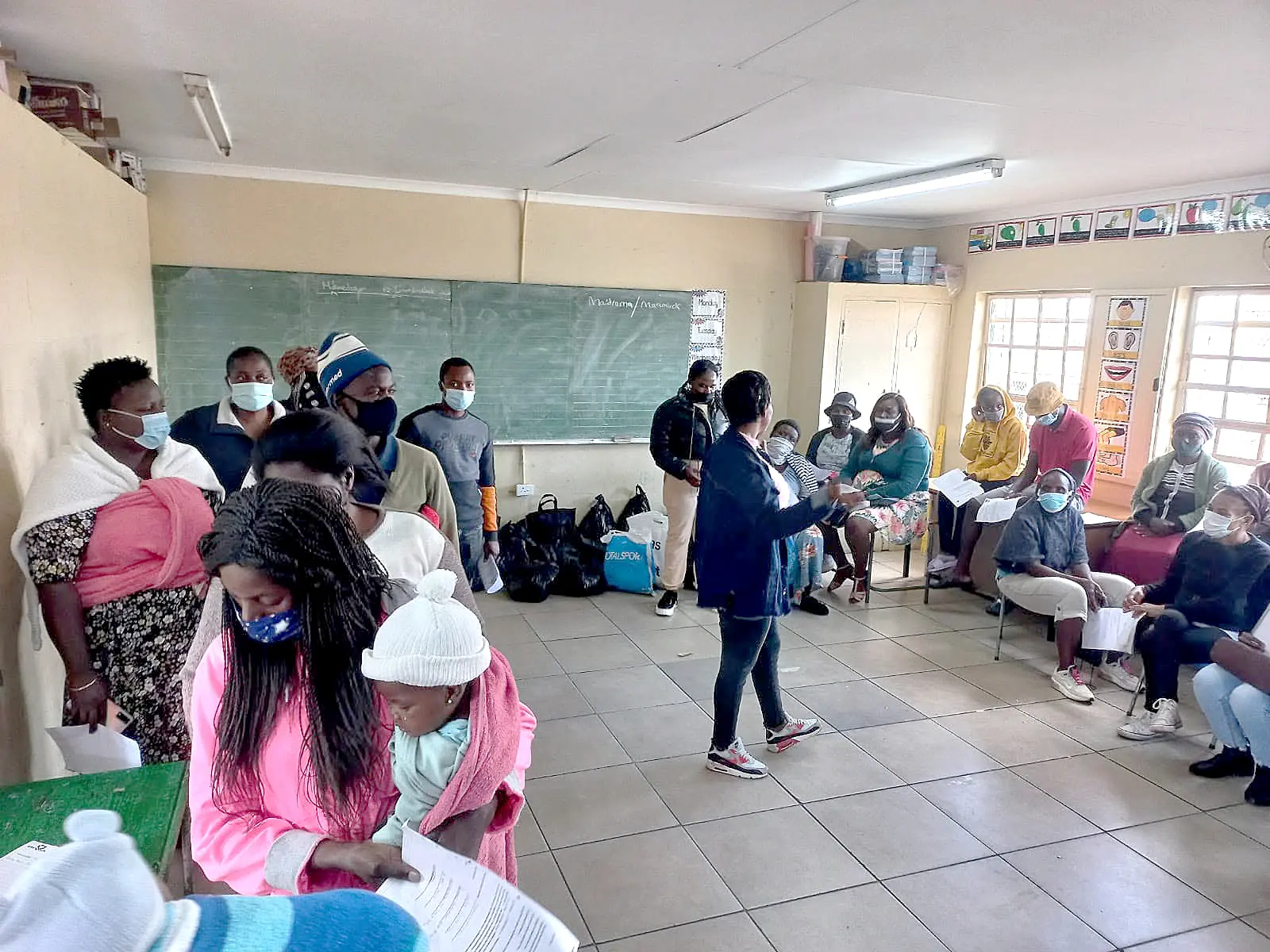
As Women's Month draws to a close and the celebrations start to die down, a pressing issue remains front and centre: the violence that continues to shape the lives of many women in South Africa.
Intimate Partner Violence (IPV), in particular, remains one of the most serious forms of violence against women, raising an important question: Are we doing enough to empower women to move beyond surviving violence towards rebuilding their lives with safety, dignity and independence?
The question is especially relevant given that the theme of this year's Women's Month is "Empowered Women Empower The Nation".
The scale of IPV demands serious reflection.
The First South African National Gender-Based Violence Study found that 23.9% of ever-partnered women had experienced physical and/or sexual violence by a partner during their lifetime, equivalent to approximately 3.45 million women.
Lifetime physical IPV was reported by 22.4% of women, while 6.4% reported experiencing physical and/or sexual IPV in the previous 12 months.
Economic abuse was also significant, with 13.1% of women reporting lifetime economic abuse.
The figures demonstrate that IPV cannot be understood as isolated incidents occurring between two individuals. It is connected to unequal gender relations, economic insecurity, patriarchal norms and broader social and structural inequalities.
From victim to victim-survivor
In our chapter in a recent book, we argue that the response to IPV must place victim-survivors at the centre of intervention.
This means recognising women not merely as victims requiring protection but as people with knowledge, strengths, choices and agency.
The distinction is important. When a woman discloses IPV, the instinct of professionals and others around her might be to tell her what she should do: leave the relationship, report the perpetrator or relocate to a shelter.
The interventions can be essential, particularly where there is immediate danger.
However, the reality is that leaving an abusive relationship is rarely a simple decision.
Economic dependence, children, housing insecurity, normalisation of violence, fear of retaliation, unemployment, family expectations and social stigma can all influence a woman's choices. A woman might understand that her relationship is abusive and be unable to leave immediately.
Empowerment, therefore, cannot mean making decisions on behalf of survivors. It must mean creating the conditions in which they can make informed decisions for themselves.
The victim-survivor approach provides an important foundation for this work.
In South Africa, victim empowerment programmes seek to heal and empower women to navigate the difficult landscape of their reality of IPV.
The interventions are important because IPV affects far more than physical safety; it can produce trauma, fear, diminished self-esteem and profound disruption to social and economic wellbeing.
Empowerment must include economic independence
Economic empowerment is particularly important in this regard. Economic abuse is often less visible than physical violence, yet controlling access to money, restricting employment, withholding financial resources and creating financial dependence can become mechanisms through which perpetrators exercise power and control.
Our argument, therefore, is that economic empowerment should be integrated into IPV interventions.
Financial literacy, skills development, employment opportunities, entrepreneurship and access to economic resources can expand women's choices and strengthen their capacity to establish safer, more independent lives.
Economic empowerment is not, however, a stand-alone solution to IPV. It must form part of a holistic response to addressing trauma, safety, legal rights and social inequalities.
A woman's economic dependence can expand her choices but meaningful empowerment also requires psychosocial support, access to justice and a supportive environment in which she can exercise agency.
This is particularly important in South Africa where the historical legacies of colonialism and apartheid, persistent socio-economic inequalities and patriarchal social structures have contributed to environments in which violence can become normalised.
Cultural expectations can further complicate women's ability to challenge abusive relationships. Expectations of obedience, endurance and the preservation of marriage or family unity could discourage women from speaking out or leaving.
We must therefore develop culturally responsive interventions without becoming culturally permissive of violence. Respect for culture cannot mean accepting practices or beliefs that undermine women's dignity, autonomy and safety.
From fragmented services to collective action
Our analysis also identifies a persistent challenge: fragmented service delivery.
Survivors may move among social development, healthcare, police, justice and NGOs, encountering inconsistent services and unclear responsibilities. Effective victim empowerment, therefore, requires stronger multidisciplinary collaboration and clearer pathways between service providers.
The responsibility cannot rest with social workers alone. Victim empowerment requires meaningful collaboration among government departments, healthcare services, criminal justice institutions, NGOs and economic development initiatives. When the systems operate in isolation, survivors can experience repeated referrals, delays and gaps in care.
We also argue for a stronger developmental social work perspective. Interventions for IPV cannot focus exclusively on the individual survivor.
Individual empowerment is influenced by the socio-economic environments in which women live, thus social workers must be able to connect individuals' therapeutic support, such as counselling and safety planning, with broader socio-economic community-based interventions that address poverty, inequality, access to resources and human rights.
During Women's Month, therefore, we should move beyond celebrating women simply for their resilience. Why should women have to be resilient simply to survive violence?
We must create conditions in which women can exercise meaningful agency, access resources, make informed choices and live free from violence and coercive control.
South Africa has developed important policies and programmes to address gender-based violence and femicide.
The challenge is to ensure that the commitments are translated into adequately resourced, coordinated and genuinely empowering interventions.
Empowerment must mean more than helping women survive violence. It must mean supporting victim-survivors to reclaim their agency, rebuild their independence and live beyond violence.
Xola Fayo is a PhD candidate at Stellenbosch University. He worked as a social worker at Community Cohesion, an NGO that provides therapeutic interventions to adult victims of crime and violence.
Somila Nojilana is a social work and community development programme coordinator at the South African College of Applied Psychology. She worked at Community Cohesion. Her research interests include gender-based violence, victim empowerment and women's lived experiences.
Luvuyo Teko is a lecturer and PhD candidate at the University of Pretoria. He previously worked at Community Cohesion. His research interests centre around empowerment and violence prevention.
This article is based on their chapter "Using the victim-survivor approach to empower victim-survivors of IPV in South Africa", published recently in Using women's economic empowerment to combat intimate partner violence, edited by Tatenda Manomano, Eziwe Mutsikiwa and Nicole Dubus (Routledge, 2026).