

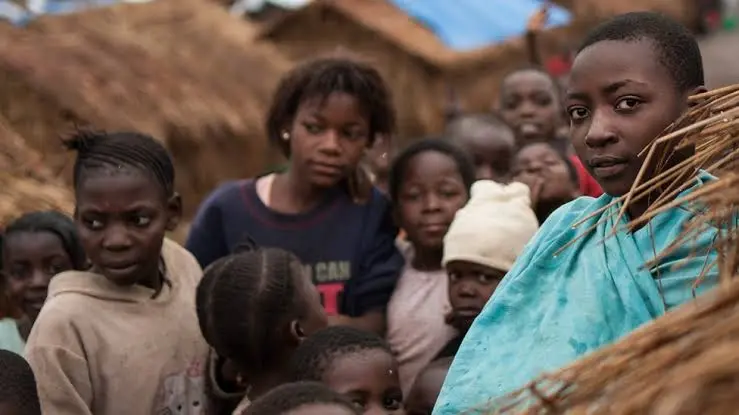
From war to peace and turmoil again. Such an undulating political terrain raises and dashes hopes, creating national angst.
Many truce agreements have been signed in the Democratic Republic of Congo (DRC) after the late 1990s war; in which Zimbabwe, Angola, Namibia fought alongside former late President Laurent-Désiré Kabila’s government to ward off military takeover from Uganda-Rwanda sponsored rebels. It was an unpopular war that cost millions of lives and wreaked economic havoc across the region.
The Sadc-allied forces had rallied to Kabila’s call, who was within minutes of losing power. Tutsi-dominated rebels had encircled Kinshasa; ready to kick Kabila out in the same way rebels had booted tyrant Mobutu Sese Seko in 1997.
But what exactly started it all?
The roots of the war lay in Kabila’s decision to turn against his former military allies from Rwanda and Uganda, who had funded, trained and helped him oust Mobutu. The war had countless internal armed groups, attracting nine African countries into a military vortex that sucked out peace and hope, creating a morass of instability, draining the benefits of the Congo’s precious minerals. Such leakages account for current poverty levels, that perhaps the current regime is trying to redress.
As one writer aptly put it, that the DRC is a case of a contradiction, where “extraordinary mineral wealth and extraordinary human poverty existing side by side, is not a mystery”.
The late 90s Sadc military intervention undoubtedly helped restore order in Kinshasa. At the same time, it ignited a political feud between the government and its hostile neighbours; namely Uganda and Rwanda. The protracted war is ostensibly a fight over the resources that lie under the belly of one of Africa’s most minerally rich countries. But the country struggles under poor road infrastructure, precarious health care, weak educational systems and unstable security. Continued gross human rights violations, accompanying the continued rebel eastern front military onslaughts paint a worrying picture of a society unable to redeem and reestablish itself as an African mineral powerhouse.
Estimates suggest that close to 5.5 million people died, whose demise is closely associated with war crimes and disease and malnutrition. Further, there were close to 2 million displacements, creating a huge refugee strain across the Southern African region.
Yet, it has everything it needs in its belly to establish itself as such. Political will can certainly follow economic endeavours that can set this unsung territory into a haven of joy and prosperity, given its rich indomitable culture and music that unbundle inimitable creativity. Many 90s to early 2000s DRC war returnees in the region could unsurprisingly pull a dance, sing or speak Lingala; explaining how quickly a rich culture, music and dance rub off on the rest across the region.

War casualties were too many to mention. The economic strain is unimaginable. While the epitaph "Africa's World War" might have been too much of a stretch, it created a lasting impact on the region. It was in large part fueled by the region’s smoldering ethnic tensions, between Hutus and Tutsis – and huge concentration of refugees that fled the 1980s war in Rwanda and Burundi. It was going to be a difficult challenge for any new leader such as Joseph Kabila, to maintain a firm security grip on such a diverse country, without solid infrastructure but carrying deep suspicions, anger and a retributive spirit in its ironically rich belly.
What it was, and what it is now, is different. There is relative ease of business in Kinshasa. Notwithstanding corruption and the usual bureaucratic bottlenecks throttling economic progress. Despite international attempts at peace, including the Lusaka Accord, the war continued and the DRC remained troubled by ongoing conflicts and violence fueled by some continued trade of conflict minerals. The Mobutu government fell because it neither had the political legitimacy nor the military capability to halt the Rwanda-sponsored military maneuvers from the largely Tutsi ethnic group. The current government has political legitimacy and potential to attract international assistance to reestablish the DRC as a formidable progressive state. But questions remain.
To what extent can the fragile peace in the eastern front be contained to have resources rechanneled towards political stability and economic progress? After proclaiming himself President in May 1997, Kabila sought to restore order and re-energise the embattled country with a huge foreign debt. The current leader Félix Tshisekedi is the country’s fifth President in his second term. Notwithstanding signing many truce agreements with Rwanda in Washington, the United States, the DRC’s history continues to be shaped by some continued overlapping crises dating back centuries. Yet, it is endowed with mineral resources that can establish it as both a continental political and economic powerhouse, away from music.
An analyst cleverly remarked that: “The DRC helps power the world but its people are left behind.” The worst irony is that the country is ranked amongst the poorest in the world with close to 80% surviving below the poverty line, according to World Bank estimates. Notwithstanding, it has one of the largest reserves of minerals such as gold, diamonds, copper, zinc, coltan and cobalt. Despite having over 2 million irrigable lands, it has a burden of trade deficits: imports versus exports. It imports more food than it can produce despite its agricultural potential remaining irritatingly dormant. Moreover, its huge minerals continue to produce more than half the global smart phones, and car batteries.
Now, almost three decades after that military conflict, it still has something to show. Its combined estimated mineral value exceeds USD24 trillion dollars, which drives the global clean energy transition, including the electric vehicle manufacture and smartphones creating the digital economy revolution. Now, what is required of it is to reemerge from such a morass of a vicious cycle of poverty.
There are credible deep suspicions that the DRC could have much more than what has been reportedly stored in its belly. Reports suggest that the resource base reality could be far more extraordinary. This shouldn’t be a surprise because the IMF has estimated that the DRC's “unmined mineral deposits alone are worth more than the entire GDP of the United States”. Reports suggest that large portions of the country have never been extensively surveyed using modern geological methods. Yet, such information is important for encouraging more investments and effective participation in the mining value chain
If the fish rots from the head downwards, then, essentially, the government must start acting sooner than later. First, redesigning the economy that was originally designed for extraction rather than development, addressing corruption and developing the human capital base that drives the mineral production, and undoing the investment-unfriendly policies. This should be prioritised. Moreover, serious efforts towards deescalating the security situation in the east is important without ignoring infrastructure decay and worrisome leakages.
For now, political elites, military actors and foreign companies must account for corruption and illicit financial flows. Further, weak state institutions must be replaced with robust government policy interventions to create efficient institutional habits that transform this sleeping giant.
Dr Brian Hungwe is researcher in law, with interests in Public International Law; Constitutional law and Human Rights; Intellectual property law and Delict