



Somewhere in America, machines were cutting the spines off books so that artificial intelligence could learn from them. It sounds like the opening of a dystopian novel but it was part of Anthropic’s Project Panama, an initiative revealed through court documents in which the AI company sought to buy, scan and destroy large quantities of books to train its models.
One vendor proposal discussed processing between 500 000 and two million books over six months. The books would be dismantled, scanned and eventually sent for recycling.
The irony is difficult to ignore. A company building machines capable of producing human-like writing needed something distinctly human to teach the machines how to write. Anthropic has since agreed to a $1.5-billion (R24bn) settlement with authors over allegations involving copyrighted books but the significance of the case extends beyond the settlement. It exposes a tension in the artificial intelligence industry: some of the technology being built to automate creativity depends heavily on the creative work of people.
That should matter to Africa.
The AI race is usually discussed in terms of computing power, semiconductors, data centres and electricity. Much less attention is paid to another resource that makes the systems valuable: human knowledge. Books, journalism, music, photography, film, academic research, art and language provide the material from which AI systems learn patterns of human communication.
For Africa, this presents an uncomfortable question. The continent has enormous cultural and intellectual resources, much of which remains under-digitised and difficult for creators to monetise. If the material becomes increasingly valuable to AI companies, will African creators have meaningful control over how it is used or will their work simply disappear into datasets they cannot see or influence?
We have encountered a version of the problem before. Africa has historically supplied raw materials to global markets while much of the processing and value creation happens elsewhere. Artificial intelligence creates the possibility of repeating the imbalance in a new form, with knowledge and culture replacing minerals as the resource being extracted.
The Anthropic case shows why this matters. If an African novelist publishes a book, should an AI company be able to use the work to develop a commercial system without the author knowing? If a South African journalist spends years building an archive of reporting, should the archive become training material simply because it is accessible online? If an artist publishes work on the internet, does public availability amount to permission for a machine to ingest and learn from it?
There are no easy answers and the law is struggling to establish them. A US court found in 2025 that Anthropic’s use of lawfully acquired books to train its models could qualify as fair use, while distinguishing that from the company’s acquisition of pirated books. This means the debate cannot be reduced to whether AI companies are “stealing” everything they train on. The deeper issue is whether copyright frameworks can adequately deal with technology capable of processing millions of creative works at a scale that was unimaginable when many of the laws were written.
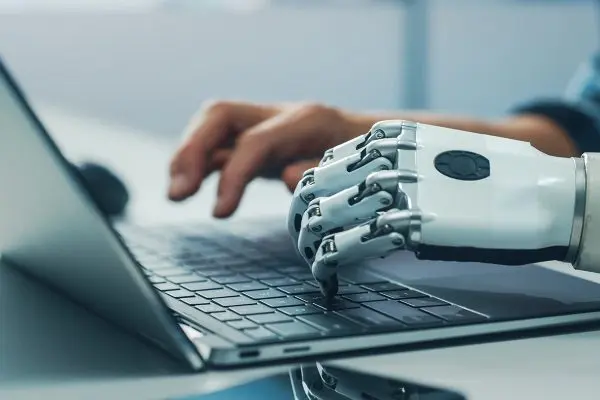
The dispute is also moving beyond books. Sony Music Publishing and Warner Chappell Music have sued Anthropic, alleging that the company unlawfully downloaded and used tens of thousands of copyrighted musical works, including lyrics, to train Claude. The expanding litigation against AI companies suggests that disputes over training data will become one of the defining intellectual-property battles of the coming decade.
South Africa cannot afford to treat the debate as a distant American problem. The country is developing its approach to AI governance while its copyright framework continues to evolve. In April, the government withdrew its draft national AI policy after fictitious references and apparently AI-generated citations were identified in the document, with a revised policy expected to go out for public comment in 2027.
The policy process should consider more than how AI can improve productivity or stimulate economic growth. It should also ask how South African creators will be protected in an economy where their work can become valuable training material. Transparency over what is being used to train commercial systems, meaningful licensing mechanisms and fair compensation should be part of the conversation.
African languages make the issue even more important. AI systems cannot become genuinely useful in languages such as isiZulu, isiXhosa, Sesotho or Setswana without access to substantial linguistic and cultural material. The knowledge exists across books, newspapers, academic research, recordings, archives and communities. If companies want to build better AI systems using the resources, the people and institutions that created and preserved them should not be treated as irrelevant to the process.
None of this means Africa should reject artificial intelligence. The continent has much to gain from technologies that can improve education, healthcare, public services and economic opportunity. But embracing AI should not mean surrendering ownership of the knowledge that makes the systems more capable.
Project Panama offers an unsettling image of the emerging AI economy: physical books being dismantled so that their contents can be transformed into digital intelligence. The machines may be new but the knowledge they depend on is not. It was written, researched, recorded and preserved by people over generations.
Africa now has an opportunity to decide how its own knowledge enters this new economy. If its literature, languages, journalism, music and cultural resources become valuable inputs into global AI systems, the continent should ensure that creators have a voice in how the resources are used and a stake in the value they generate.
Otherwise, the AI revolution risks becoming an old story told with new technology: Africa provides the resource, someone else builds the machinery and someone else takes the greatest share of the value.
Nancy Dusani is a graduate in public relations and communications from the University of Johannesburg and is pursuing an advanced diploma in communications management. She is interning at Decode, a pan-African PR agency in Johannesburg.