


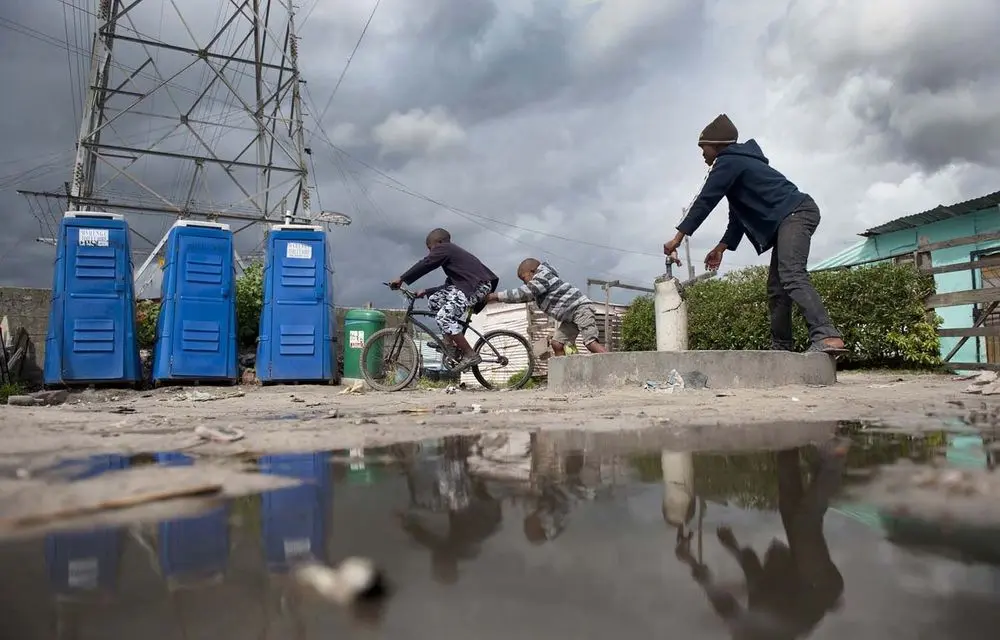
In three months, South Africa votes for municipal leaders. The billboards are coming. They always do. The faces grow larger. The promises grow wilder. The contact with reality shrinks.
Fix the potholes. Create jobs. Bring back water.
Now here is what I want to know.
Show me your budget. Not your slogan. Not the manifesto printed on expensive paper that came from a marketing firm that charged you money you did not have. Show me the actual numbers.
Because South Africa's 257 municipalities are not bankrupt by accident. They are bankrupt through choice. They choose outsourcing over competence. They choose ‘tendepreneurs’ over public interest. They choose parking fines in Sandton over fixing burst pipes in the township. And they do it all while politicians smile from billboards promising that next time will be different.
It will not — not because the next generation of councillors lack imagination, but because they lack a backbone. What is required is not vision. It is basic mathematics and the willingness to face it.
According to the Auditor-General's 2024-25 report, only 39 of 257 municipalities achieved clean audits. None of the metropolitan municipalities that sit at the top of South Africa's urban hierarchy was clean. These are not minor accounting adjustments. This is systemic moral failure dressed in spreadsheets.
The treasury's numbers from June 2025 tell a different story than the politicians tell. Municipalities owed creditors R156.1 billion. Of that, 73% were more than 90 days overdue. Meanwhile, municipalities were owed R427.7 billion that they could not collect. Collection rates sat at 72.9%. That means nearly one rand in three that the municipality legitimately billed never arrived.
Let me translate that into plain language. Your municipality is broke. Not because the economy failed. Because the municipality failed to make the economy work for it. But this is where the real scandal begins. When the revenue dries up, municipalities do not cut costs or improve efficiency. They do what broke parents do. They look for pocket money in places they should not.
In affluent suburbs, the municipality has discovered a brilliant strategy for instant cash. Stop drivers for minor infractions. A taillight out. A number plate slightly crooked. An obscure traffic violation that existed for two years unnoticed until the parking meter needed feeding. Then suddenly a traffic officer appears. A fine is issued. A revenue target is met. This is not law enforcement. This is taxation through annoyance.
Meanwhile, the township still waits for a pothole repair that costs R500.
Then there are the tariffs. A household installs solar panels. That is not a triumph of self-reliance in the municipality's eyes. That is lost revenue. So the municipality invents a levy. A sunlight tax. A self-sufficiency penalty. A citizen who took the initiative to power their home now receives an invoice for the privilege of not requiring the municipality's failing electricity supply.
Someone drills a borehole because the water has stopped flowing from the municipal tap. So the municipality charges a tariff on groundwater extraction. The poor man who is trying to keep his garden alive is now paying the municipality for water that fell from the sky. That is not survival. That is tax evasion. Never good governance, but extortion wearing a clipboard. The real question nobody asks is where the money actually goes.
Here is what I suspect. A substantial portion never reaches infrastructure at all. Over the past decade, South Africa has witnessed the systematic dismantling of municipal capacity. Functions that municipalities once performed themselves are now outsourced to private ‘tenderpreneurs’ who exist for one purpose: to extract maximum money while doing minimum work.
Vehicle maintenance? Outsourced. Construction? Outsourced. Billing? Frequently outsourced. Sanitation contracts? Outsourced. Water management? Increasingly outsourced. The excuse is always efficiency. The result is always the opposite. A municipality that once possessed its own motor vehicle workshop with skilled mechanics, panel beaters and diesel fitters now pays private contractors R2,500 to change an oil filter on a municipal bus. That same municipality, years ago, employed 23 mechanics. Today it employs one supervisor who monitors a contract that costs five times what the in-house route would cost.
I have watched this unfold for two decades. I have seen it destroy government departments. The pattern never varies. Outsource the function. Watch the cost triple. Discover that the contractor cannot be removed because the contract was written by lawyers paid by the contractor. Realise that rebuilding internal capacity takes years that politicians do not have.
Municipalities are now locked into contracts that bleed them. A rubbish collection company charges R3 200 per household annually because the municipality has no alternative. Fire it and the rubbish piles up within a week. The councillors lose votes within a month. So the municipality pays.
Construction is worse. A municipality wants a water treatment plant. It puts out a tender. The evaluation committee lacks engineering expertise because that function was outsourced five years ago. The cheapest tender wins. The contractor delivers a mediocre facility. The municipality then pays for emergency repairs. Then repairs on the repairs. This is not an accident. This is the predictable outcome of dismantling institutional knowledge.
But here is the uncomfortable truth. These contracts are not competitively tendered on genuinely open platforms where any qualified provider can bid, and every bid is visible. These contracts are tendered in the dark. A consulting firm that advises the municipality also somehow owns a construction company. A supply company that bids for contracts is run by a relative of the mayor's adviser. The tender is advertised. Theoretically, anyone can bid. Practically, only three companies bid. One always wins. The pattern repeats. When was the last time you saw a municipal tender award published with full detail? When did you last read why bidder A was preferred over bidder B? The answers are never and never. Now add incompetence to corruption and you have contemporary municipal governance.
Consider what happened to eThekwini metropolitan municipality's buses. In 2003, the city sold its municipal transport fleet to Remant Alton Land Transport, a consortium led by ANC Durban businessman Jay Singh and former ANC provincial treasurer Diliza Mji. The price was R70 million. Ratepayers were promised that an empowerment deal would save R40 million annually. Within five years the venture had collapsed. The municipality was forced to buy back the depreciated buses in 2008 for R405 million. The city had lost R335 million on an asset it owned outright. It purchased back the same vehicles it had given away, but in poor condition due to neglect. The service then passed to Tansnat Africa, which has since become its own financial catastrophe. The pattern is identical. Privatise. Watch it fail. Bail it out. Repeat. Every iteration costs more. Every iteration delivers less.
A major municipality puts a tender out for road resurfacing. The contract allows 18 months for completion. Contractors arrive with inadequate equipment and skeleton crews. Six months pass. Five percent of the work is complete. The municipality applies pressure. The contractor explains that his supplier delayed. The municipality extends the contract. Another six months pass. Another 10% of the work is finished. The municipality, frightened of legal action, abandons enforcement. Five years later, the road remains half finished.
The way forward is neither mysterious nor complicated. Give every contractor a realistic deadline. Require scheduled milestone reports, supported by time-stamped photographic evidence, on a digital workflow platform where managers can see the entire project chain at a glance. If the contractor misses a milestone, levy penalties. If the contractor misses two milestones, annul the contract. Award it to the next bidder. Let the market understand that incompetence is expensive. No municipality does this. Because no municipality wants to risk litigation. It is bad politics.
The solution requires political courage that South Africa's municipal politicians do not possess. Every metropolitan municipality should establish internal departments for core functions. A large vehicle workshop. A construction division. An engineering unit. A project management office. These need not be bloated. They need to be competent. A municipality that maintains its own vehicles spends 40% less than one that outsources. A municipality with internal engineering capacity can evaluate contractor bids properly.
But this requires long-term thinking. Politicians think in election cycles. And yet there is a pattern that makes me believe something could change. In affluent suburbs, infrastructure gets maintained because ratepayers demand it and pay for it. Service delivery works where people have leverage. It fails where people cannot afford legal action or media access. The 2026 election could be different if voters asked uncomfortable questions.
Which functions will you bring back in-house? Which contracts will you terminate? What is your strategy for revenue expansion rather than revenue harassment? Why are parking fines higher than three years ago? How much does your municipality spend on vehicle outsourcing compared to five years ago? Which companies have won tenders from your administration? What are the ownership structures? Are they competing fairly, or are they connected?
And the hardest question. Which projects will you cancel to fund the ones that matter?
Stop renaming streets. Municipalities change street names annually and spend money on new signage. Nobody asked for this. Stop erecting statues and sculptures. No township has ever voted to replace water infrastructure with bronze. Direct every rand towards capacity, competence and completion.
Before 4 November, residents should interrogate candidates like bank managers interrogate loan applications. Where is the five-year financial recovery plan? What happens if revenue underperforms? Who executes? What is the deadline? Who pays if you miss it?
Democracy is not choosing the politician with the finest promises. It is choosing the candidate who has done the homework. South Africa has had enough government by announcement. We now need government by arithmetic. So come to my town and ask for my vote. Bring your manifesto and your T-shirt. But this time, bring something else.
Bring the recovery plan. Bring the contracts you will terminate. Bring evidence that you understand a balance sheet. Bring proof that you have read the Auditor-General's findings. Then I might believe you are serious.
Because on 4 November, the most dangerous voter in South Africa will not be the angry one. It will be the one who has learnt to ask the question politicians fear most. Where did the last lot get the money? And where will you get ours?
Reverend Lionel Jean Michel is a Johannesburg-based journalist, thought leader, and communications strategist. He writes on faith, leadership, politics, and society, bringing biblical insight and public-interest analysis to contemporary African conversations.