



South African football stands at a critical crossroads. On 12 September 2026, the South African Football Association (Safa) holds its elective congress, with the presidency contested by incumbent Dr Danny Jordaan and AmaZulu FC chairman and businessman Sandile Zungu.
After 13 years under Jordaan's leadership, the beautiful game in this country needs renewal more than continuity. Popular belief is that Zungu is the candidate best placed to deliver that renewal.
At the same time looms fear that he may still lose heavily not because his vision is weaker but because Jordaan is a seasoned political operator and his faction, the Football Transformation Forum (FTF), remains a formidable electoral machine with a proven track record of delivering results.
Zungu brings a combination of private-sector competence and genuine football involvement. As owner and president of AmaZulu FC, he understands club administration, player development pressures and the commercial realities that keep professional football alive.
His broader business career, which spans significant stakes and leadership roles in major enterprises, equips him to attract corporate partners, professionalise operations and restore financial credibility to an organisation that has too often operated under multiple clouds of controversy.

He has spoken consistently about strengthening the 52 regions, prioritising grassroots and school football, professionalising the women's game, restoring integrity and unity across Safa structures. These slogans address the core weaknesses that have left South African football under-performing relative to its talent and potential.
The national teams and the broader developmental pathway need fresh energy. Grassroots structures in many regions feel neglected. Women's football still lags in resources and professional pathways despite the talent on display.
Governance questions have lingered, including legal challenges facing the current leadership. Zungu's campaign, backed by figures such as Safa vice-president Bennett Bailey and supported by elements of the Save Our Safa grouping, positions itself as a unity ticket that seeks to embrace rather than exclude. His relative youth and outsider-insider status as a club owner give him the credibility to challenge entrenched ways of doing business without being a complete newcomer to football's internal politics.
Yet the path to victory is steep. Jordaan is no ordinary incumbent. He is a hardened politician who has navigated the complex, often opaque world of South African football administration for decades.
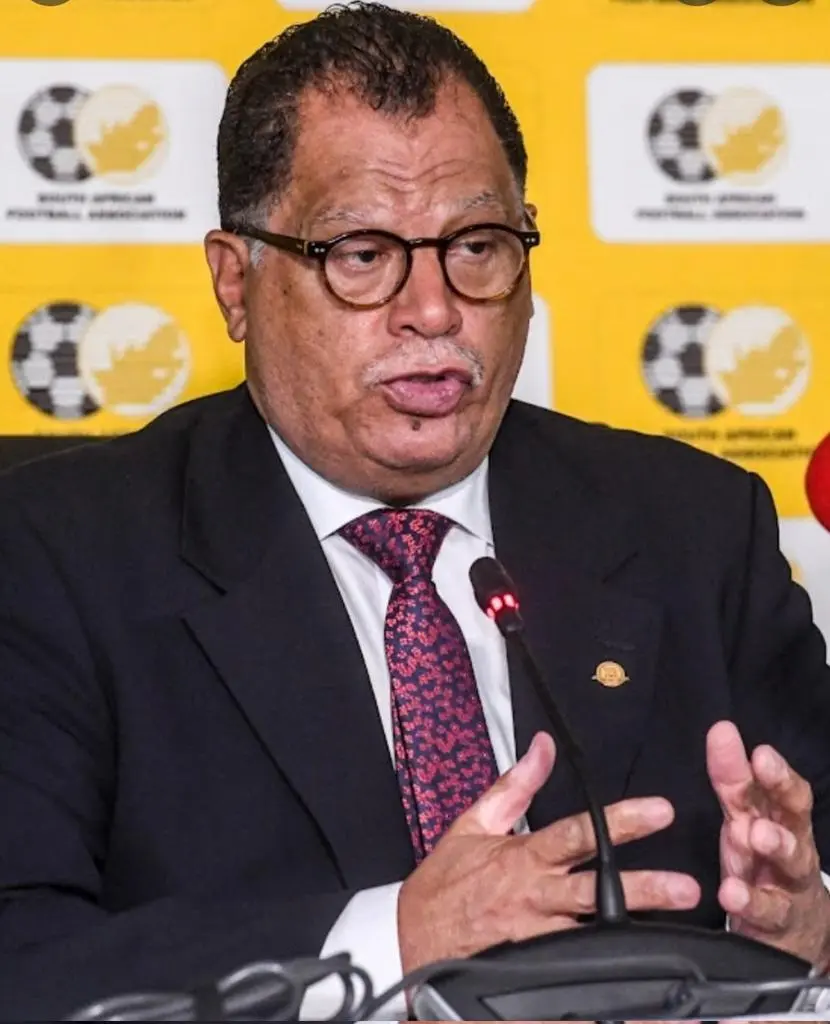
He led the successful bid and delivery of the 2010 Fifa World Cup as CEO of the Local Organising Committee, a landmark achievement that still carries significant weight.
He has been Safa president since 2013, winning successive terms and signalling his intention to seek a fourth. The Safa statutes impose no term limits and Jordaan has made clear that the regions will decide.
Incumbency brings advantages and spoils: established relationships with regional structures, familiarity with the levers of power inside Safa House and the ability to shape narratives around stability and experience, to name a few.
More decisive still is the FTF. Unlike the Save Our Safa grouping, the FTF is not a loose collection of supporters. It is a disciplined political machine with deep roots in the regions and a demonstrated capacity to deliver electoral outcomes.
Its track record is clearest in the events surrounding the 2009 Safa elections. Ahead of the 2010 World Cup, a bitter contest simmered between Jordaan and the Premier Soccer League's formidable leader, Dr Irvin Khoza.
Fifa was strongly opposed to Safa holding a presidential election so close to the tournament. World football's governing body, through secretary general Jérôme Valcke and powerful president Sepp Blatter, explicitly called for the elections to be postponed until after 2010, citing fears that the intense rivalry and potential instability could disrupt World Cup preparations.
Safa refused outright to delay. Eligibility challenges and intense factional manoeuvring followed. Both men ultimately withdrew and little-known Kirsten Nematandani, widely regarded as aligned with the FTF, was elected unopposed as president.
That outcome was not accidental. It demonstrated the Forum's ability to outmanoeuvre rivals, manage internal processes and install preferred leadership even under high-stakes conditions and against the expressed wishes of Fifa.
Nematandani served until 2013, after which Jordaan himself easily assumed the presidency with FTF backing that has endured through subsequent elections.
That same machinery is again mobilised behind Jordaan. The FTF has publicly endorsed him for a fourth term. Its national convenors and aligned regional leaders understand the voting arithmetic.
There are 52 regions, associate members and the Premier Soccer League as a special member. Votes are not purely about policy platforms. They are about relationships, patronage networks and the ability to deliver for local structures.
Zungu has campaigned energetically, travelling the country and securing visible endorsements, including from all KwaZulu-Natal regions and from prominent football personalities. Yet the structural advantage still appears to rest with the incumbent and the Forum that has proven its organisational strength.
This is the central tension of the 2026 contest. On one side stands a businessman and club owner offering commercial expertise, a focus on development and a call for cleaner, more inclusive governance. On the other stands an experienced political operator backed by a faction that has shown, for more than a decade and a half, that it knows how to win Safa elections. The 2009 precedent with Nematandani remains instructive: when the FTF decides an outcome is necessary, it has the tools and the discipline to achieve it, even if that means using proxies or navigating eligibility battles.
South African football cannot afford another cycle of the same. Development at regional level remains uneven. The gap between elite professional clubs and the broader pyramid is wide. Women's football requires sustained investment rather than periodic attention.
Governance must move beyond defensive postures and legal distractions towards transparent, professional administration that rebuilds public and commercial confidence. Zungu's profile and stated priorities align more closely with these urgent needs than another term of the status quo.
Zungu represents the possibility of injecting private-sector discipline, broader stakeholder engagement and a genuine developmental focus into an organisation that has grown comfortable with its internal power dynamics.
At the same time, realism demands recognition of the obstacles. Jordaan's political experience and the FTFs proven electoral machinery, the same machinery that installed Nematandani ahead of the 2010 World Cup, despite Fifa's strong opposition and fears of instability, make Zungu's task daunting.
Elections inside Safa have rarely been decided solely by the quality of a candidate's vision. They are decided by organisation, alleged greased loyalty and the ability to command the regions.
Whatever the result on 12 September, the underlying issues will not miraculously disappear. South African football needs leadership that prioritises the game's long-term health over the preservation of existing power structures. Zungu may offer that possibility. Whether the political realities of Safa allow it to materialise is the question the congress will answer.

Lelo Mzaca is an award-winning multitalented journalist, copywriter and presenter of The Big Breakfast Show on Radio 2000. He has an overwhelming passion for sport, lifestyle, music, arts and culture.