

Africa has never felt like a market I am looking to expand into. It is home.
I was born in Sudan, spent part of my childhood in Nairobi and later built my life and career in Canada. Construction became the industry through which I learned how much a building can represent: safety, stability, dignity, ownership and opportunity.
Travelling and engaging with organisations in different countries has added another lesson. The value of knowledge is not simply in accumulating it. It is in asking what can be shared, adapted and put into action.
For me, coming home does not mean arriving with all the answers. South Africa is not Canada. Kenya is not Sudan. No African country, community or informal settlement should be treated as interchangeable.
The continent is home to me but home is not sameness.
Coming home means listening to the people who already understand their communities, learning what is working and asking where our experience, relationships and resources can add something useful.
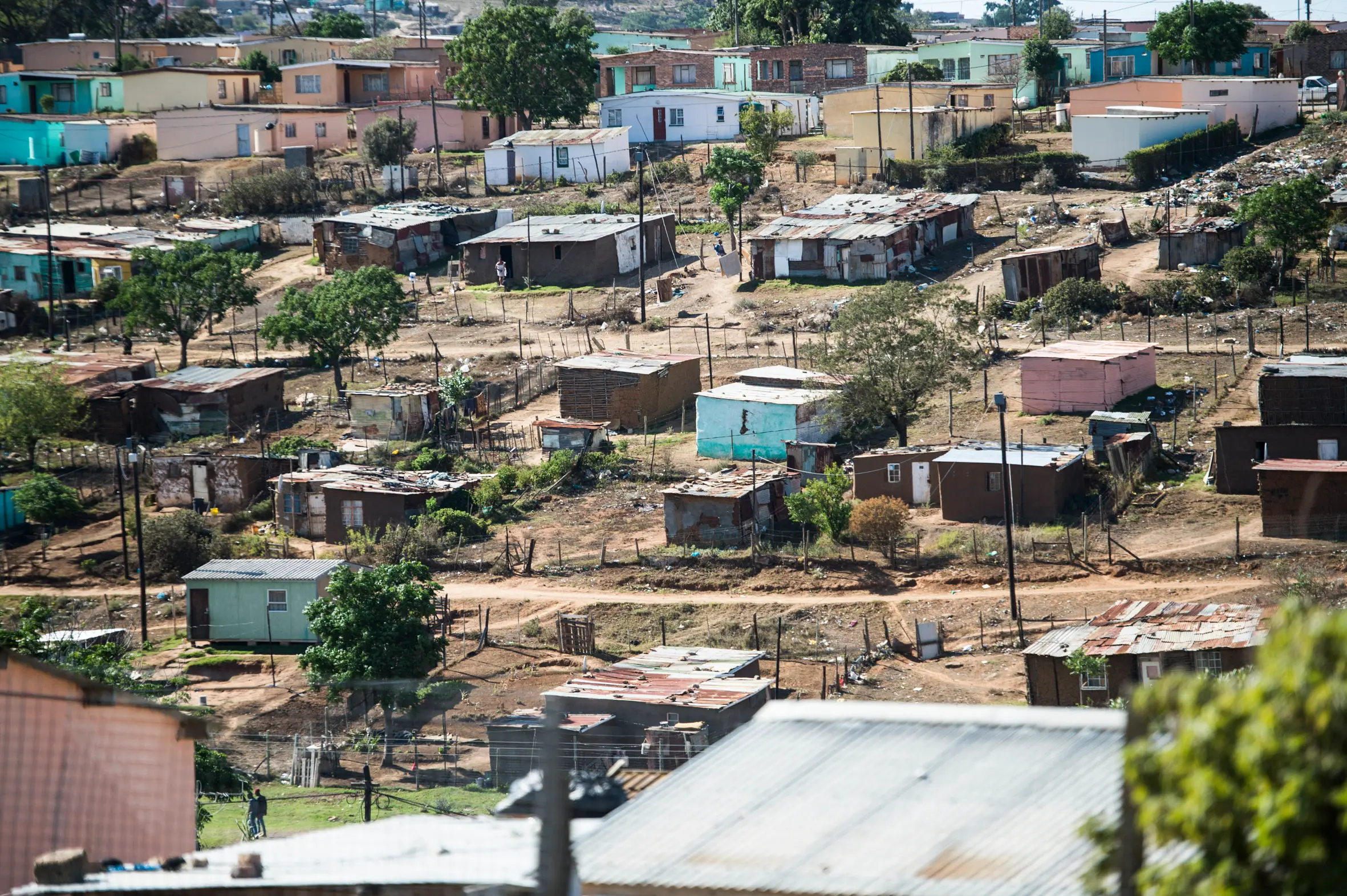
South Africa's current housing challenge presents one place where that conversation matters. The department of human settlements plans to support the upgrading of 4,075 informal settlements during the 2024-2029 period. Its upgrading programme includes basic services and infrastructure such as water, sanitation, electricity, roads, stormwater management and refuse removal.
Those numbers immediately make me think beyond the physical project.
Imagine if every upgrade were also treated as a workforce-development opportunity.
What if young people from the communities being upgraded could be trained to help build, maintain and improve the places they call home?
What if infrastructure investment were intentionally paired with apprenticeships, recognised qualifications, formal pathways into the trades, mentorship and support for local enterprises?
Then the value of the investment would not leave when a contractor leaves.
The knowledge stays. The skills stay. The earning potential stays. The opportunity to build a business stays.
People trained through those projects could maintain existing homes, identify problems before they become emergencies, work on future projects, establish companies, employ neighbours and eventually train the next generation.
The goal should not be to create dependency on outside expertise. It should be to expand the number of people inside a community who have the knowledge and credentials to sustain what has been built.
As a general contractor, I know that housing does not end at construction.
A home needs maintenance. Infrastructure needs maintenance. Water intrusion, electrical faults, drainage problems, damaged finishes, plumbing failures and structural deterioration rarely become cheaper because they are ignored.
That is why I believe housing conversations must include maintenance literacy alongside new construction. Teaching practical skills — including what residents can safely address themselves, what requires a qualified professional and how to recognise early warning signs — can help protect both homes and the investment made in them.
But this conversation is incomplete if women are not part of it.
In August 2026, South Africa's Parliament noted that women make up roughly 10% to 11% of the country's approximately 1.259 million construction workers. It also raised concern that women-owned construction businesses stay concentrated in the lower registration grades, while higher-value commercial and civil construction work is still male-dominated.
That matters because women should not only experience the outcome of housing and infrastructure decisions.
We should be among the people making them.
Women belong in the trades. We belong in project management, engineering, architecture, planning, procurement and property management. We belong as contractors and business owners. We belong in community consultations and at the tables where budgets, land, infrastructure and development priorities are decided.
South Africa is already having that conversation. In August, the Housing Development Agency held its second Women Who Build the Nation Summit under the theme 'Women at the Centre of Development, Growth and Nation Building', bringing together leaders from government, the private sector, academia and civil society around inclusive development and economic empowerment.
The question now is how conversations like these become sustained pathways into skills, contracts, ownership and leadership.
That is particularly important when we speak about training the next generation.
If a young woman living in a community being upgraded can see another woman installing, managing, designing, inspecting or owning part of that project, we have expanded what the project can build.
It is no longer only delivering infrastructure. It is also widening the image of who gets to build.
That same belief is behind Women Who Build 2027, a global calendar project I am developing to spotlight 12 women working across construction and the built environment. The calendar is not simply about visibility. It is about showing girls and women what is possible, connecting recognition to opportunity and making sure women from Africa are part of a global story about who builds our communities. Representation matters most when it helps open a door to training, contracts, mentorship, leadership and ownership.
This thinking also sits at the heart of the work I am developing through the Black Enterprise & Trades Network and TradeBridge Network: connecting people, skills, knowledge and opportunity in ways that can strengthen local capacity.
Housing is a natural place to begin but the principle is larger than housing.
The same question can be asked about agriculture, manufacturing and trade. How do we ensure that investment creates knowledge and ownership that remain in the community? How do we support a farmer not only to produce, but also to take part further along the value chain? How do we help local businesses develop the skills, standards, networks and market access needed to move from producing to processing, supplying and exporting?
These are different sectors and require different approaches. I am not suggesting a single programme can solve them all.
I am suggesting that our development conversations should repeatedly ask the same question: What are we leaving behind?
If the answer is only a completed project, we may be missing part of the opportunity.
Housing is a necessity whether we are talking about South Africa, Canada, the United Kingdom or elsewhere. The histories, policies, economies and scale of the challenges differ but people everywhere need safe, dignified and affordable places to live.
We are not going to solve every housing or infrastructure problem. I do not believe responsible leadership begins by making that promise.
It begins by being intentional about the problems we are equipped to help address and building partnerships with the people who already know the terrain.
For diaspora professionals like me, that also requires humility.
Bringing knowledge home should never mean assuming knowledge only travels in one direction. There is just as much to learn from African builders, entrepreneurs, communities and institutions as there is to share from experience abroad.
The opportunity is in the exchange — and then in the action that follows.
I want to see projects that do more than improve buildings.
I want to see them create trades-people, qualified professionals, women-owned businesses, local contractors and young people who can continue the work.
I want communities to keep more of the knowledge and economic value generated when investment arrives.
Because Africa is home.
And when you come home, you do not simply take. You contribute.

Josephine Sindani is an African-born Canadian general contractor, speaker and founder of JS GROUP, BETN and TradeBridge Network, focused on construction, skills development and inclusive economic opportunity.