


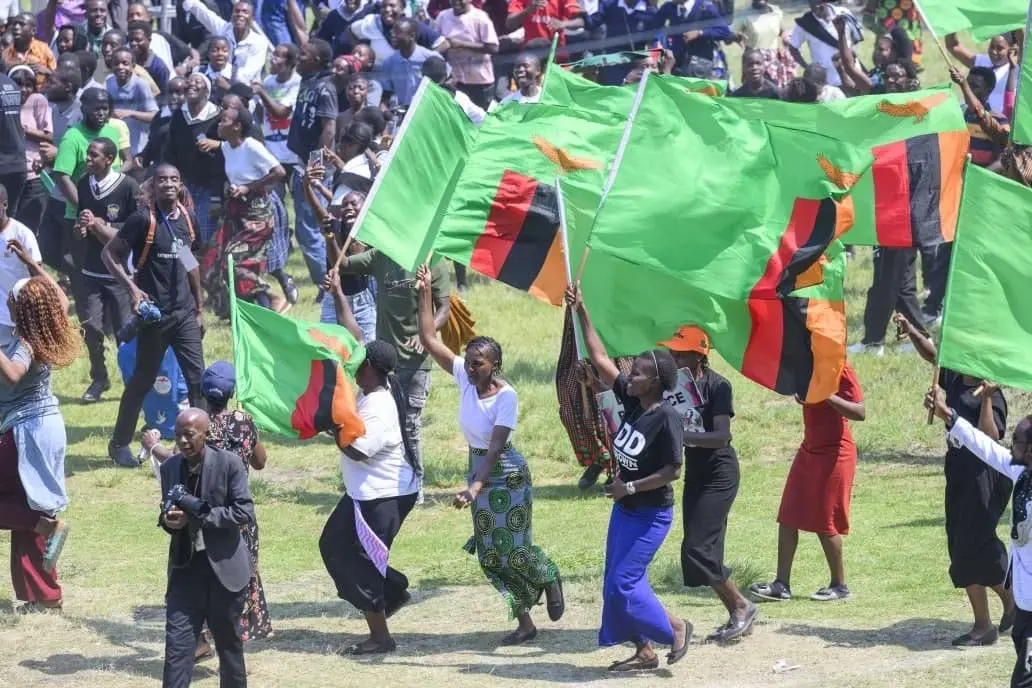
As the world marks the International Day of Democracy, Africa's state of democracy remains ambiguous and precarious.
From Zambia, where opposition leader Brian Mundubile is facing treason charges following the 2026 elections, to Uganda, where opposition figures have faced detention and restrictions and Tanzania, where opposition leader Tundu Lissu has been detained, the continent continues to grapple with serious questions about political freedoms and democratic governance.
In Zimbabwe, constitutional changes signed into law in July 2026 extended the presidential term from five to seven years, while across the continent, concerns persist about the concentration of executive power and the weakening of democratic institutions.
Among these countries, however, the tale of Zambia's democracy remains a complicated one of both hope and fear.
Since gaining independence from Britain in 1964, Zambia, the copper-rich southern African country, has often offered hope that it could become one of the continent's strongest democracies. Its history of relatively peaceful political transitions has contributed to that reputation.
Unfortunately, the recently concluded 2026 elections have raised fears of democratic backsliding, particularly following the arrest and subsequent treason charges against Mundubile, the main challenger to President Hakainde Hichilema.
On August 18, the Electoral Commission of Zambia declared Hichilema the winner of the August 13 presidential election, giving him a second five-year term. He received 2,965,326 votes, while Mundubile received 1,856,217 votes. Hichilema was subsequently sworn in for his second term on September 1.
Amid the glamorous swearing-in ceremony and congratulatory messages for the United Party for National Development (UPND) president, however, came criticism of the conduct of the election, post-election developments such as Mundubile's detention and concerns that the opposition was denied a meaningful opportunity to challenge the result in court.
Reuters reported that the election was marred by allegations of irregularities, military deployment and restrictions on the opposition, while Mundubile and his running mate were later detained on treason charges.
These developments have attracted criticism from international actors and religious leaders, reinforcing the argument that conducting genuinely free and fair elections remains a daunting challenge in many parts of the world.
It is equally important to assess Zambia's democratic record in the context of what is happening in other African countries.
Contrary to the condemnations surrounding the 2026 elections, Zambia's conduct of elections and its broader democratic environment, when contrasted with countries such as Tanzania, Zimbabwe and Rwanda, as well as other authoritarian states including Uganda, Sudan, Cameroon and Eritrea, still offer reasons for hope.
Despite being an incumbent president, Hichilema did not prevent his principal challenger from contesting the election. This is significant when compared with countries where prominent opposition figures have been barred from elections through legal, administrative or political restrictions.
For instance, Rwanda's opposition leader Victoire Ingabire was barred from contesting the 2024 presidential election after a court refused to restore her civic rights. As well as Ingabire - who remains in jail after her second arrest last year - Diana Rwigara was arrested when she dared show interest in the presidency and her bid for 2024 run was ended prematurely as the electoral body in Kigali ruled her ineligible to contest the presidency.
Any state-sponsored disruption of opposition activities not only scares citizens away from freely associating and participating in elections but can also contribute to voter apathy and political disengagement, thereby undermining a key tenet of democracy.
At least on record, Hichilema did not lock out his strongest opponent from contesting the presidency. That is an important distinction when evaluating Zambia against some of its neighbours.
Yes, Zambia's 2026 elections raised serious issues that must be addressed. But the comparison with other countries is also important.
Uganda, for example, went into its January 2026 elections amid a government-ordered internet shutdown, restrictions on social media and reports of violence and arrests involving opposition supporters.
The internet was shut down from January 13 to January 18, while access to some social media and messaging platforms remained restricted afterwards.
This makes the Zambian experience comparatively significant. Hichilema's government did not shut down the internet or impose a nationwide social-media blackout during the voting exercise.
In this digital era, switching off the internet and restricting platforms such as Facebook, X and TikTok can amount to a serious restriction on access to information, freedom of expression and citizens' ability to participate in public debate.
Zambia also retains a vibrant civil society and a relatively active press that can scrutinise those in power. Such civic space is an important component of a functioning democracy.
A vibrant press and flourishing civic space are cornerstones of any democratic society. Therefore, Zambia's democratic progress should not be dismissed simply because its latest election exposed serious weaknesses.
At the same time, neither should those weaknesses be ignored. The detention and treason charges against Mundubile are particularly troubling because the treatment of the opposition after an election is as important to democracy as the conduct of the election itself. The charges have been confirmed by his lawyer, although the government has presented the case as a matter of national security.
Zambia has subsequently demonstrated an important tradition of peaceful transfers of power through elections and constitutional processes, distinguishing it from countries where political transitions have been accompanied by coups, prolonged conflict or bloodshed.
My fear will rise the moment Hichilema's government seeks to alter the constitutional limits on presidential tenure to allow him to remain in power beyond the two-term limit. Zambia's Constitution currently provides that a person who has twice held office as president is not eligible for election as president.
Other than that, let us remain hopeful that the "cattle boy", as Hichilema is sometimes known, will follow in the footsteps of Edgar Lungu, Rupiah Banda and Kenneth Kaunda, who ultimately handed over power through constitutional and democratic avenues.
Lest we forget, while elections remain a key tenet of democracy, there are other standards that determine whether democracy is meaningful.
These include respect for the rule of law and human rights, gender equality, independent arms of government, strong institutions, accountable governance, freedom of expression, civic participation and sustainable development.
Regardless of the shortcomings of the 2026 elections, Zambia deserves credit for maintaining comparatively greater space for political participation, press freedom, constitutionalism and civic engagement at a time when some of its neighbours are experiencing serious restrictions on dissent, rights and freedoms.
The lesson from Zambia, therefore, should not be that its democracy is perfect. It is that democracy is a continuous process that requires constant vigilance.
The country's 2026 election should serve as both a warning and an opportunity: a warning against complacency and an opportunity to strengthen institutions, protect opposition rights and preserve the democratic gains Zambia has made since independence.
In conclusion, democracy is a seed that we must keep watering until it grows into a healthy tree that bears the ripe fruits of long-term peace, justice, equality, equity, political stability, coexistence, social transformation and sustainable development.
Robert Kigongo is a sustainable development analyst.