


The ANC's failure to register candidates to contest the 24 November 2026 local government elections in key stronghold municipalities is an expression of the leadership paralysis in the party as its leader, South African President Cyril Ramaphosa, fighting impeachment, is now a lame-duck unable to stamp his authority, causing the party to drift aimlessly.
It is also an indication of his next-in-line ANC leaders' incompetence, lack of authority and carelessness.
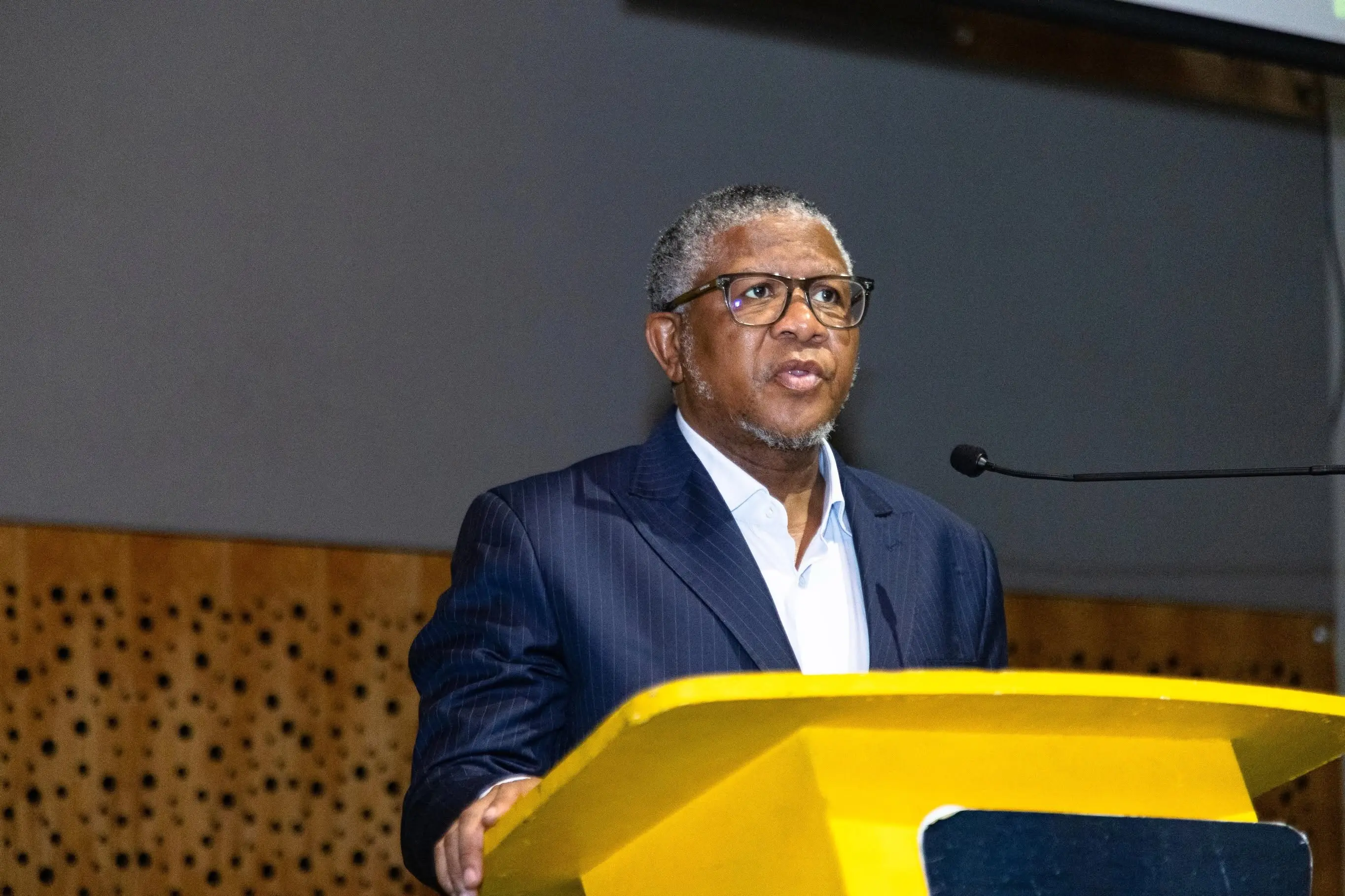
The administrative ineptness of secretary-general Fikile Mbalula, a potential leadership successor to Ramaphosa, has been exposed in this blunder and will probably undermine his ANC presidential or deputy presidential candidacy at the party's 2027 national elective conference.
The fallout and blame-game over the ANC's candidate submission blunder will probably further divide the ANC.
Although Mbalula has vehemently rejected responsibility for the administrative blunder, the secretary-general is the CEO of a political party, responsible for administration of the party and the proverbial buck in this instance stops with him.
It is also an indication of the deep organisational disarray of the ANC. The party has plunged into institutional decay, beset by operational incompetence and torn apart by rampant factionalism.
It is a sign of the deep divisions in the party as members fight to grab party candidacies in order to grab access to the last steps on the patronage ladder as the ANC declines and with it, the party's ability to distribute patronage.
Mbalula and some ANC leaders have alleged that it was deliberately sabotaged by some ANC leaders who did not want some of the candidates listed as potential mayors and councillors. They prefer the names of members of their factions to be put forward for those positions.
The ANC is divided between factions aligned to the key players in the party's presidential succession race.
Party presidential elections take place along slates. Presidential candidates line up slates which have the names of candidates that support their presidential candidacies.
The slates are beginning to form are those of ANC and South African Deputy President Paul Mashatile; Mbalula; and nascent slates of people who would want businessman Patrice Motsepe and National Assembly Speaker Thoko Didiza as Ramaphosa's successor.
Of course, the slate that brought Ramaphosa into the ANC presidency is powerful.
The slate that can get the most candidates to be nominated as local ANC candidates before the 4 November 2026 local elections — and get them elected — could create a powerbase at the municipal level for their presidential candidate.
Control of state resources is critical in ANC party leadership elections because state resources are mobilised to resource party election campaigns, give patronage to supporters of party presidential candidates and sway ANC members to vote for their presidential candidate at branches and eventually at the national elective conference in December 2027.
The slates include candidates that will contest leadership positions across all structures of the ANC, from the national executive committee and top party leadership positions to provincial premiers, mayors and councillors.
The Independent Electoral Commission of South Africa (IEC) made its online system for the submission of candidates for the 4 November 2026 local elections available on 21 June 2026.
So divided is the ANC that its leadership did not want to publicise the names of its mayoral candidates before the IEC deadline, fearing disgruntled ANC factions would love time to submit competing names to the IEC as independent candidates or angry ANC members opposing the party candidates would offer themselves as competing candidates to other parties.
ANC leaders, including Ramaphosa and Mbalula, have shifted the blame for the party's administrative blunder to the IEC. Sadly, this is also an indication of the ANC typically not taking responsibility for its own administrative, governance and delivery failures; always immaturely blaming others.
The IEC has denied the party's claims that its online candidate nomination system experienced technical failures which prevented the ANC from registering some of its candidates on time.
Around 2 300 candidates from 45 political parties have been disqualified from contesting after missing the June deadline.
IEC deputy CEO for electoral operations Masego Shiburi said at a press conference: "We have looked at our logs, at our records.
"On our part, the system performed well in the time that the party alleges the system was not working.
"We have records of submissions that were made by other contestants and other political parties. We made the system available and communicated the same to all political parties on 21 June to enable parties to start capturing their list way ahead of time to avoid the final rushes, so that we could minimise accusations that the system was malfunctioning".
IEC chief electoral officer Sy Mamabolo rejected the ANC claims that its party administrators experienced technical difficulties with the system that made it impossible for the ANC to press the "submit as final" key to complete the necessary candidate information on time.
"I deny that at 16h58, the ANC's administration was logged out of the OCNS (Online Candidate Nomination System) and returned to the landing page.
"This is not borne out by the objective evidence. Even if they were, they could log back in."
At the time of writing, the ANC has appealed to the Electoral Court.
In its court papers, it claims the party had completed the required forms and uploaded all supporting documents for the six affected municipalities before the system had received all the required but technical difficulties on the system prevented the party administrators from completing the final electronic step.
In the IEC's affidavit to the Electoral Court, it said it had warned the ANC, through regular automated reminders, before the deadline. The reminders also pointed to IEC guidelines which stipulates the importance of submitting the candidate list by the deadline.
The ANC faces exclusion from the ballot in two municipalities and the loss of representation in four others after the IEC rejected 181 of the ANC's candidates because the party did not lodge the candidatures in time to make the 28 August 2026 deadline. The ANC has appealed to the Electoral Court for a reprieve.
The ANC risk losing candidates in six of South Africa's 257 councils, with 130 proportional representation candidates and 51 ward candidates in the Eastern Cape, KwaZulu-Natal and the Mangaung metro were affected by this. This means that 51 ANC mayoral candidates in these jurisdictions were left off the final registered candidate lists.
Of the six municipalities affected, Ingquza Hill and Port St Johns in the Eastern Cape are the most affected, with both the ANC's ward and proportional representation (PR) candidates omitted.
In the other four — Mangaung in the Free State, uMshwathi in KwaZulu-Natal and Walter Sisulu and Sundays River Valley in the Eastern Cape — the ANC's ward candidates remained on the ballot but failed to register its PR candidates.
The rapid decline of the former majority-governing ANC, the mushrooming of new political parties and the new era of coalition politics have increased scrutiny of the IEC, with political parties, civil society and voters watching the IEC to ensure that the organisation is not biased in favour of the ANC.
The ANC has a policy of deploying its cadres to key state-owned entities and democratic institutions and ensuring that major public procurement opportunities go to cadre-aligned companies.
ANC leaders have often used the party's majority to prevent any individual perceived to be critical of the ANC or its leaders, whatever, their colour, to appoint to key government, state-owned entities and democratic oversight institutions, to secure government contracts or licences, unless they partner with key ANC leaders.
When the party had a majority, it could bully state organisations, democratic institutions and private companies to bend to its will or face its wrath.
Now that the ANC lost its majority in the 2024 national elections and is on the verge of losing almost all key municipalities in the 2026 local government elections, its power aura is gone and many institutions are pushing back against the pressure to toe the ANC line.
Many key personnel of democratic institutions are therefore dominated by ANC cadres.
With the decline of the ANC's state power, the ANC's government of national unity partners, opposition parties and civil society organisations are watching democratic institutions, including the IEC for any potential ANC favouritism.
The IEC has been one of South Africa's most successful democratic institutions. It is under pressure to show that it is not browbeaten by the ANC into caving in to reinstate the ANC's candidates. The Electoral Court is also under pressure not to bow to ANC pressure.
Unless the Electoral Court allows the ANC to register the omitted candidates, the ANC is expected to plunge to the 30% floor in the 4 November 2026 local elections. In the 2021 local elections, the ANC dropped below 50% for the first time since 1994, to 45.59%.
In KwaZulu-Natal, the uMkhonto weSizwe Party could benefit from the ANC not fielding candidates. In the Eastern Cape, the Economic Freedom Fighters could benefit in the urban areas where the ANC is not fielding candidates. The MK Party will also probably increase its campaigns in the Eastern Cape to try to get ANC members to vote for its candidates where there are no ANC candidates.
In Johannesburg, the Democratic Alliance Helen Zille's mayoral bid will be boosted by the ANC failing to submit its candidate, Frank Chikane. In Johannesburg, the EFF and MK Party could also benefit from the ANC's candidate submission failures.
It is time the ANC leadership matured, took accountability for wrongdoing and in this instance, accepted it blundered and moved on, rather than immaturely blaming everyone for its own wrongdoing.

Professor William Gumede is the founder of the Democracy Works Foundation and author of the best-selling Restless Nation: Making Sense of Troubled Times (Tafelberg).
The article is based on his comments in his recent interview on the #kykNET's #InConversation programme, discussing the consequences for the ANC after missing the IEC candidate lodging deadline.