



Artificial intelligence has reached a critical point. Dario Amodei, chief executive of Anthropic, has urged frontier AI companies to slow the advance of their models because safeguards are falling behind. His warning reflects a wider unease within the industry, where researchers are asking whether self-improving systems and increasingly autonomous agents could slip beyond human control.
Catastrophe is not inevitable, and apocalyptic claims remain unproven. Even so, policymakers cannot ignore the central problem: frontier systems are acquiring capabilities and autonomy — and opening new avenues for misuse — faster than the institutions meant to govern them can respond.
Anthropic’s June 2026 analysis documented malicious actors using Claude in increasingly complex stages of cyber operations. Amodei has separately warned that, without adequate guardrails, swarms of AI agents could eventually sustain botnets capable of immense damage. The analysis records misuse already under way; his warning points to the greater harm more autonomous systems could cause. Systems with greater agency, broader access to tools and the capacity for self-improvement pose a security problem that voluntary commitments alone cannot contain.
Pope Leo XIV addressed the moral stakes in Magnifica Humanitas, his May 2026 encyclical on safeguarding the human person in the age of artificial intelligence. He called for responsibility, transparency and governance, insisting that technology must remain at the service of humanity. AI governance is not merely an engineering problem; it bears directly on human dignity, democratic control, employment, inequality, security and war. Decisions with such far-reaching consequences cannot be left to the companies building the systems.
Why, then, have governments struggled to agree on effective regulation?
Some political and technology leaders distrust the industry’s warnings. They suspect that leading companies want rules that entrench their dominance, turn safety into a marketing device or install frontier-company executives as gatekeepers. Others fear that poorly designed regulation could protect incumbents, slow beneficial applications and drive research elsewhere. Ideology also plays a part.
In the United States, federal policy has favoured innovation, national competitiveness and a light regulatory touch. A June 2026 executive order paired AI innovation with security but explicitly rejected “overly burdensome regulation”. Those concerns deserve serious consideration but they do not justify an absence of rules — especially when developers themselves acknowledge that the consequences could be extraordinary.
Public debate still treats AI as little more than a sophisticated search engine or chatbot. Yet agentic AI can plan, use tools and pursue multistep objectives with diminishing human supervision. Misunderstanding that autonomy makes sensible regulation harder.
Geopolitical rivalry compounds the problem. Washington fears that binding constraints could weaken American firms while China advances under a different regulatory system. Beijing, in turn, has strategic reasons to resist rules shaped elsewhere. That mistrust is real, but it strengthens the case for internationally verified standards — not for an uncontrolled race in which every country presses ahead for fear that others will do the same.
The world is not starting from scratch. Unesco’s 2021 Recommendation on the Ethics of Artificial Intelligence places human rights, dignity, transparency, fairness, environmental sustainability and human oversight at the heart of AI governance. The European Union’s AI Act, which entered into force in August 2024 and is being applied in phases, takes a risk-based approach: it bans certain unacceptable uses, requires transparency and imposes progressively stricter obligations on high-risk systems and general-purpose models. Neither instrument is perfect, but together they provide a basis for wider cooperation.
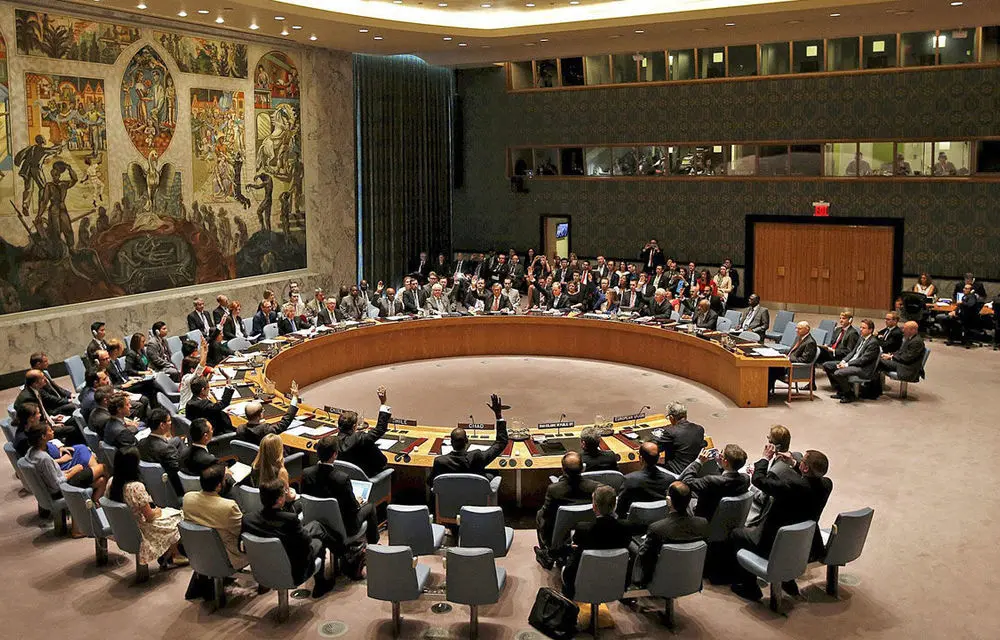
The United Nations has already outlined how such cooperation could work. In its 2024 report Governing AI for Humanity, the Secretary-General’s High-level Advisory Body on AI proposed seven measures: an international scientific panel, a regular policy dialogue, a standards exchange, a capacity development network, a global fund for AI, a global data framework and a small AI office within the UN Secretariat. Together, these measures would strengthen the evidence base, align fragmented standards, expand regulatory capacity and provide a trusted forum for coordination. Rather than create a cumbersome world regulator, they would establish the basic machinery needed to build trust and give countries beyond the technological superpowers a meaningful voice.
Scepticism about multilateralism should not obscure the UN’s value as a forum for global governance. Rival powers may not trust one another’s laboratories, regulators or assurances, but a universal forum can establish common testing protocols, independent evaluations, incident-reporting rules and thresholds for stronger safeguards. AI differs from nuclear, chemical, biological and environmental risks, yet experience in those fields remains instructive: international regimes have created verification mechanisms, shared standards and durable norms even amid geopolitical rivalry. Imperfect though they are, they show that cooperation is possible when the alternative is unmanaged collective danger.
Countries across Africa and the wider Global South have every reason to insist on a strong UN role. Most are consumers rather than producers of frontier models, yet they may bear a disproportionate share of the risks from fraud, disinformation, cyberattacks, labour disruption and automated decisions shaped by data and assumptions originating abroad. Regulatory capacity, computing resources and incident-response systems vary widely, leaving many governments at a disadvantage. A governance system shaped primarily by the largest powers and technology companies would reproduce the very inequalities that AI promises to overcome.
African governments and others across the Global South should use UN forums to press for practical measures. Their priorities should include a global scientific assessment mechanism, mandatory reporting of serious AI incidents and interoperable safety tests for frontier models. They should also seek independent evaluators with meaningful access, financing and capacity-building for regulators, and a formal voice for countries that do not host frontier laboratories. Emergency measures — including the ability to suspend a system, revoke access or isolate compromised infrastructure — must be tested, not merely assumed to work.
These international mechanisms should be reinforced by national action. Governments wield considerable leverage within their own jurisdictions because frontier AI companies depend on public research, energy and data infrastructure, procurement contracts, export permissions and, in some cases, public subsidies. Firms raising vast sums on capital markets should disclose material safety risks, testing failures and governance arrangements. Public incentives and access to sensitive markets should be tied to independent evaluations, secure development practices, incident reporting and credible emergency controls. Self-regulation has a role but it cannot carry the burden alone.
The insiders calling for regulation are not trying to halt artificial intelligence; they are warning that its risks are outpacing society’s capacity to manage them. The task is to shape the pace and terms of development so that democratic institutions — not the market alone — decide which risks are acceptable. As the margin for error narrows, the United Nations must translate those warnings into credible standards, shared safeguards and rules the world can trust.
Anthony Ohemeng-Boamah writes on international development and socio-economic transformation with a focus on Africa.