

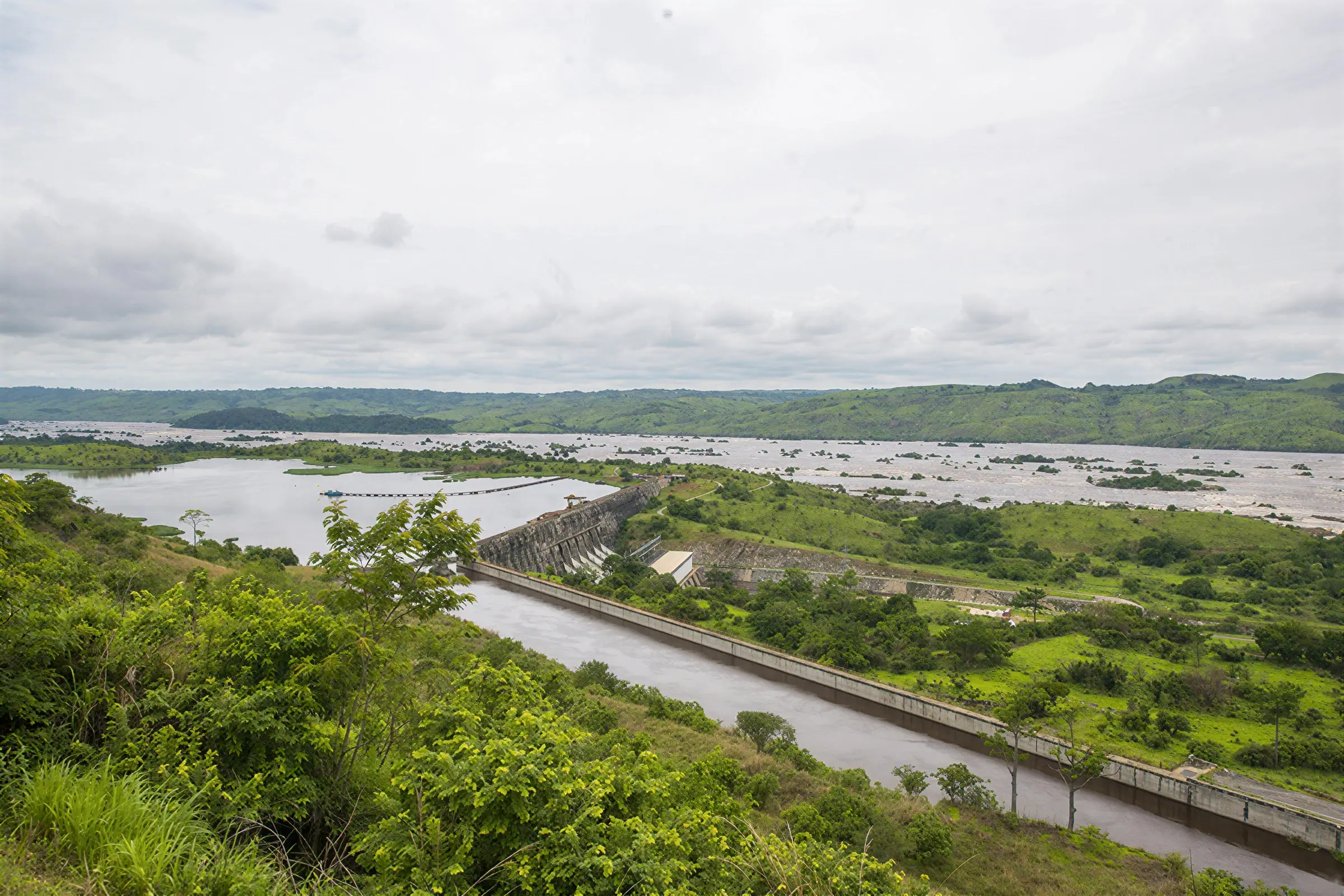
The power of the Democratic Republic of Congo (DRC) Grand Inga dam hydropower project to transform Africa by generating about 43,200MW to augment regional power pools and provide access to affordable electricity is a potential game changer.
But where the political will lacks or is smothered by bureaucratic bungling, is the future of every African citizen that is temporarily put on hold.
Across the Congo River, the hydropower project is located about 150km southwest of where the river empties into the Atlantic Ocean. It is 225km southwest of the capital Kinshasa and about 40km upstream of Matadi, the country's largest port. Hence, it is well positioned to provide strategic supplies to key areas and beyond. Moreover, with an extraordinary site with an average flow of approximately 42,000 cubic metres per second, it is regarded as having one of the highest sustained river flows on Earth, which is exceptional.
So, what more do you need?
But the question is not its irrefutable capacity. It is why it has taken the country and continent so long to reconstruct that hydro plant?
Indeed, Inga Dam's transformative power was known inside the DRC corridors of power since the days of its tyrant, former President Mobutu Sese Seko. Despite initial construction projects in the 1970s and 1980s, the project stalled due to lack of funding and maintenance, mirroring Mobutu's dilapidated and now unusable private home located in Gbadolite, often referred to as the 'Versailles of the Jungle'.
The Inga Dam project was stalled during Mobutu's reign. Contrast this with the Gbadolite grand place that was built over several decades corresponding with Mobutu's taste for vulgar opulence. It's a question of taste and priorities. The 'Versailles of the Jungle' was eventually looted and abandoned after Mobutu's abrupt departure after being toppled. Yet Mobutu himself oversaw the Inga dam's construction in the 1970s and 1980s but by the end of the century, both dams were dilapidated due to a lack of funding for their maintenance.
Inga Dam is a golden idea on mute. It has been sadly dormant, without the necessary political will. It's only now that concerted efforts towards rebuilding it have begun, albeit slowly. The hopeful yearn for that powerful construction momentum towards transforming the region and helping alleviate the current economic and humanitarian challenges, partly aggravated by erratic power supplies.
The current DRC leader Étienne Tshisekedi has been drawn to reviving the Inga Dam project and lighting up the region that ironically has been seen through the unfortunate and false racist lens of the term 'Dark Continent'. The project could indeed support current regional power pools, helping transform the continent towards modern sources of energy. In the process, we guarantee access to clean and affordable electricity.
At present, intermittent power cuts are aggravating a humanitarian crisis directly linked to military conflicts that have ravaged the region for years.
The height of selfishness and lack of foresight that had gripped the previous DRC governments is also reflected in some neglect that will haunt the memory of those that had the capacity to act but failed. Indeed, several attempts have been made to kick-start this project in the last five years, with seven proposed hydroelectric power stations at the site of the Inga Falls, likely to create the largest power station in the world. And this in Africa.
There had been initial projects. Inga I and II were built in the 1970s and 1980s. There was strong anticipation that the next phase of Inga III was to begin six years ago. It's not just the DRC that was going to benefit. It was expected that the project, whose total construction cost is expected to be around $80 billion, will be Africa's largest hydropower facility.
The Congo River's energy will surely revitalise the Great Lakes Region, transforming much of the continent, with power supplies that will provide energy towards production in potential manufacturing and agricultural projects.
Yet, notwithstanding huge rewards from it, the project has faced irritatingly constant delays and revisions, because of a combination of technical, financial and institutional challenges. What brings hope are however current ongoing capitalisation talks between the government and global financiers, particularly the World Bank.
But why would the country, the region and world financiers ignore such a milestone, or rather, can they afford to remain phlegmatic about such an initiative, especially with that alluring capacity to be the world's largest hydroelectric plant?
The total project cost is around $80 billion, yet the annual national 2026 budget for the DRC is set around $20.3 billion. Managing the project therefore requires foresight and refinement of technical details with close cooperation with global financiers. The fact that it's doable makes failure not an option.
Undoubtedly, about 600 million people in sub-Saharan Africa have no access to power supplies, yet the regional organ SADC itself had contemplated an interconnected electricity grid.
At present, Inga 1 and 2 are operational but efforts towards adding six more dams along the river are stagnating. False starts have been there, presenting worrying signals after several potential investors and partners pulled out. The World Bank has had stalled talks that themselves mirror the stalled regional peace talks necessary to bring hope and peace to the war-torn nation. All this is because of policy differences, with policymakers that can't reach a consensus with private investors geared towards providing a win-win situation that will benefit both the country and the region.
There are now huge expectations with current leader Tshisekedi, having recently started engaging with the World Bank and other private investments for the project. Quoted by the BBC, the most hilarious comment came from José Ángel González Tausz, chairman of AEE Power, a Spanish-run company and partner in the project: "The Grand Inga is like a 'serpent — it is up, down, visible, not visible.'"
South Africa's commitment to import about 4,800MW of electricity from the Inga 3 project demonstrates an ever-present appetite that Tshisekedi cannot ignore. Nigerian investors have demonstrated similar interest, which is understandable given the country's intermittent power supplies.
The current leadership must provide the impetus and leadership credibility needed to bring the country out of the woods. It is not to be denied that corruption, mismanagement and infrastructure decay have stalled the country for so long. Global capital is timid. It will not rush towards the sound of gunfire, especially if it is accompanied by shadows of mismanagement and corruption. But policy reforms and management are likely to rekindle hopes and restore investors keen on long-term investments, scared by ongoing conflicts in the East. While project delays and stalls are common in similar large-scale investments, prioritising such projects given the huge benefits associated with them is important, because failure, as earlier indicated, is not an option.
If the project is easy to work through, Tshisekedi must keep rowing. Mining companies, similar projects in agriculture, await reliable and dependable sources of power. Most importantly, its people, of whom about 80 million lack access to electricity. This alone makes it one of the countries with the highest electricity access deficits. Hence, such facts alone obviously highlight the urgent need for advanced infrastructure and expedited regional energy solutions.
The DRC cannot simply market this project alone. Given its magnitude, it only makes sense to have a concerted regional effort, roping in the African Union given the obvious continental dividends emerging from the huge investment. It is, however, important that the DRC government has begun pitching the Inga Dam project as a genuine new development providing a source of cheap, clean electricity for AI data centres.
Such an AI-focused trajectory cannot be lost to investors keen on creating AI regional hubs, given increased global appetite for investors keen on establishing footprints on the continent. Moreover, given that AI data centres require huge power supplies.
Dr Brian Hungwe is a researcher in law, with interests in public international law, constitutional law and human rights, intellectual property law and delict. He holds a LLB, postgraduate LLM degrees in defamation and constitutional law and PhD in intellectual property law.