

September invites South Africans to do more than remember where we come from.
Heritage Month, commemorated under the theme "Celebrating Our Living Heritage: Strengthening the Ties That Bind Us", celebrates our diverse cultures, traditions and living heritage while encouraging social cohesion and appreciation of the rich cultural diversity that defines our nation.
The theme reminds us that heritage is not simply something preserved in museums, monuments, archives and historical sites. Heritage is something we live, practice, transmit and renew every day. It resides in our languages, ceremonies, music, food, beliefs, stories and traditions but also in the places and natural resources that have sustained communities across generations.
Among these, water holds a particularly profound place in our living heritage. Water has always been more than a resource. It has been an economic, social and cultural enabler, shaping where people could live, farm, trade and establish communities. Throughout human history, the availability of water has influenced great migrations, determined settlement patterns and helped shape the economic and cultural identities of communities.
People settled around rivers, springs, wetlands and other reliable water sources not simply because water was necessary for survival but because it created the conditions for livelihoods, social organisation and cultural life to flourish. Over time, these places became repositories of memory and identity.
In this sense, water has helped shape the geography of our heritage. The relationship between people and water is therefore also a relationship between people and place. Communities develop traditions around the landscapes in which they live. They attach meaning to rivers, springs, mountains and other natural features. They tell stories about them, conduct ceremonies around them and pass knowledge about them from one generation to another.

Across South Africa's diverse cultures, water has carried profound social, cultural and spiritual meaning. Rivers and springs have been places of gathering, cleansing, ceremony and remembrance. Rain has represented renewal, fertility and hope. Traditional knowledge about seasons, landscapes, rainfall and the stewardship of natural resources has been transmitted from elders to younger generations.
Where people settle, how they live and how they relate to one another have often been inseparable from their relationship with water. Sanitation belongs within this story too, not as a technical afterthought, but as an expression of dignity, public health and social wellbeing. Every cultural practice requires a community and a place in which it can be lived. Traditional ceremonies, weddings, funerals, festivals, markets, religious gatherings and family celebrations all depend, in ways both visible and invisible, on safe water, adequate sanitation and healthy public spaces.
Where these services are absent or unreliable, the consequences extend beyond inconvenience. They affect health, dignity, participation and the ability of communities to gather and practise their traditions. Reliable water and decent sanitation create conditions in which communities can come together, celebrate their identity and transmit their heritage to future generations. For this reason, the water and sanitation challenge should be understood not only as an infrastructure or service-delivery challenge, but as a social, economic and cultural imperative.
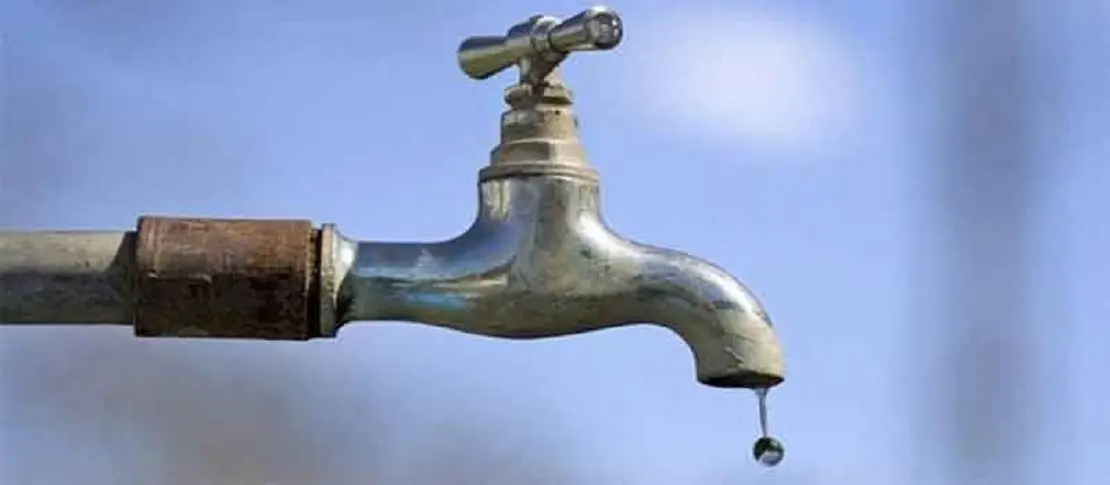
The neglect of infrastructure illustrates this point. Water lost through leaking, ageing or poorly maintained systems is not simply an engineering inefficiency. Every drop lost is water that cannot be used by a household, farmer, business, school or hospital or community elsewhere. Persistent infrastructure failure can deepen inequality and undermine equitable access to a resource fundamental to social wellbeing and economic activity.
Pollution is equally destructive. When rivers, wetlands, springs, wells and other water sources become contaminated, communities can lose access not only to water but also to places that have historically supported cultural practices, livelihoods and communal life.
A polluted river can become inaccessible to communities whose histories and traditions are connected to it. A contaminated spring can sever a relationship between people and a source of water that has sustained generations. Pollution therefore carries an environmental cost, but it can also carry a cultural cost.
So too can the hoarding or inequitable control of water. When water is captured, withheld or monopolised in ways that restrict access by sections of society, the consequences are felt in people's health, livelihoods, dignity and ability to participate in community life.
Water security cannot mean security for some while others remain excluded. Water is scarce and the resource must be managed in ways that strengthen, rather than fracture, the social ties that bind us.
This calls for a deeper understanding of water governance which is grounded in sustainability, equity, stewardship and intergenerational responsibility. Many indigenous traditions understood the importance of living in balance with nature and treating natural resources as something entrusted to the community rather than owned exclusively by individuals. That principle of stewardship remains relevant in an era of climate change, increasing water demand, pollution and ageing infrastructure.
We must bring this wisdom into conversation with contemporary science, engineering, technology and innovation. Indigenous knowledge and modern knowledge need not compete. Together, they can help us develop more resilient approaches to water conservation, resource management, climate adaptation and sanitation.
For the Association of Water and Sanitation Institutions of South Africa (AWSISA), celebrating living heritage must translate into practical action. Securing South Africa's water future requires collaboration between government, water institutions, municipalities, communities, business, researchers, civil society and other stakeholders.

AWSISA is committed to contributing through collaboration, innovation, knowledge-sharing, stronger institutional capacity and responsible investment across the water and sanitation value chain. This commitment is reflected in the 2nd AWSISA Africa & Global South Water and Sanitation Dialogue 2026, centred on "Accelerating Climate-Resilient Water and Sanitation Solutions for Africa and the Global South – Every Drop Counts."
The Dialogue reflects our conviction that Africa's water challenges require practical solutions, partnerships and innovation. Climate resilience is ultimately about protecting more than infrastructure. It is about protecting the communities, livelihoods, cultures and ways of life that depend upon that infrastructure. AWSISA therefore seeks to contribute to a water sector that is more collaborative, innovative, resilient and responsive to society's needs. This means supporting efforts to reduce water losses, protect water sources, prevent pollution, strengthen institutions, encourage responsible water use and promote investment in infrastructure capable of serving future generations.
It also means recognising that water security is not achieved by government or institutions alone. Every household, community, business and institution has a role in protecting the resource on which we all depend. The challenge before us is therefore both practical and profoundly human. If our heritage is alive, our responsibility is not simply to preserve the memories of yesterday but to create the conditions in which those memories, traditions and values can continue to live tomorrow. Water is one of the ties that binds us to our ancestors, our communities, one another and future generations.
Let us therefore make water security part of our social-cohesion agenda, sanitation part of our dignity agenda and the protection of our natural resources part of our living heritage.
Let us draw on the wisdom of generations past while embracing the science, technology and innovation required to secure the future. Let us build infrastructure that serves everyone, protect the sources that sustain communities, eliminate pollution and reject practices that deny others their rightful access to this shared inheritance.
And let us ensure that the water and sanitation systems we build today do more than deliver services. Let them build healthier communities, sustain our cultural practices, create spaces where people can come together and strengthen the ties that bind us. As AWSISA, we commit to playing our part in this collective endeavour to foster collaboration, champion innovation, strengthen institutions and support a water and sanitation sector that serves present and future generations.
Because celebrating our living heritage is about more than looking back. It is about recognising what has sustained us, protecting what we have inherited and working together to ensure that it continues to sustain those who come after us.
Water is life. Sanitation is dignity. Our heritage is living. As we celebrate the richness of who we are, let us protect the resources that sustain us, strengthen the communities that carry our traditions and build a future in which our shared inheritance continues to bring us together. In doing so, we will not only honour where we come from, we will strengthen the ties that bind us and ensure that our living heritage continues to flourish for generations to come.
Rameteu Monyokolo is the chairperson of AWSISA.