

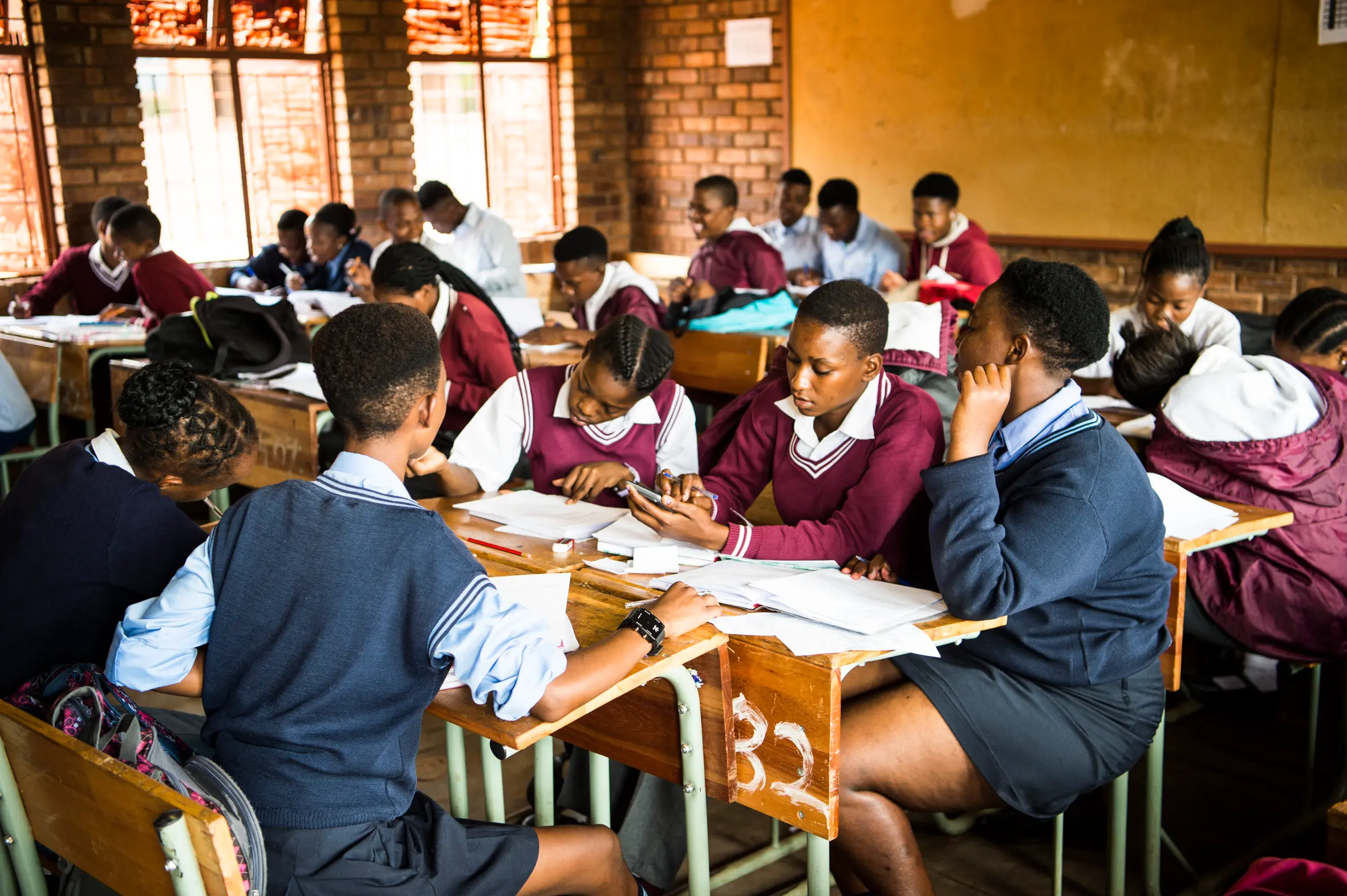
If you have been around the development space for a few years, you will be familiar with the term “demographic dividend”. Nearly a decade ago, the African Union dedicated an entire year to “Harnessing the Demographic Dividend through Investments in Youth”. The operative word was harnessing. Because demography is not destiny. A young population can produce a demographic dividend; it can also produce frustration, exclusion and instability. The difference lies in what we do with it.
Ask anyone to name Africa’s greatest assets and its young population will almost certainly make the list. Nearly 60 percent of Africans are under the age of 25. By 2050, one in four people on earth will be African, creating the potential for one of the world’s largest consumer markets. These are extraordinary numbers. But while numbers have the potential to be power; they are not power.
Africa’s young people may be one of the continent’s most talked-about assets, but they are not necessarily its most powerful group. A large young population does not automatically produce innovation, economic growth or political accountability. Population gives you scale. Turning that scale into a dividend requires investment in health, education, skills and jobs, the things that enable young people to become productive and economically secure.
But I think there is another dividend we talk about far less: the “civic dividend”. Young people also need the ability to understand the systems governing their lives and to influence them. In 2026 and 2027, more than 20 African countries are expected to hold elections. In the world’s youngest region, those elections will provide a practical test of whether we are turning demographic potential into civic power. What happens after young people cast their ballots will matter as much as what happens before them. Can they assess what candidates are promising? Can they follow what happens to public budgets after the election? Can they identify who has the authority to make a decision that affects their community, organise around a specific issue and hold elected officials to account? These are not abstract civic ideals. They are skills.
And yet, we rarely talk about them as an investment.
Social media has radically democratised voice: a young person with a phone can speak to thousands, or millions, of people without needing the permission of an editor, broadcaster or institution. That is a significant shift. But voice is not always influence. Visibility is not power and participation does not necessarily produce change.
For young people to exercise the kind of agency that leads to influence and change, they need to understand how advocacy works in their own context. Real advocacy requires knowing how to interrogate evidence, identify who has decision-making authority, understand power, formulate a specific task, build coalitions, communicate effectively, sustain pressure and know when to negotiate. Many young Africans learn these things accidentally, often after years spent inside NGOs, politics, journalism, movements or government.
ONE’s Youth Advocacy Survey found that 83 percent of young people want to create change but only 53 percent have taken part in advocacy. That gap tells us something important. The problem is not simply whether young people care. Many clearly do. The problem is whether they have the tools to turn that concern into action.
These skills should be treated as infrastructure.
We would not expect a young person to build a business without access to education, skills or financial infrastructure. We recognise that roads, electricity and digital networks create the conditions for economic activity. We invest in schools because knowledge creates opportunity. We invest in health because healthy people are better able to participate in society and the economy.
Civic capability deserves similar consideration.
A young woman concerned that children in her community cannot read should be able to do more than post about the problem. She should be able to find the evidence, understand the policy, map the power, formulate an ask, build allies, communicate, advocate and measure whether anything actually changed.
There are already efforts to build this capacity. The ONE Campaign, for example, has developed ONE Academy as a free learning platform designed to help young Africans develop practical advocacy skills and move from caring about an issue to knowing how to act on it. It is one example of a broader approach that deserves much more attention: making the knowledge of how change happens accessible to people who have historically been expected to navigate those systems without it.
A young community health worker who sees women and children struggling to access basic healthcare should be able to distinguish between a problem of policy, financing and implementation, identify which level of government has the power to act, and organise others around an evidence-based demand.
For decades, the development sector has spent billions trying to deliver solutions for African citizens. The next focus of our investment should be in citizens’ own capacity to demand better solutions, shape them and hold institutions accountable for delivering them. Particularly in an era of shrinking aid budgets, one of the highest-return investments we can make is in people’s capacity to become change agents themselves.
That means governments have a role in building civic capability through education and participation. Foundations and development partners can support organisations that equip young people with practical advocacy and leadership skills. Civil-society organisations can make their knowledge more accessible rather than treating advocacy expertise as institutional property.
And young people themselves are already showing what this can look like. Across the continent, they are organising around the issues that affect their communities, using digital platforms to scrutinise those in power, building movements and finding new ways to participate in public life. The task for institutions is not to manufacture that agency. It is to invest in the capabilities that allow it to become more effective.
Today, more than one in four of the world’s under-25s lives in Africa and that number will continue to grow. Africa’s demographic dividend will depend partly on whether its young people can participate productively in its economies. But it will also depend on whether they can participate meaningfully in the decisions that shape those economies and their societies.
We should stop treating youth advocacy as an optional add-on to development programmes. It is part of the infrastructure through which citizens exercise agency.
Africa has the numbers. The opportunity now is to give those numbers the skills, knowledge and power to matter. A demographic dividend is ultimately created by people. And a civic dividend begins when those people have the capacity to shape the future they will inherit.
Serah Makka is executive director for Africa at The ONE Campaign.