


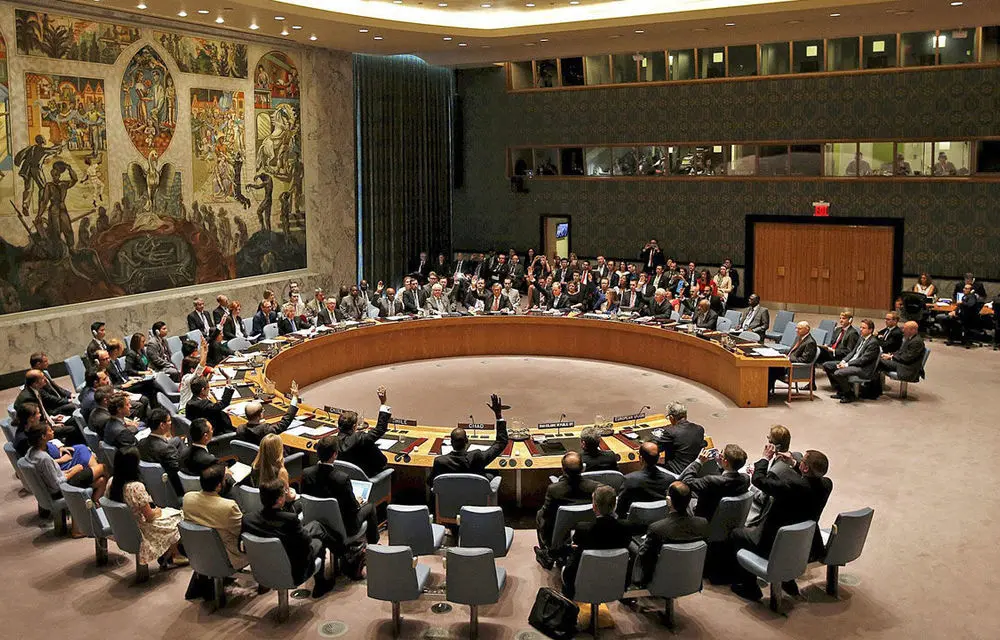
United Nations reform is usually framed as a matter of efficiency: reducing bureaucracy, eliminating duplication, containing costs and improving delivery. These concerns are real, but they obscure a deeper geopolitical anxiety. Some Western governments increasingly fear that large financial contributions no longer command the authority or alignment they once seemed to secure, even as rising powers assume a greater share of the UN’s costs. The reform debate is therefore about more than budgets. It is also about shifting influence and the difficulty of governing a more plural international order.
Since 1945, the UN has evolved through three broad periods. Its founding gave way to rapid expansion during decolonisation; the Cold War made newly independent states a central arena of diplomatic competition; and the decades since have brought China’s rise, waning Western predominance and greater agency across the Global South. Each shift has forced the institution to accommodate new members, priorities and demands for representation.
Western influence was embedded in the UN from the outset. The organisation began in 1945 with 51 members, while much of Africa and Asia remained under colonial rule. Decolonisation transformed the General Assembly, whose membership rose from 60 in 1950 to 127 in 1970. Yet this surge did not immediately overturn the diplomatic, financial and institutional hierarchy. Western capitals retained considerable sway over the Bretton Woods institutions, development finance, trade rules and the machinery through which newly independent states entered the international system.
For the United States, the UN was never simply another budget item. It was part of a broader system of influence. Washington and its allies funded multilateral action partly because the institution helped sustain an order they had played a central role in creating. State-building, peacekeeping and development assistance served strategic interests alongside commitments to international solidarity.
The Cold War sharpened the contest, even as Western leverage remained considerable. Great-power rivalry repeatedly paralysed the UN Security Council and made Africa, Asia, Latin America and the Middle East central theatres of diplomatic struggle. The Western and Soviet blocs courted votes, legitimacy and partnerships. Funding UN agencies, development programmes and peacekeeping missions became another means of extending influence, containing rivals and promoting competing models of development.
The balance grew more fluid after the Cold War. Western power initially appeared unrivalled, while liberal interventionism, democratisation, market reform and humanitarian action shaped global governance. China’s subsequent rise shifted the economic and diplomatic centre of gravity, particularly in Africa and Asia. By 2025, China’s nominal GDP stood at about $19.5 trillion, making it the world’s second-largest economy. In 2024, it was also the world’s largest merchandise exporter, shipping goods worth about $3.58 trillion — roughly 14.6% of global merchandise exports, according to UNCTAD.
The shift in global leverage is especially visible in Africa. China-Africa trade reached a record $282.1 billion in 2023, and Chinese official data indicate that China had been the continent’s largest trading partner for 15 consecutive years by 2024. Governments once heavily dependent on Western markets, lenders and donors can now negotiate with a broader range of partners. World Bank analysis traces the links among Chinese trade, investment, finance and large-scale infrastructure projects across Africa. These arrangements often differ from those offered by traditional partners, particularly in their financing structures and policy conditions, although outcomes vary by country and project. Estimates place cumulative Chinese engagement under the Belt and Road Initiative at more than $1 trillion by 2023, though methodologies differ and activity remains unevenly distributed across regions and sectors.
China’s growing weight is also evident within the UN. It is now the second-largest assessed contributor to both the regular budget and peacekeeping. Under the 2025-27 regular-budget scale, the United States is assessed at 22% and China at 20.004%. For the $5.6 billion peacekeeping budget covering July 2024 to June 2025, the respective rates were 26.95% and 18.69%; in 2025, they rose to 26.1584% for the United States and 23.7851% for China. Chinese official reporting also describes the country as the largest contributor of uniformed personnel among the Security Council’s five permanent members, having dispatched more than 50,000 peacekeepers since 1990. Beijing has not displaced Washington, but it can no longer be regarded as peripheral.

This redistribution is changing not only the politics of reform but also the assumptions that underpin it. Western countries still finance a substantial share of the UN system, yet funding no longer guarantees the same diplomatic alignment. China draws influence from trade, infrastructure, finance, market access and a growing multilateral presence. Governments across the Global South can therefore diversify their partnerships and pursue national priorities with greater room for manoeuvre. Traditional donors remain indispensable financiers, but their relative political leverage is diminishing. Arguments about cost and efficiency cannot be separated from a deeper uncertainty over how influence works in a more contested international order.
Calls for security council reform, stronger African representation, fairer development finance, climate justice and a larger voice for emerging economies expose the same problem: the international order has changed, but the institutions created to govern it have not kept pace. The security council still reflects the power distribution of 1945 more closely than that of the 21st century. Africa has 54 UN member states but no permanent seat; India and Latin America also lack permanent representation; and under the security council’s voting system, a negative vote by any permanent member can still block a substantive decision.
UN reform cannot end with budget discipline. Savings and administrative consolidation may be necessary, but they will not by themselves restore confidence in multilateralism. If cuts, mergers and narrower mandates are pursued without addressing legitimacy and representation, many member states will see them as an attempt to preserve established influence at lower cost. Representation without performance would be no better. A credible reform agenda must confront four questions together: who holds power, how legitimacy is earned, what the UN delivers and how the international order is changing.
The Pact for the Future brings security council reform, development financing, peace and security, digital cooperation and global governance under a single multilateral agenda. Council reform remains essential. So does a development system capable of advancing poverty reduction, climate resilience, governance, digital transformation and crisis prevention, rather than treating development as expendable. Peacekeeping reform should combine realistic mandates, viable political strategies and predictable financing. Complex conflicts cannot be managed cheaply from headquarters or ended on artificial timetables.
Western governments should be equally candid about their own interests. If they want the UN to remain the principal forum for multilateral engagement, they cannot treat it chiefly as a cost centre whenever diplomatic outcomes depart from their preferences. Legitimacy requires power to be shared more widely. Effectiveness rests on sustained investment and diplomacy. Relevance demands institutions that reflect the world as it is becoming. China’s rise and the Global South’s demand for recognition do not make confrontation inevitable, but they rule out a reform project designed to restore the former predominance of any country or bloc. The task is not to resist pluralism, but to make it work.
Born in a Western-led order, enlarged through decolonisation and now operating in a world of dispersed and contested power, the UN bears the imprint of every era it has survived. Reform that ignores this history will treat symptoms while leaving the underlying strain untouched. Cost-cutting alone cannot secure the institution’s future. The UN must retain the trust to act, the capacity to deliver and the legitimacy to represent a changing world. Its future depends on whether member states are willing to rebuild the political bargain on which multilateral cooperation rests.
Anthony Ohemeng-Boamah writes on international development and socioeconomic transformation, with a focus on Africa.