


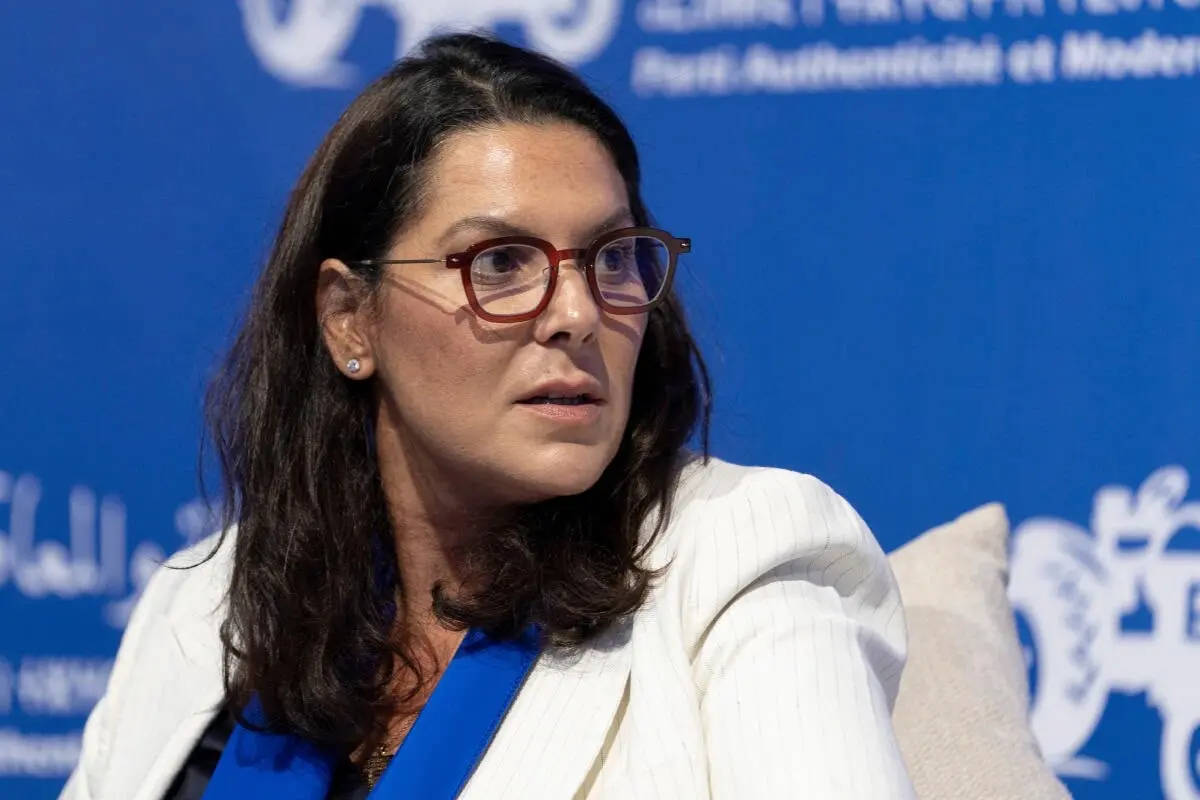
Africa now has a growing group of women at the highest levels of political leadership. Namibia is led by President Netumbo Nandi-Ndaitwah, Tanzania by President Samia Suluhu Hassan, while Judith Suminwa serves as Prime Minister of the Democratic Republic of Congo and Sara Zaafrani serves as Prime Minister of Tunisia. Morocco has now joined them, with Fatima Ezzahra El-Mansouri becoming the country’s first woman Head of Government.
The development is particularly significant in a continent where women’s representation in executive leadership remains far below their representation in many national parliaments.
In South Africa, women currently hold about 45% of the seats in the National Assembly, making the country one of Africa’s examples of relatively high female parliamentary representation. The African National Congress (ANC) also has a constitutional requirement that at least 50% of its elected structures should be women.
Yet the question of whether South Africa will have a woman president remains open. The country has had women in senior political positions, including the Speaker of the National Assembly, but the Constitution provides that the National Assembly elects either a woman or a man as president. There is therefore no guarantee that the country’s next president will be a woman.
Across the Middle East and North Africa, the rise of women to the highest levels of political leadership has been more recent.
Benazir Bhutto broke a major barrier in 1988 when she became Pakistan’s first woman prime minister and the first woman to lead a Muslim-majority country.
Five years later, in 1993, Tansu Çiller became Türkiye’s first woman prime minister.
Now Morocco has joined that history.
Morocco appoints its first woman Head of Government
Morocco’s King Mohammed VI appointed Fatima Ezzahra El-Mansouri as Head of Government on Tuesday, September 29, making her the first woman to hold the position in the country’s history. Her appointment followed parliamentary elections in which her Authenticity and Modernity Party (PAM) won 97 of the 395 seats in the House of Representatives, the largest number secured by any party.
Under Morocco’s constitutional system, the King appoints the Head of Government from the political party that wins the largest number of seats in the House of Representatives. El-Mansouri will now have to form a coalition government.
El-Mansouri, a lawyer and senior member of PAM, previously served as housing minister and mayor of Marrakech. Her appointment comes at a time when Morocco is preparing major investments linked to the 2030 FIFA World Cup and facing economic and social pressures, including concerns over inflation, employment and wages.
Following her appointment, El-Mansouri said she would “work towards proposing a government that lives up to the expectations of His Majesty the King and all citizens.”
She described her meeting with the King as an opportunity to receive “His Majesty the King’s High Guidelines for managing the coming phase.”
“This is a historic moment for our country,” El-Mansouri said, adding that “this is the first time that a woman has been appointed to head a government, which is a source of pride for me and for all the women of the country.”
She also acknowledged the expectations surrounding her appointment.
“We are fully aware of the importance of this stage and of the high expectations of citizens, particularly young people,” she said, adding that “we will draw up a program offering realistic and concrete solutions.”
Her appointment adds Morocco to a changing picture of political leadership across Africa. Namibia’s Nandi-Ndaitwah became the country’s first woman president in 2025, while Tanzania’s Samia Suluhu Hassan has served as president since 2021. In the Democratic Republic of Congo, Judith Suminwa became prime minister in 2024, and Tunisia appointed Sara Zaafrani as prime minister in 2025.
Morocco’s appointment is therefore not the first instance of a woman leading an African government. It is, however, a historic first for Morocco and adds another prominent example to the continent’s evolving record of women in executive political leadership.
The significance is also broader than the appointment itself. Africa has made progress in increasing women’s representation in legislatures, but women remain less common at the highest executive levels. A 2025 analysis by the Center for Strategic and International Studies noted that Africa had had 24 female heads of state or government across 18 countries, while only two women had been directly elected by voters to the presidency at that point: Liberia’s Ellen Johnson Sirleaf and Namibia’s Netumbo Nandi-Ndaitwah.
South Africa presents an interesting contrast. Its parliament is close to gender parity, with women currently accounting for 45% of the National Assembly. Yet the country has not had a woman elected president since the end of apartheid, and whether that changes in the future remains uncertain.
Morocco’s appointment of Fatima Ezzahra El-Mansouri adds another chapter to that history and gives women’s political leadership another significant place in Africa’s evolving political story.
Turkmen Terzi is a foreign journalist based in South Africa