

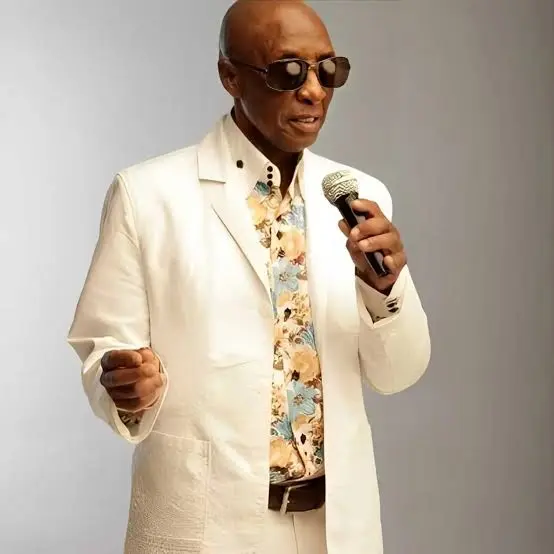
Africa mourns. Soweto laments. Katlehong cries. Unisa weeping.
For the academic community, particularly institutions such as UNISA, the passing of Bernand Babsy Mlangeni offers an opportunity for reflection on the relationship between knowledge, culture, and liberation.
Universities are not merely repositories of books and theories. They are guardians of humanity's intellectual and cultural heritage.
The life of Babsy Mlangeni reminds us that some of the greatest scholars never occupy lecture halls. Yet, they educate nations through lived experience, cultural artistic expression, and ethical examples.
Today, the fertile soil of our ancestors receives one of its faithful sons, a wandering minstrel of the people, a custodian of melody, and a messenger of hope.
Ntate Bernard "Babsy" Mlangeni was more than a musician. He was a vessel through which the dreams, pains, victories, and aspirations of ordinary people with less eyesight found voice.
His music travelled beyond stages, TV sets and radio waves; it entered homes, taxis, taverns, churches, and community gatherings where Africans sought comfort and affirmation of their humanity.

The title of one of his most beloved songs, "Iphupho Lami" ("My Dream"), now echoes with deeper meaning. It is no longer merely a song. It has become a testimony. A declaration. A legacy. A testament.
For millions living under apartheid and navigating the complexities of democratic South Africa, dreams have always carried political, social, and personal significance. They represent hope in times of despair and possibility in moments of uncertainty.
What makes Iphupho Lami timeless is its ability to connect across generations. Older listeners hear echoes of their sacrifices and aspirations, while younger audiences discover a message that remains relevant in contemporary struggles against poverty, unemployment, inequality, and social exclusion.
The dream spoken of in the song is not confined to one individual. It is a collective dream of a society where every child can realise their potential and every citizen can live with dignity.
Every lyric carried the weight of lived experience. Every note and tone conveyed sincerity and serendipity. His music reminded us that genuine artistry emerges from truth and right, love and light.
In a world increasingly driven by commercialism, Babsy remained rooted in the lived realities of ordinary people and connected with all those with less data and signal.
This explains why his songs continue to evoke deep emotional responses long after they were first recorded. Babsy's dream was not his alone.
It was the dream of millions who grew up under difficult conditions yet refused to surrender their dignity. It was the dream of township youth who sought inspiration amid hardship and strife.
As Pan-Africanists, we understand that music is not entertainment alone. Music is memory. Music is resistance. Music is healing. Music is a bridge between generations. Music was born in Afrika as Ntate Babsy once said.
Throughout our story, from the drums of ancient Afrika to the liberation songs of anti-colonial struggles, music has preserved our identity when others sought to erase it.
The African worldview teaches us that death is not an ending. It is a transition.
Those who serve humanity with honour do not vanish but vibrate in our minds and souls. They become part of the living heritage of a people.
They take their place among the ancestors who continue to guide the living through memory, example, and spirit. Bernand Babsy Mlangeni has crossed that sacred River Nile and River Limpopo, yet the rivers still flow with the glow of his smile.
He joins the great congregation of Afrikan cultural icons such as Hendrik "Koloi" Lebona and Tebogo Steve Kekana, whose contributions transcend time and geography.
His melodies from Iphupo lami remain embedded in our collective consciousness as we re-member him. Present and future generations may never meet him, but they will know him through the songs he left behind and through the countless lives he touched when he passed our way.