


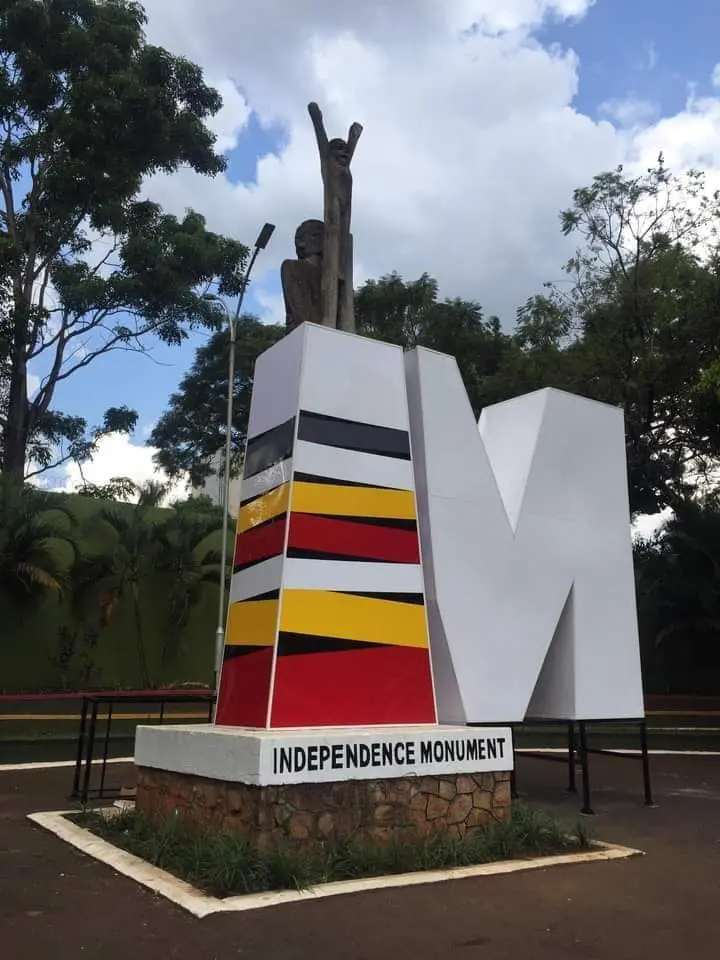
For a couple of weeks, I have struggled to write about Uganda’s political situation as the East African country marks 64 years of independence. At least St. Paul had a clear starting point when writing his letters to the Ephesians and Galatians.
Ever since gaining independence from the British on 9th October 1962 Uganda has journeyed through the hills and valleys of political turmoil, civil wars, economic growth, setbacks, constitutional renewal, and democratic backsliding.
Initially, there was great hope on the African continent when President Yoweri Museveni first came to power in January 1986.
It appeared the continent had received a new breed of African leaders who would stir fundamental changes and grant peaceful transitions of power a chance, contrary to past post-independence leaders.
Meanwhile, this hope for meaningful democracy increased after the young, charismatic Pan-African leader guided Uganda into drafting and passing the 1995 Constitution.
The constitution enshrined Article 105 (presidential term limits) and Article 102(b) (presidential age limits) as vital guardrails against executive selfish overreach.
Further hope emerged when the country opened up to affirmative action under Articles 33 and 32 of the Constitution, closing gender gaps and guaranteeing women's participation at all levels as a pillar of inclusive democracy.
Hope for a peaceful transfer of power completely vanished when these two constitutional guardrails Articles 105 and 102 (b) were removed in 2007 and 2018 subsequent years.
However, there was a temporary glimmer of hope when the nation held a historic referendum and passed constitutional amendments to transition from the one-party state "Movement system” to a multiparty democracy.
Four decades down the road, the East African country still dreams of a peaceful transfer of power.
Multiparty democracy has severely diminished following the most recent January 2026 elections, where opposition polling agents and supporters were abducted and arbitrarily arrested, while many opposition candidates were robbed of victory in broad daylight.
At the backdrop of this diminishing hope is 40 years iron fist rule seasoned with constitutional erosion, human rights violations, chronic poverty, political corruption and now the prolonged incarceration of Dr. Kizza Besigye, and the forced exile of Robert Kyagulanyi the other political power contenders.
Therefore, dear Country Men and Women, development partners and media as you make colorful E-posters and remarks about the 64 years, we cannot ignore the major, sensitive story dominating the airwaves, billboards, national papers, and social media timelines: "The Presidential Endorsement" of the current Uganda People’s Defense Forces (UPDF) Military Chief, Gen. Muhoozi Kainerugaba, for the 2031 race—even before the dust of the January 2026 elections has fully settled.
The Military Chief has instituted a political vehicle but a totalitarian inspired outfit code named the "Patriotic League of Uganda" (PLU) disguising as a civic movement under the national resistance movement.
The political vehicle is running a partisan political mobilisation and recruitment exercise for the military chief’s candidature, even as his father, Yoweri Museveni, reaffirms his own desire to continue ruling.
This endorsement, happening so early into another five-year Museveni presidential term, is creating diatribe on the streets, excitement among kleptomaniacs, whispers in newsrooms, and tension across the political divide.
Borrowing St. Paul’s courage, I must state openly that endorsing a serving military officer plunges Uganda into a state of confusion, fear, hope, and back again.
The PLU, acting as a special purpose vehicle under the National Resistance Movement, is radically coercing legislators, ministers, public servants, gullible businessmen, and fortune hunters to endorse a serving military officer for the presidency in 2031 and onwards.
In a country where elections have become auctions and democratic guardrails are gone, it is delusional not to fear the ongoing confusion between Muhoozi’s endorsements and Museveni’s “Donec mors nos separavit” presidency.
The decline of multiparty democracy means the nation has slipped back into an era reminiscent of Idi Amin and Milton Obote.
Uganda is back to the old times of Idi Amin, when military officers and regime loyalists would summon cabinet ministers and business community.
We are now plugged into the confusion of wondering who exactly wields executive powers between the Son and the Father.
Under this current political confusion, one cannot tell whether the country is under military rule or a democracy, whether it operates under the rule of law or rule by law or if elections are still relevant or not, kwegamba its j”ust Kavuuyo” confusion.
These irregularities in governance spark a cycle of fear regarding where the country is heading.
Amidst this well-sponsored confusion, human rights standards are sinking low.
For instance, We are witnessing very now and then Continuous state sponsored abductions, basement victims torture, arbitrary arrests of dissenting voices, repression of political opponents, transnational repression of exiles,Ghetto youth gang formations, press censorship, and a shrinking civic space becoming the order of the day.
It is disingenuous to believe that the PLU will bring change; it’s the same clique of corrupt individuals, vigilantes, abductors, charlatans, fortune hunters, and kleptomaniacs merely shedding their skin.
It is literally old wine in a new bottle, using the same gimmicks of the existing system.
On a lighter note, while the country has attained relative peace, security, Gross Domestic Product (GDP) growth, and an increased human capital index, its political stability remains trapped between a ticking time bomb and explosive ordnance disposal specialists.
No country breathes well under fear, erratic political confusion, domestic structural governance hurdles, and power transition uncertainties.
Therefore, we must all come to terms with the reality that the inevitable transfer of political power is bleeding fear, confusion, hope, and despair among Ugandans and friends of Uganda across the globe.
As Uganda celebrates her 64th independence, I call upon courageous and level headed Ugandans of a sound mind, the African Union, the Commonwealth Secretariat, and the United Nations to find ways to resolve this political confusion ahead of time, before the East African nation inevitably finds herself in the current state of either Sudan or Myanmar or Libya or North Korea or Syria or Cameroon.
Robert Kigongo is a sustainable development analyst.