

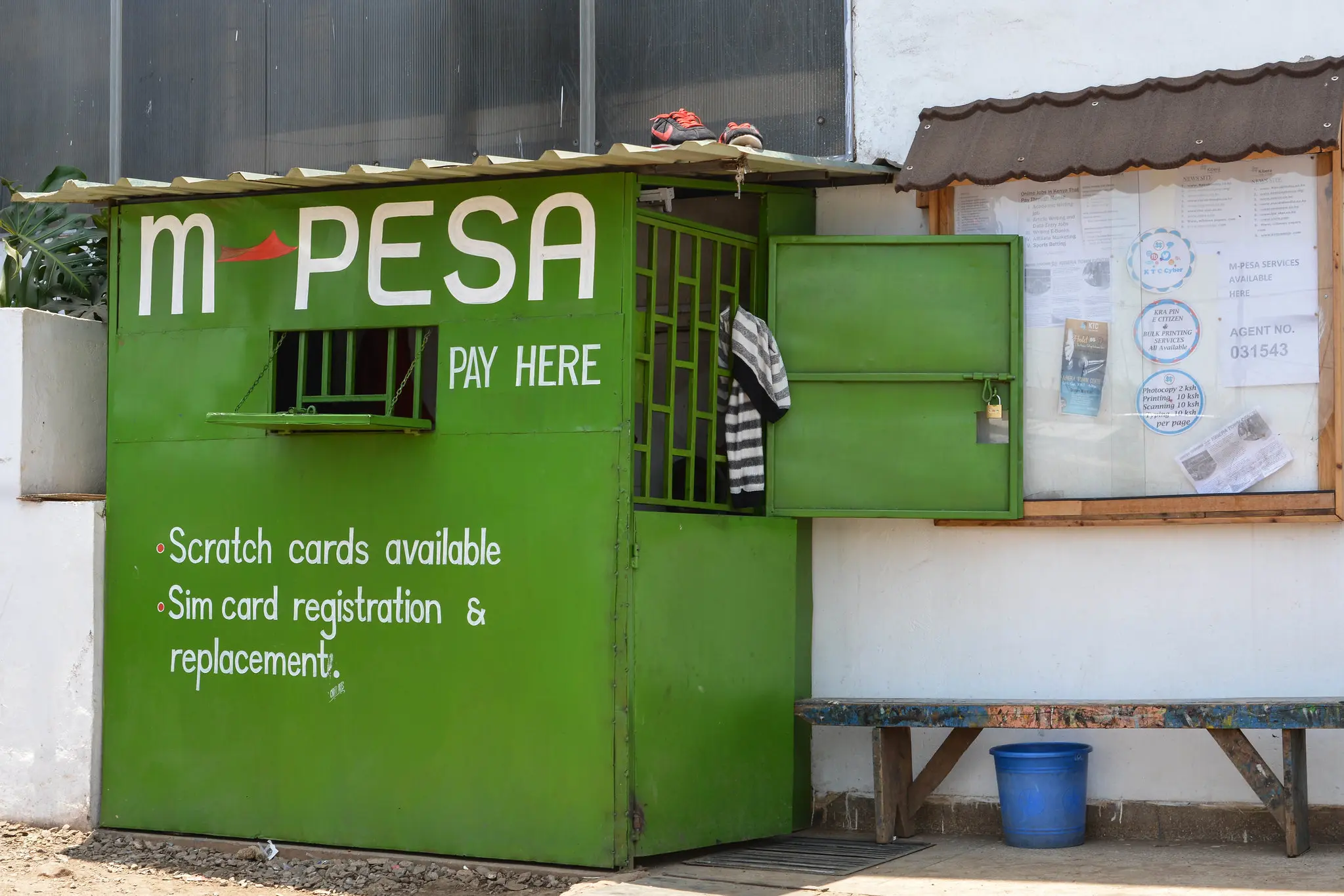
Africa’s debate over artificial intelligence should begin with a technology it helped redefine. When Safaricom and Vodafone launched M-Pesa in Kenya in 2007, they connected financial services to basic cellphones and a dense network of local agents, turning familiar tools and local businesses into gateways to the financial system.
The model has since travelled across Africa and beyond.

In 2024, mobile money platforms handled about 108 billion transactions worth nearly $1.7 trillion worldwide, with Sub-Saharan Africa accounting for more than half of registered accounts and roughly two-thirds of transaction value.
The question now is whether the continent will bring the same practical ambition to AI.
M-Pesa’s significance extends beyond finance. It showed that Africa can do more than adopt technologies conceived elsewhere: it can shape them around its own conditions and, in doing so, influence markets abroad.
The same principle should guide the continent’s approach to artificial intelligence.
Governments and entrepreneurs should prioritise AI systems built for African languages, institutions and economic realities, pairing accessible delivery with regulation that permits responsible experimentation, rather than accepting imported tools by default.
Mobile money succeeded because it addressed a problem that conventional banking had left unresolved.
For small traders, informal workers, rural families and subsistence farmers, a bank account could demand documents, travel, time and fees that made little sense for the sums involved.
A mobile wallet stripped away many of those obstacles: customers could deposit, withdraw and transfer small amounts through nearby agents, without a bank branch or an expensive handset.
The breakthrough lay less in technical sophistication than in a precise reading of how people lived, earned and exchanged money.
African AI will matter for the same reason: not because it uses the most advanced model but because it solves a real problem in a form people can use. M-Pesa’s continued value now depends on interoperability. The same principle should shape Africa’s AI infrastructure.
Payment networks lose much of their usefulness when customers are confined to one provider.
Ghana’s mobile money interoperability system, introduced in 2018, enabled direct transfers across mobile networks and between wallets and bank accounts.
The Pan-African Payment and Settlement System pursues a similar logic across borders: faster payments in local currencies, with less reliance on external currencies.
Such infrastructure can lower costs, help small firms and make intra-African trade easier.
AI systems will likewise deliver broader value when data, standards and public-interest infrastructure prevent countries and users from being locked into isolated platforms. Products might spark adoption; open, connected systems determine whether the benefits spread.
M-Pesa should be treated not as a finished success story but as a standard for the next generation of African innovation.
In education, agriculture, health, government and trade, the priority should be AI applications that address a defined public or market failure, work within local infrastructure constraints and reach people beyond affluent urban communities. That demands more than basic familiarity with devices and software. Schools need to build problemsolving, coding, data literacy and entrepreneurship so that Africans can adapt emerging technologies to their own economies and public services rather than depend entirely on systems designed elsewhere.
Those capabilities will matter only if people can connect.
Coverage is no longer an adequate measure of progress: many people in Sub-Saharan Africa live within range of mobile broadband yet remain offline because devices, data and useful services cost too much or are difficult to access.
Governments should judge digital policy by whether people can afford to use the network, not simply whether a signal reaches them. That requires competition, infrastructure sharing, sustained investment, reliable service and effective consumer protection.
Africa cannot build a consequential AI economy while women remain less likely than men to use the internet, particularly across the continent and in the least developed countries.
This is not only an equity failure; it narrows the market for new technologies, shrinks the pool of talent available to create them and risks entrenching unequal access in the next generation of digital services.
Networks alone will not close the divide. Affordable devices and data, practical digital skills, access to identification and finance and confidence in online safety must be treated as core design requirements from the outset.
Capital presents another constraint. African technology companies often lack patient, early-stage finance before they are large enough to interest international investors.
Governments should not choose commercial winners. Neither should they remain passive.
Working with business and universities, they can strengthen innovation hubs where entrepreneurs test ideas, build prototypes and develop solutions to development problems. They can also establish well-governed venture funds, co-investment vehicles and guarantees that draw in private capital, while using public procurement to give credible local firms an anchor customer when their products address national priorities.
Talent supplies the ideas, connectivity opens the market and disciplined public action can help viable products reach scale.
M-Pesa demonstrates what becomes possible when African constraints are treated as design conditions rather than excuses for dependence.
The choice in the AI era is therefore not between rejecting foreign technology and building everything alone. It is between passively importing systems shaped by other markets and developing the capacity to select, adapt and create technologies on African terms.
That capacity requires skilled entrepreneurs, regulation that enables responsible experimentation, interoperable infrastructure, broad access and patient capital.
Success should be measured not by how many AI tools Africa adopts but by how many African problems they solve — and how much of the value they create remains on the continent. Anthony Ohemeng-Boamah writes on international development and socio-economic transformation with a focus on Africa.